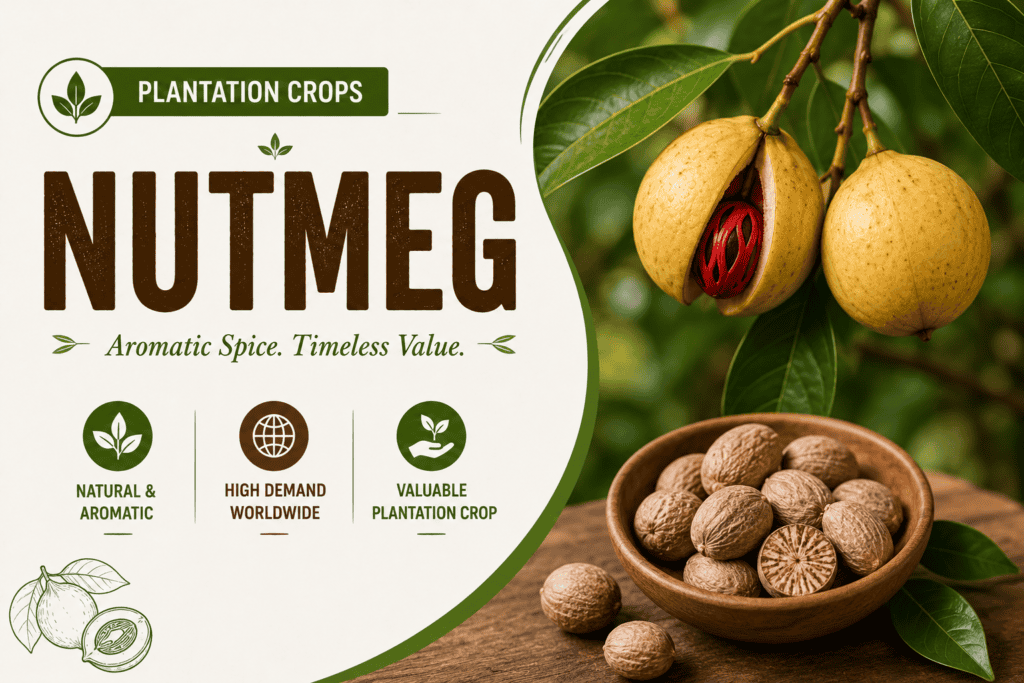
Nutmeg
Nutmeg
Understanding About Nutmeg
Nutritional Value
- Nutmeg contains essential minerals: magnesium, copper, calcium, iron, zinc, and manganese.
- Rich in dietary fiber for better digestion.
- Nutmeg has volatile oils, mainly myristicin, safrole, and eugenol, which give flavor and medicinal properties.
- Provides vitamin A, vitamin C, and several B-complex vitamins.
- Nutmeg seeds are energy-rich, offering calories important for traditional medicine use.
- Loaded with antioxidants that protect against cell damage.
- Overconsumption may cause side effects, so moderation is necessary.
Dietary Diversity
- Nutmeg is widely used in sweets, curries, soups, sauces, and stews.
- Used in spice blends and bakery products like cakes, bread, puddings, and cookies.
- Nutmeg adds flavor to beverages, milk-based drinks, and herbal teas.
- Nutmeg is essential in spice-mix industries and confectionery.
- Common ingredient in pickles, chutneys, and savory spice powders.
- Nutmeg butter and oil used in food flavoring industries.
- Farmers can supply raw nutmeg to both local and export-based food markets.
Economic Importance
- Nutmeg is a high-value spice crop, grown mainly in Kerala and parts of Karnataka.
- Internationally demanded because both nuts and mace (outer red covering) are valuable.
- Provides income through domestic spice trade and export.
- Nutmeg plantations contribute to foreign exchange earnings for producing countries.
- Nutmeg trees live long (60–70 years) offering continuous income to farmers.
- Used in food, beverages, cosmetics, perfumes, and pharmaceutical industries.
- Farmers in tropical belts can integrate Nutmeg as a cash crop alongside coconut, arecanut, or coffee.
Crop Rotation
- Nutmeg is a perennial plantation crop, not rotated frequently.
- Intercropping early years with coffee, banana, or pepper provides income until trees mature.
- Proper crop rotation helps in maintaining soil fertility.
- Intercrops with legumes fix nitrogen, improving soil health.
- Nutmeg plantations maintain greenery and ecological diversity on farms.
- Traditional mixed cropping patterns in Kerala ensure sustainable spice farming.
- Fruit trees and spices together improve farmer income.
Climate Resilience
- Thrives in warm, humid, tropical climates.
- Can tolerate high rainfall zones (2000–3500 mm annually).
- Sensitive to extreme drought or frost, needs consistent humidity.
- Evergreen nature makes Nutmeg resilient against sunlight stresses.
- With irrigation support, it performs well even in summer dry spells.
- Provides canopy and shade, reducing soil erosion and heat stress.
- Nutmeg, being a hardy spice crop, supports long-term sustainable farming in coastal belts.
Health Benefits
- Nutmeg is used as a traditional cure for digestive issues like gas, bloating, and indigestion.
- Helps relieve toothaches and bad breath when used in home remedies.
- Used in oils to reduce body pain and inflammation.
- Nutmeg improves sleep quality due to its soothing effect.
- Often recommended in Ayurveda for improving appetite and detoxification.
- Contains compounds useful for heart and brain health.
- Overuse may cause toxicity symptoms like nausea or dizziness – moderation is essential.
Key Features of Nutmeg Cultivation
Climate and Soil Requirements
- Hot, humid tropical climate required.
- Rainfall 2000–3500 mm ideal.
- Tolerates temperatures between 20°C–35°C.
- Requires partial shade in early stages.
- Soil: deep, fertile, sandy loam or clay loam preferred.
- Rich organic matter ensures good yield.
- Soil pH between 5.5–6.5.
- Needs well-drained soils, as waterlogging damages roots.
- Best suited to coastal, hilly areas (Western Ghats).
- Avoid very dry or frost-prone climates.
- Nutmeg survives in mixed plantations under coconut, arecanut.
- Mulching is essential to retain soil moisture.
- Terraced slopes preferred for large-scale plantations.
- Consistent humidity ensures good fruiting.
- Irrigation required in dry summer months.
Land Preparation
- Select humid areas with natural shade.
- Clear land while retaining beneficial trees.
- Dig pits 60×60×60 cm for planting.
- Pits filled with compost + topsoil mixture.
- Construct trenches for drainage.
- Prepare land before monsoon planting.
- Planting spacing: 8–10 m depending on slope.
- Dig contour bunds on hill slopes to prevent erosion.
- Use mulch to cover dug pits before planting.
- Organic FYM added at pit base.
- Land fencing protects seedlings.
- Retain shade trees on boundaries.
- Terraces in steep areas required for stability.
- Weeding is done before plantation starts.
- Timely preparation ensures plantation longevity.
High-Yielding and Hybrid Seed Selection
- Nutmeg propagates through seeds; high-quality seeds essential.
- Select fully ripe fruits that split open naturally.
- Choose seeds from high-yielding trees (15–20 years old).
- Hybrid selections preferred for higher oil and fruit yield.
- Myristica fragrans is the main species cultivated.
- Seeds lose viability fast, so sowing is immediate.
- Grafted high-yield varieties available in certain regions.
- Mother trees known for uniform fruiting selected.
- Healthy bold seeds germinate faster.
- Tissue culture methods under research.
- Seedling quality determines tree productivity.
- Avoid shriveled or insect-infested seeds.
- Recommended to source from certified spice boards.
- Early maturity hybrids reduce waiting time to yield.
- Farmers using elite seeds earn higher returns.
Seed Treatment
- Extract seeds from fresh fruit on the same day.
- Wash and clean seeds thoroughly.
- Treat with Trichoderma to prevent fungal issues.
- Do not sun-dry seeds before sowing.
- Keep moist until sowing in nurseries.
- Germination beds prepared with FYM + soil.
- Bio-slurry application to seedlings is useful.
- Nursery shade net helps protect tender germinating seeds.
- Seeds germinate within 30–40 days.
- Fungicide dips prevent rot and damping off.
- Mulch beds with straw for moisture retention.
- Gentle watering helps speedy germination.
- Avoid chemical-heavy seed treatments in Nutmeg.
- Healthy nurseries ensure plantation survival.
- Early stage care gives strong seedlings.
Sowing and Planting Methods
- Nursery-raised seedlings 8–10 months old are transplanted.
- Transplantation at the onset of the monsoon season.
- Pit spacing: 8–10 m × 8–10 m.
- Pits should be pre-filled with organic manures.
- Shade regulation needed during planting.
- Intercropping bananas or coffee during early years is beneficial.
- Mulching after planting keeps soil moist.
- Direct sowing in the main field is not recommended.
- Gap filling with spare seedlings needed.
- Saplings protected with stake supports against winds.
- Water lightly for initial establishment.
- Ensure planting in morning/evening hours.
- Avoid planting in waterlogged sites.
- Planting under partial shade improves survival.
- Only healthy saplings were transferred to avoid mortality.
Nutrient and Fertilizer Management
- Apply well-rotted FYM 15–20 kg per pit annually.
- NPK @ 100:50:100 g recommended per plant.
- Nutrients applied in split doses during monsoon.
- Organic compost keeps soil fertile long-term.
- Neem cake controls soil nematodes.
- Potassium boosts oil concentration in nutmeg and mace.
- Biofertilizers enhance soil biodiversity.
- Green manuring improves soil structure.
- Balanced fertilizers prevent foliage-only growth.
- Soil testing is advised every 2 years.
- Avoid excess nitrogen as it delays fruiting.
- Vermicompost gives better sustainability.
- Micronutrient sprays improve plant health.
- Organic systems fetch premium spice prices.
- Proper nutrition sustained for decades ensures continuous yield.
Irrigation and Water Management
- Nutmeg requires consistent soil moisture.
- Heavy rainfall areas support rainfed cultivation.
- Irrigate during dry months every 10–15 days.
- Drip irrigation improves water use efficiency.
- Avoid overwatering to prevent root infections.
- Mulching reduces evaporation losses.
- Small check dams support plantations on slopes.
- Contour bunds conserve rainwater.
- Moisture directly affects flowering and fruiting.
- The first 5 years need careful irrigation to establish trees.
- Shade regulation reduces water requirements.
- Rainwater harvesting is useful in summer.
- Dry months = supplemental irrigation needed.
- Too much drought reduces fruit setting.
- Proper water care ensures strong, long-term trees.
Intercultural Operations
- Regular weeding is needed near young plants.
- Mulching suppresses weeds, conserves soil water.
- Shade regulation must be monitored each year.
- Prune branches to allow good light balance.
- Thinning early to avoid overcrowding.
- Earthing-up supports roots during rains.
- Cover crops and legumes maintain soil nitrogen.
- Clean cultivation practices discourage pests.
- Staking saplings helps against wind damage.
- Remove diseased or damaged plants in time.
- Farm sanitation is important for quality crops.
- Companion crops must be pruned in balance.
- Early intercrops give additional income.
- Healthy intercultural practices extend yield life.
- Regular inspections keep the plantation sustainable.
Pest Management
- Pests: nut borer, shoot borer, aphids, scales.
- Neem sprays are effective against common pests.
- Introduce biological control predators where possible.
- Regular plantation monitoring is essential.
- Mild chemical sprays only if needed.
- IPM practices recommended.
- Avoid overuse of pesticides that harm spice quality.
- Farm sanitation reduces pest populations.
- Use pheromone traps to reduce borers.
- Select pest-resistant plants if available.
- Organic sprays fetch premium export value.
- Monitor at flowering and fruiting stages mostly.
Disease Management
- Major diseases: leaf spot, root rot, dieback.
- Good drainage avoids fungal root problems.
- Soil treatment with Trichoderma helps.
- Spray copper fungicides at infection signs.
- Shade regulation reduces fungal incidence.
- Avoid over-irrigation to prevent wilts.
- Burn infected leaves and stems quickly.
- Farm hygiene reduces disease occurrence.
- Well-spaced planting lowers spread risk.
- IDM practices enhance sustainability.
- Healthy nurseries avoid early disease incidence.
- Regular monitoring prevents severe outbreak.
Harvesting and Post-Harvest Management
- Nutmeg trees start bearing after 7–9 years.
- Harvesting is done when fruits split open naturally.
- Seeds (nutmeg) and outer mace both collected.
- Sun-dry mace separately until crisp and red.
- Nutmeg seeds dried until kernels rattle inside the shell.
- Storage in airtight bags or containers avoids fungus.
- Proper curing enhances oil content.
- Sorting and grading improve market prices.
- Shelf life is maintained by keeping dry and pest-free.
- Nutmeg export requires good-quality packaging.
Do’s
Don'ts
What is Nutmeg mainly used for?
Nutmeg is mainly used as a spice in cooking and baking. It adds warm, sweet, and slightly spicy flavor to soups, sauces, sweets, and drinks. Nutmeg is also used in traditional medicine.
Can Nutmeg be eaten raw?
Yes, Nutmeg can be grated and consumed raw in very small amounts. However, eating too much raw Nutmeg can cause stomach irritation, so moderation is important.
How should Nutmeg be stored at home?
Nutmeg should be stored in a dry, airtight container away from sunlight. Whole Nutmeg seeds last longer than powdered Nutmeg, keeping aroma and oils fresh for months.
Why is Nutmeg considered special among spices?
Nutmeg is unique because it provides two spices from one fruit – Nutmeg (the seed) and Mace (the red covering). Both are valuable in cooking, medicine, and cosmetics.
Does Nutmeg have any side effects?
Yes, Nutmeg is safe in small amounts but harmful in excess. Overuse of Nutmeg may cause nausea, dizziness, or even hallucinations due to its strong natural oils.
Is Nutmeg good for children?
Nutmeg can be added in very small amounts to children’s milk or food for flavor. However, large amounts should be avoided, as children are sensitive to its strong effects.
Which countries produce the most Nutmeg?
Indonesia, India, Sri Lanka, and Grenada are some of the top Nutmeg producers. In India, Kerala and Karnataka are leading Nutmeg farming states.
Can Nutmeg help with sleep problems?
Yes, Nutmeg is often used in home remedies for better sleep. A pinch of Nutmeg in warm milk at night is believed to calm the mind and promote restful sleep.
How long can Nutmeg trees live?
Nutmeg trees can live for 60–70 years if cared for properly. They take time to bear fruits but provide long-term income for farmers once established.
Is Nutmeg used in the beauty and cosmetic industry?
Yes, Nutmeg oil and powder are used in beauty creams, soaps, and perfumes. Its antibacterial properties make Nutmeg useful for skincare and natural remedies.
Can Nutmeg be used in beverages?
Yes, Nutmeg is used to flavor teas, coffee, milkshakes, and traditional winter drinks. It gives a warm and aromatic taste that is widely enjoyed worldwide.
How is Nutmeg different from Mace?
Nutmeg is the dried seed inside the fruit, while Mace is the red outer covering of the seed. Both come from the same fruit of the Nutmeg tree but have slightly different flavors.