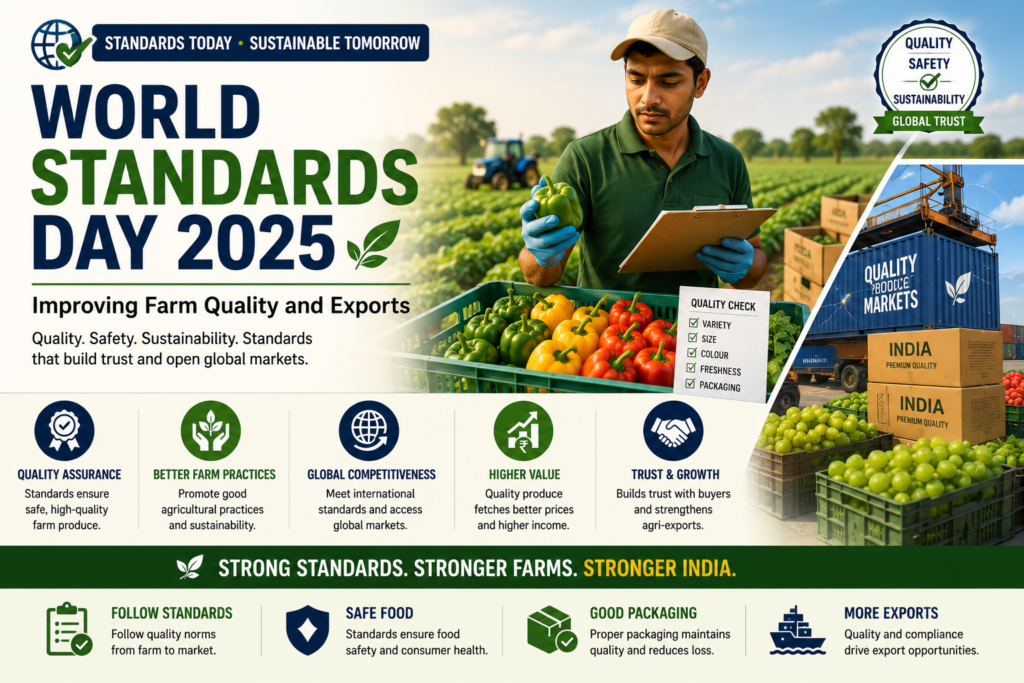
World Standards Day 2025: Improving Farm Quality and Exports
World Standards Day 2025: Improving Farm Quality and Exports
Introduction
Every year on October 14, the world celebrates World Standards Day, a reminder of how shared rules and quality systems connect trade, technology, and farming. In agriculture, these standards play a big role in helping farmers grow, grade, and sell their crops with confidence. Clear agricultural quality standards and crop grading standards make sure that every grain, fruit, or vegetable meets buyer needs at home and abroad. For India’s farmers, following these norms builds trust and boosts export agricultural produce, showing how World Standards Day agriculture is linked to fair trade and better income for rural communities.
Strong farmers quality compliance means cleaner produce, fairer prices, and less waste. By learning how to improve crop grading for export, small farmers can easily meet agricultural standards for small farmers in India and reach more markets. Farm produce grading, export quality compliance, and certification for farmers all help reduce losses and improve shelf life. Following sustainable agriculture standards and climate resilient grading standards in agriculture also protects soil, water, and the wider environment. With better training and post-harvest management, farmers can see a clear impact of standards on farmer income and long-term sustainability.
This blog on World Standards Day 2025 and farming explores how global quality rules improve exports, reduce waste, and build stronger rural livelihoods. It explains certification steps for farmers to export crops, what are agricultural quality norms for export markets, and how farmer producer organizations (FPOs) and quality systems support success. From phytosanitary certification and traceability in farm supply chains to AGMARK and quality marks under the APEDA export policy India, every step matters. With agri-tech for grading and sorting, better food safety standards in agriculture, and sustainable farming practices, this is a full farmer guide to quality compliance and export – helping every grower improve crops, reduce waste, and achieve export readiness for farmers across India.
Why World Standards Day Matters for Agriculture
Every year, World Standards Day agriculture reminds us how quality rules help farmers grow better and sell smarter. Clear agricultural quality standards make farm work more transparent and fair. These crop grading standards help buyers trust what they buy and ensure that export agricultural produce from India meets global demand.
For Indian farmers, these standards mean better income and less rejection. By following farmers quality compliance and export quality compliance, they can meet market needs for clean, graded, and safe food. Domestic systems like AGMARK and quality marks and global ones like Codex or UNECE all aim for the same goal – quality that connects the farm to the world.
Following sustainable agriculture standards also supports climate smart agriculture, helping farmers protect soil and reduce waste. According to APEDA export policy India, countries that follow standards export more and face fewer shipment losses. These systems bring trust, food safety, and growth to every farming village.
Agricultural Quality Standards and Crop Grading
Agricultural quality standards mean simple, practical rules – how crops are graded, packed, and labeled. They define what is good produce and what needs to be improved. Crop grading standards make sure fruits, vegetables, and grains are sorted properly before they reach the market.
When farm produce grading is done well, farmers earn more because good crops sell faster. Clean sorting also helps in reducing post-harvest losses through grading standards, which protects farmers’ hard work. AGMARK and quality marks show that produce is safe and ready for trade.
Examples:
- Fruits and vegetables that meet export quality compliance can enter more markets.
- Certification for farmers helps build trust with buyers.
- Better grading improves export readiness for farmers and ensures food safety standards in agriculture are met.
In short, grading turns local produce into export agricultural produce, raising value and reputation worldwide.
2025 Theme: Shared Vision for a Better World
The World Standards Day 2025 and farming theme, “Shared Vision for a Better World,” fits well with modern agriculture. It reminds us that quality and sustainability go hand in hand. Farmers who follow sustainable agriculture standards not only grow better crops but also care for soil and water.
These ideas match climate resilient grading standards in agriculture, which help farms adjust to changing weather. When post-harvest management and grading systems are strong, farmers save time and avoid waste.
Global agencies like UNECE and FAO guide farmers on eco-friendly grading and packaging, making Indian exports stronger. This shared global effort builds a cleaner, safer food system for all.
Key Lessons for Farmers from World Standards Day
World Standards Day agriculture offers real lessons for every grower. Farmers can take simple steps to match agricultural quality standards and raise their crop value.
Here are 5 key lessons for farmers:
- Learn how to improve crop grading for export by sorting crops early.
- Follow certification steps for farmers to export crops under APEDA and AGMARK.
- Use clean tools and safe pesticide levels to maintain farmers’ quality compliance.
- Join farmer producer organizations (FPOs) and quality programs for collective growth.
- Practice sustainable farming practices to meet future export rules.
Comparing traditional and modern grading shows clear results – modern methods reduce loss and meet agricultural standards for small farmers in India more easily. Awareness and training improve yield, boost export readiness for farmers, and make rural life better.
Role of Technology and Awareness in Quality Farming
Technology is changing how farmers meet agricultural quality standards. With agri-tech for grading and sorting, even small growers can upgrade their farms. Smart machines, IoT tools, and AI-based scanners help with fast and fair farm produce grading.
Digital systems improve traceability in farm supply chains, helping buyers track every product. When farmers adopt climate smart agriculture tools and modern post-harvest management methods, they cut waste and raise earnings.
Government schemes like APEDA export policy India, NABARD, and MyScheme now fund projects that build quality and promote certification for farmers. These steps help bridge the gap between farms and world markets.
What Citizens and Farmers Can Do Together
Everyone can play a role in World Standards Day agriculture. Farmers can grow safe food, and citizens can choose produce that meets AGMARK and quality marks. When both sides care about food safety standards in agriculture, the entire system improves.
Simple habits like crop rotation, using fewer chemicals, and clean packaging support sustainable agriculture standards. Farmer producer organizations (FPOs) and quality programs can help rural groups learn how to meet export quality compliance faster.
NGOs and social groups like SMS Foundation or StarAgri also guide farmers on phytosanitary certification and agricultural standards for small farmers in India. This teamwork keeps our food healthy and our planet cleaner.
India’s Export Future and Global Opportunities
India has great scope for export agricultural produce such as fruits, pulses, and spices. Reports from APEDA export policy India and NABARD show that meeting export quality standards for fruits and vegetables increases both prices and demand.
By focusing on farmers quality compliance and export readiness for farmers, India can expand its share in global markets. Certification for farmers and better crop grading standards make Indian produce globally trusted.
In short:
- Quality builds reputation.
- Standards build markets.
- Awareness builds sustainability.
By following sustainable farming practices, using agri-tech for grading and sorting, and understanding what are agricultural quality norms for export markets, farmers can increase profits and protect nature at the same time.
Conclusion
World Standards Day reminds us that good standards make farming stronger, safer, and more sustainable. Clear rules for grading, packaging, and export help farmers grow better crops, earn fair prices, and protect the planet. They connect farms to the global market and support food safety, environmental care, and sustainable agriculture.
When farmers follow agricultural quality standards, they not only meet export norms but also reduce waste and improve soil health. Every effort – from clean grading to eco-friendly packaging – brings India closer to becoming a trusted export leader.
Why it matters for farmers: each quality check builds trust, improves income, and opens new export doors. Global standards also prepare farmers for climate challenges and build long-term growth.
Key takeaways:
- Standards build trust and better prices for crops.
- Proper grading reduces loss and raises export value.
- Awareness and technology help sustainable farming grow.
- Farmers and citizens together can secure safe food for all.
This World Standards Day, let’s celebrate the power of quality and unity. Every farm that follows standards supports a healthier planet and a stronger economy.
Explore detailed information and the full suite of programmes at ALL ABOUT AGRICULTURE. For one-on-one assistance, call us at +91 8484002628.
What is the purpose of World Standards Day for farmers?
World Standards Day highlights the value of global standards that improve product quality, safety, and trade. For farmers, it’s a reminder to follow quality rules that make their produce more competitive in both Indian and international markets.
How can small farmers in India start exporting their crops?
Small farmers can begin by understanding export requirements under APEDA and applying for basic certifications like AGMARK or phytosanitary certificates. You can find detailed step-by-step guidance on the ALL ABOUT AGRICULTURE website.
What are the common barriers to agricultural export from India?
The main challenges include lack of awareness about export quality norms, poor packaging, and missing certifications. With proper training and access to grading tools, these barriers can be reduced.
Are there government schemes that help with export certification costs?
Yes. NABARD, APEDA, and the Ministry of Agriculture run schemes that support certification and infrastructure upgrades. Farmers can check the latest updates on these schemes at ALL ABOUT AGRICULTURE.
How does climate-smart agriculture link to crop grading?
Climate-smart agriculture ensures better soil, water, and pest management – leading to healthier crops that meet grading standards more easily. This reduces rejections and improves export quality.
What is the role of technology in farm produce grading?
Modern grading uses sensors, drones, and sorting machines to identify quality defects quickly. These agri-tech tools save time and ensure accurate grading for both local and export markets.
How can FPOs (Farmer Producer Organizations) help in quality compliance?
FPOs help small farmers combine their produce, access quality testing labs, and apply for export certifications together. This collective effort reduces costs and builds trust among international buyers.
Why are traceability and packaging important for export crops?
Traceability helps track produce from the farm to the market, ensuring food safety. Proper packaging protects products during transport and meets export quality compliance standards required by global buyers.
How can farmers reduce post-harvest losses through standards?
Following farm produce grading rules, using clean packaging, and adopting safe storage practices can reduce spoilage and waste. This also boosts profit margins and export readiness.
What are sustainable farming practices that meet export norms?
Using organic manure, conserving water, and avoiding excessive chemicals are key sustainable practices. They improve soil health and meet sustainable agriculture standards recognized worldwide.
What certifications are required for exporting fruits and vegetables?
Farmers need phytosanitary certification, AGMARK grading, and APEDA registration for most exports. You can read the full certification checklist on ALL ABOUT AGRICULTURE.
How does standardization affect farmer income in the long run?
Consistent quality and certification increase buyer trust, reduce rejections, and open premium markets – helping farmers earn better prices season after season.
What role does APEDA play in Indian agricultural exports?
APEDA guides exporters, ensures compliance with international standards, and promotes Indian farm produce abroad. Their support helps farmers upgrade to global-quality systems.
Can organic farmers also benefit from export standards?
Yes, organic farmers gain credibility through certification and traceability, which makes their produce more valuable globally. Organic certification details are shared on ALL ABOUT AGRICULTURE.
Where can farmers learn about training programs for export readiness?
Farmers can explore training sessions, workshops, and certification help on ALL ABOUT AGRICULTURE, which connects them with trusted partners, government updates, and export experts.