Barley
Barley
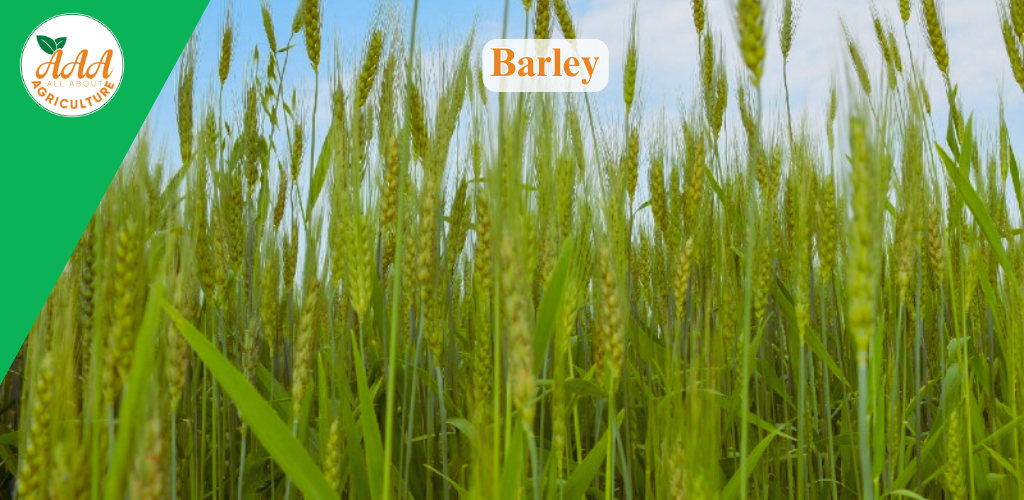
Understanding About Crop
- Barley is a fast-growing cereal crop widely cultivated for food, fodder, and malting uses.
- It thrives in temperate climates and is more tolerant of drought and soil salinity than many other cereals.
- Barley has a relatively short growing season and can adapt to a range of soil types, including moderately saline and alkaline soils.
- On All about agriculture, we provide trusted tips and techniques to improve barley yields and maintain soil health.
Key Features
Climate and Soil Requirements
- Barley prefers cool to moderate temperatures for growth, ideally between 12°C and 20°C during the growing season, with 30-32°C at ripening.
- It tolerates drought better than wheat but requires low humidity and dry weather near harvest to avoid diseases.
- Barley grows best in well-drained loam or clay-loam soils with moderate fertility and a pH range of 6.0 to 7.8, thriving even in mildly saline or alkaline soils.
- Poor drainage and heavy, waterlogged soils reduce root health and yield.
- Before sowing, testing soil pH and fertility is essential; amend soils with organic matter or lime as recommended to optimize barley growth.
- Regular monitoring of climate conditions via platforms like All about agriculture helps farmers plan sowing and irrigation effectively.
Land Preparation
- Prepare land by ploughing 2-3 times to achieve a fine, crumbly seedbed that promotes seed-to-soil contact.
- Remove all weed residues, stones, and previous crop debris to reduce pest buildup and improve aeration.
- Apply well-rotted farmyard manure or compost (around 2-3 tons per hectare) 3-4 weeks before sowing to enrich soil nutrients naturally.
- Conduct final levelling with a plank or levelling device to ensure even irrigation and prevent waterlogging spots.
- For soils prone to pests like termites, use recommended insecticides during land preparation to protect young barley roots.
- Proper land preparation ensures uniform seed germination and healthy crop establishment, supported by All about agriculture best practices.
High-Yielding and Hybrid Seed Selection
- Always use certified seeds from trusted suppliers to guarantee purity and viability.
- Choose barley varieties adapted to your local climate, such as two-row or six-row barley, which differ in grain arrangement and yield traits.
- Popular varieties in your region should have resistance to common diseases like rust and blight and be tolerant to drought or salinity if relevant.
- Replace seed stock every 2-3 cropping seasons to maintain seed vigor and minimize disease presence.
- Consulting agriculture experts or following updates from All about agriculture can guide the selection of the most suitable varieties for your farm.
Seed Treatment
- Treat barley seeds with fungicides (e.g., Thiram or Carbendazim) to prevent seed and soil-borne diseases such as smut and rust.
- Consider biological seed treatments with Azotobacter or other biofertilizers to enhance nitrogen fixation and seedling vigor.
- Dry treated seeds in the shade before sowing to maintain germination potential and prevent fungal attack.
- Seed treatment reduces dependency on chemical sprays during crop growth and promotes uniform, healthy plant stands.
- Always use recommended doses and follow safety protocols, as shared by All about agriculture.
Sowing and Planting Methods
- Sow barley seeds when soil temperature reaches at least 4-5°C to ensure proper germination; this usually happens in early winter (rabi season).
- Use seed drills for uniform seed placement at a depth of about 3-4 cm to promote even emergence.
- Maintain row spacing of 20-25 cm, allowing sufficient sunlight and airflow to reduce disease risk.
- Seed rate varies but generally ranges from 70-100 kg per hectare depending on variety and soil fertility.
- Avoid broadcasting seeds as it leads to uneven stands and reduces yield potential.
- For best results, monitor soil moisture before sowing, and irrigate lightly if necessary.
Nutrient and Fertilizer Management
- Apply well-decomposed organic manure (2-3 tons/ha) before sowing to improve soil structure and nutrient availability.
- Recommended fertilizers include Nitrogen (50-100 kg/ha), Phosphorus (30-50 kg/ha), and Potassium (20-40 kg/ha), adjusted to soil test results.
- Apply phosphorus and potassium as basal doses before sowing; nitrogen is usually split across stages- half at sowing, half at tillering.
- Monitor micronutrient needs, especially zinc and iron, which can limit growth if deficient.
- Nutrient management balanced according to All about agriculture guidance ensures strong growth and higher grain quality.
Irrigation and Water Management
- Barley requires moderate irrigation, with 3-4 applications depending on rainfall and soil type.
- First irrigation is usually done 20-25 days after sowing during crown root initiation stage.
- Subsequent irrigations are needed at tillering, jointing, and heading stages for optimal yield.
- Avoid waterlogging as barley roots are sensitive and excess moisture causes root rot and disease.
- Use efficient irrigation methods like sprinklers or drip systems when possible to conserve water.
- Weather tracking via All about agriculture helps schedule irrigation timely.
Intercultural Operations
- Conduct timely weeding and light hoeing after the first irrigation to eliminate competition and improve soil aeration.
- Mechanical weed removal or approved herbicides can be applied for large fields as needed.
- Proper weed control minimizes nutrient theft by unwanted plants and reduces pest hideouts.
- Crop residue should be managed wisely, either by incorporation to increase organic matter or removal if pest risk is high.
- Regular intercultural operations support healthy canopy formation and improve grain filling.
Pest Management
- Common barley pests include aphids, armyworms, and termites which damage leaves, stems, or roots.
- Use seed treatment and crop sanitation as first defense lines.
- Monitor regularly to identify pest populations early; use neem-based products or selective insecticides when thresholds are exceeded.
- Avoid excessive chemical use to prevent pest resistance and harm to beneficial insects.
- Integrated pest management (IPM) as recommended by All about agriculture ensures sustainable control.
Disease Management
- Watch for diseases like leaf rust, powdery mildew, and blight that reduce photosynthesis and grain quality.
- Use resistant barley varieties and properly treated seeds to minimize infection risk.
- Maintain crop rotation and good field sanitation to break pest and pathogen cycles.
- Fungicide sprays should be applied based on disease scouting and only when economic thresholds are reached.
- Avoid over-irrigation to reduce fungal disease incidence.
Harvesting and Post-Harvest Management
- Barley matures in about 120-140 days, depending on variety and growing conditions.
- Harvest when the stalks and grain turn golden-yellow, and moisture content is about 20%.
- Use sharp sickles or combine harvesters to minimize grain losses.
- Dry harvested barley grains quickly to reduce moisture to around 12-14% to prevent mold and sprouting.
- Store grains in clean, dry, and pest-free environments; use airtight containers or well-ventilated storage.
Other Important Points
- Barley improves soil by breaking disease cycles when used in crop rotations with legumes or other cereals.
- Barley straw is also valuable fodder and organic matter for the soil.
- Attend agricultural extension programs recommended by All about agriculture for improved barley cultivation techniques.
Do’s and Don’ts
- Use certified seeds, prepare land well, monitor fields often, apply fertilizers correctly, and manage irrigation efficiently.
- Control weeds timely, follow IPM practices for pests, rotate crops to maintain soil health, and harvest at proper maturity.
- Use untreated or old seeds, over-irrigate or leave standing water, mix seed varieties in one field, or delay harvesting.
Frequently Asked Questions
What are common nutrient deficiency signs in barley and how to spot them?
Barley shows yellowing or pale leaves when nitrogen is low. Phosphorus deficiency causes stunted growth and dark green or purplish leaves. Potassium shortage results in leaf edges turning brown and curling. Early detection through leaf observation or soil tests lets farmers apply targeted fertilizers and maintain healthy crops.
How can barley farmers improve soil health sustainably?
Crop rotation with legumes, applying organic manure, and reducing chemical fertilizer use build soil fertility over time. Conservation tillage helps preserve soil structure and beneficial microbes. These practices improve barley root development and reduce disease risk, supporting better yields and long-term farm productivity.
What post-harvest best practices help in barley grain quality preservation?
Dry barley properly to reduce moisture below 14% to avoid mold growth in storage. Use clean, pest-proof containers like metal bins or jute sacks stored in cool, dry places. Regularly inspect stored grain for insects and rodents to reduce losses and maintain market value.
How does climate variability affect barley farming?
Changing rainfall patterns and temperature extremes can shorten growing seasons and increase disease incidence. Farmers adapt by selecting climate-tolerant barley varieties, adjusting sowing dates, and improving irrigation scheduling. Following updates on All about agriculture helps manage such risks effectively.
What are eco-friendly weed control options for barley fields?
Mechanical weeding, mulching, and crop rotation reduce weed pressure naturally. Using selective herbicides carefully minimizes environmental harm. Timely field sanitation and proper crop spacing also limit weed competition, helping barley plants grow without nutrient stress.
How to manage storage pests in barley grains?
Regular cleaning of storage areas prevents pests like beetles and weevils. Using airtight containers reduces oxygen, deterring insect survival. Natural repellents and safe fumigation methods protect grain quality without harmful chemicals, extending storage life.
What role do beneficial soil microbes play in barley growth?
Microbes like nitrogen-fixing bacteria and phosphate-solubilizing organisms enhance nutrient availability naturally. Applying biofertilizers improves barley root health and nutrient uptake, reducing the need for chemical fertilizers and promoting sustainable agriculture.
How can farmers handle market price fluctuations for barley?
Diversify crops to reduce income risk when barley prices fall. Stay informed via agricultural market updates, join farmer cooperatives, and sell at optimal times to maximize returns. Proper storage also allows holding grain until prices improve.
What labor-saving innovations help barley farming?
Use of seed drills, mechanical harvesters, and GPS-based field tools increase efficiency. Drones assist in crop monitoring for pest and disease detection. These technologies reduce workload and improve timely interventions for better yield.
How is barley crop residue beneficial for soil?
Straw left after harvest adds organic matter when incorporated back into soil. It improves soil moisture retention and supports beneficial microbes. Using residues as mulch also helps control weeds and protects soil from erosion.
What precautions should be taken while applying pesticides in barley?
Only spray pesticides when pest levels exceed economic thresholds. Use protective gear and follow label instructions to ensure safe, effective application. Combining chemical control with cultural methods reduces resistance buildup and environmental impact.
How does barley contribute to sustainable farming systems?
Barley’s short growing season fits well in crop rotations, breaking pest and disease cycles. It tolerates poor soils, improving land productivity. Incorporating barley supports biodiversity and reduces pressure on chemical inputs, aligning with eco-friendly farming goals.