Black Gram
Black Gram
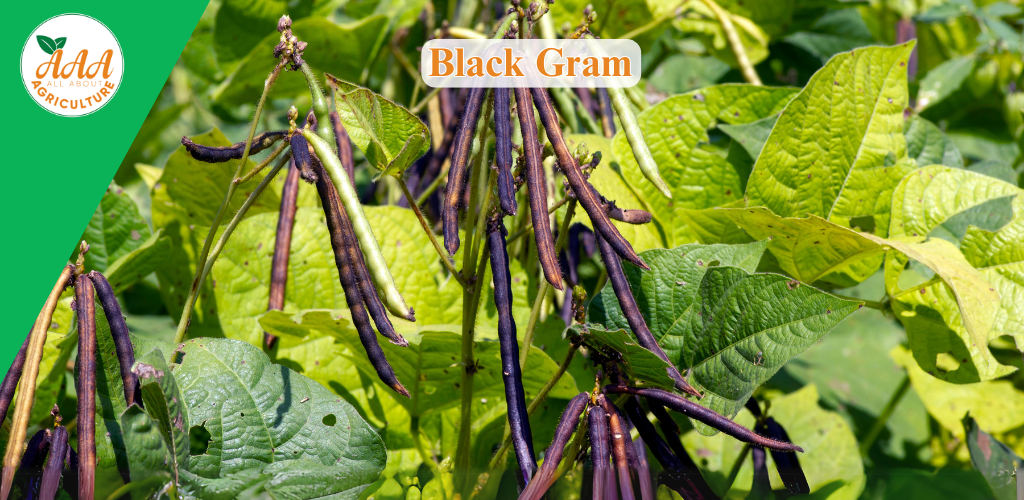
Understanding About Crop
Nutritional Value:
- Black Gram is rich in protein, fiber, vitamins like B-complex, and minerals such as iron and potassium.
- It is low in fat and an excellent source of energy, making it a staple in many diets to support muscle and overall health.
- The nutrient-dense profile makes it ideal for vegetarians and those needing high-energy food options.
Dietary Diversity:
- It is commonly used in dals, soups, snacks, and fermented foods, enhancing meal variety.
- The pulse is easily digestible and incorporated into diverse cuisines, supporting nutritional security.
- Black Gram’s versatility helps households maintain balanced diets by complementing cereals.
Economic Importance:
- Cultivation provides steady income for small and marginal farmers due to stable demand locally and internationally.
- The crop has high market value both as whole pulses and processed dal, supporting rural economies.
- On All about agriculture, farmers get tips to increase yields and market strategies for better profits.
Crop Rotation:
- As a legume, Black Gram fixes nitrogen, improving soil fertility for following crops and reducing fertiliser costs.
- Rotating with cereals or other non-leguminous crops breaks pest and disease cycles, promoting sustainable farming.
- Rotation practices boost soil microbiology and overall farm productivity.
Climate Resilience:
- Black Gram thrives in warm, humid climates with temperatures between 25°C and 35°C.
- It tolerates moderate drought and adapts to a variety of soil types, enhancing resilience to climate variability.
- The crop’s growth fits well in both Kharif and Rabi seasons with flexible sowing windows.
Health Benefits:
- Regular consumption helps regulate blood sugar, improves digestion, and supports heart health due to fiber and antioxidants.
- It is gluten-free, safe for people with celiac disease or gluten intolerance.
- The pulse strengthens immunity and contributes to balanced dietary needs.
Key Features
Climate and Soil Requirements
- Black Gram prefers warm, humid climates with temperatures ranging from 25°C to 35°C for optimum growth.
- It requires well-drained, loamy to sandy loam soils with a pH between 6.0 and 7.5, rich in organic matter.
- Avoid waterlogged, alkaline, or saline soils, as poor drainage can cause root diseases and stunt growth.
- Soil testing before planting, recommended by All about agriculture, helps adjust pH using lime or sulfur for optimal conditions.
- Proper site selection ensures healthy roots and reduces disease vulnerability.
Land Preparation
- Plough the field 2-3 times to create a fine tilth for good seed-to-soil contact and aeration.
- Clear the field of weeds, stones, and previous crop residues to reduce pests and diseases.
- Incorporate 3-5 tons/ha of well-rotted farmyard manure or compost 3-4 weeks before sowing to improve soil fertility and moisture retention.
- Level the land carefully to ensure uniform irrigation and reduce waterlogging risks.
- Timely land preparation enhances seedling establishment and improves overall crop vigor.
High-Yielding and Hybrid Seed Selection
- Use certified, disease-free Black Gram seeds from trusted suppliers to ensure better germination and crop uniformity.
- Popular varieties include Pant U-19, TAU-1, Sujata, and Krishna, selected based on local climate and soil conditions.
- Hybrid seeds offer better yield potential and pest resistance; renew seed stocks every 2-3 seasons for vigor.
- Seed uniformity and size consistency help achieve even growth and reduce cultivation issues.
- Regularly update seed varieties following advice from All about agriculture for improved outcomes.
Seed Treatment
- Treat seeds with fungicides like Thiram or Carbendazim (2-3 g/kg seed) to protect against soil-borne diseases such as root rot and wilting.
- Inoculate seeds with Rhizobium to enhance nitrogen fixation and boost early plant vigor.
- Soak seeds overnight to improve germination rates prior to sowing.
- Dry treated seeds in shade before planting to maintain the protective coating effectiveness.
- Proper seed treatment reduces dependency on chemical sprays and supports healthy crop establishment.
Sowing and Planting Methods
- Sow Black Gram seeds at 3-5 cm depth in well-prepared soil to ensure quick germination and robust root growth.
- Maintain a spacing of 30-45 cm between rows and 10-15 cm between plants for optimal air circulation and light penetration.
- Use seed drills or line sowing methods for uniform distribution; broadcasting is less efficient and can lead to uneven stands.
- Ideal sowing period is mid-June to mid-July in Kharif and February to April in Rabi depending on region.
- Proper seed placement and timely sowing increase yield potential and crop health.
Nutrient and Fertilizer Management
- Incorporate 3-5 tons/ha of organic manure before sowing to enhance soil fertility and microbial activity.
- Apply basal doses of phosphorus (20-40 kg P2O5/ha) and potassium (15-30 kg K2O/ha) based on soil tests; nitrogen application is minimal due to fixation.
- Foliar spray of micronutrients like zinc or boron may be necessary in deficient soils for better flowering and pod filling.
- Balanced fertilization guided by soil analysis and All about agriculture recommendations ensures optimal growth and yield.
- Avoid excess nitrogen which can lead to excessive vegetative growth at the cost of pods.
Irrigation and Water Management
- Black Gram requires moderate and well-timed irrigation, especially critical during flowering and pod development stages.
- Avoid over-irrigation as waterlogging can cause root rot and fungal diseases.
- Drip or sprinkler irrigation methods are preferred for efficient water use and uniform moisture distribution.
- Monitor soil moisture regularly and irrigate only when necessary to prevent stress and maximize water use efficiency.
- Follow weather updates and irrigation guides from All about agriculture to optimize water scheduling.
Intercultural Operations
- Conduct timely hand weeding 2-3 times during early crop growth to reduce competition for nutrients and light.
- Hoeing loosens soil, improves aeration, and supports stronger root systems.
- Use selective herbicides judiciously where weed pressure is heavy and mechanical weeding is insufficient.
- Remove and dispose of crop residues properly to reduce pest habitats and disease pressure.
- Consistent intercultural care helps maintain healthy growth and increases productivity.
Pest Management
- Common pests in Black Gram include aphids, pod borers, whiteflies, and thrips that damage pods and foliage.
- Regular scouting and early detection allow for timely intervention.
- Integrated Pest Management (IPM) combining biological controls, neem oil sprays, and resistant varieties helps reduce chemical pesticide use.
- Rotate pesticides to prevent resistance development and protect beneficial insects.
- Follow All about agriculture’s IPM guidelines to sustainably manage pests.
Disease Management
- Diseases such as powdery mildew, root rot, and bacterial blight lower yield and quality in Black Gram crops.
- Use disease-resistant varieties and treated seeds to minimize infection risks.
- Maintain field hygiene by removing infected plants and debris to prevent disease spread.
- Fungicide applications should be based on disease scouting and economic thresholds.
- Proper disease management ensures sustainable production and reduces losses.
Harvesting and Post-Harvest Management
- Harvest Black Gram when pods turn yellowish-brown and seeds harden, usually 75–90 days after sowing.
- Cut plants carefully or use combine harvesters to minimize grain loss.
- Sun-dry harvested pods to reduce moisture to 12-14% for safe storage.
- Store grains in clean, dry, and pest-free conditions in airtight containers or granaries.
- Market timing, storage, and quality control tips from All about agriculture help farmers maximize profits.
Other Important Points
- Black Gram improves soil nitrogen for future crops, reducing fertilizer inputs and supporting sustainable farming.
- It fits well into mixed cropping and multiple cropping systems, boosting farm productivity.
- Farmers can explore value addition and market linkages to increase income.
- For updated cultivation advice, crop insurance, and extension services, regularly review All about agriculture.
Do’s
- Use certified, treated seeds for best germination and disease control.
- Prepare land properly with manure and drainage before sowing.
- Monitor crops regularly for pests and diseases and act early.
- Rotate crops with cereals or other non-legumes to maintain soil health.
Don'ts
- Don’t sow in waterlogged or heavy saline soils.
- Don’t over-irrigate or let fields stay waterlogged.
- Don’t use untreated or old seeds that decrease yield.
- Don’t delay harvesting; mature pods shatter easily causing losses.
Frequently Asked Questions
How can organic biopesticides help in managing black gram pests?
Organic biopesticides like neem oil, cow urine, and other indigenous extracts reduce aphids, whiteflies, and thrips naturally. They lower chemical use, protect beneficial insects, and improve crop health. Regular application during vegetative, flowering, and grain-filling stages maximizes pest control organically.
What are the benefits of early sowing for black gram yield?
Early sowing helps black gram avoid peak pest infestation and high temperature stress during flowering. It improves nodulation and pod setting, leading to higher yields. Following local climate and rainfall patterns ensures the best sowing window for successful crops.
How does deep summer ploughing reduce black gram pest load?
Ploughing deeply during summer exposes and kills dormant pupae and larvae in soil, reducing pest populations like pod borers. This practice breaks pest life cycles naturally and prepares the field for a healthier crop, aligning with organic farming methods.
What role does crop rotation play in sustaining black gram soil health?
Rotating black gram with cereals and other non-leguminous crops breaks pest and disease cycles, minimizes soil nutrient depletion, and enhances soil microbiology. This leads to balanced fertility, reduced pesticide use, and better overall productivity.
How can farmers use natural pest repellents in black gram farming?
Applying neem seed kernel extract, garlic paste, or tobacco powder around crops deters pests by disrupting feeding and egg-laying behavior. These repellents are eco-friendly and help reduce chemical pesticide dependence, supporting sustainable farming.
What are effective storage practices to prevent black gram seed deterioration?
Store fully dried seeds below 12% moisture in airtight, clean containers away from sunlight and moisture. Use natural repellents like dried neem leaves and regularly check for insect activity to preserve seed viability for the next planting.
How important is field sanitation for black gram pest and disease control?
Regular removal of weeds, crop residues, and infected plants reduces habitats for pests and pathogens. Clean fields help interrupt disease cycles, lower pesticide application needs, and improve pest management efficacy year after year.
Can intercropping improve black gram productivity?
Yes, intercropping black gram with maize, sorghum, or vegetables helps suppress weeds, reduces pest pressure, and improves resource utilization. It also increases biodiversity on the farm, supporting beneficial insects and enhancing overall yield.
How do biofertilizers support black gram growth and yield?
Biofertilizers containing Rhizobium and other beneficial microbes fix atmospheric nitrogen, increasing soil fertility and promoting root development. Their use reduces chemical fertilizer needs and encourages sustainable black gram cultivation.
What weather conditions favor black gram flowering and pod development?
Moderate temperatures (25-30°C) with low humidity during flowering reduce disease risk and encourage good pod sets. Heavy rains or extreme heat during these stages can cause flower drop or fungal infections, negatively impacting yield.
How can farmers monitor and forecast pest outbreaks in black gram fields?
Regular weekly field scouting, yellow sticky traps, and pheromone traps help detect early pest presence. Keeping records and responding quickly at threshold levels prevent major crop damage and reduce chemical use.
What government schemes or support can black gram farmers access?
Farmers can benefit from subsidies on certified seeds, biopesticides, and irrigation equipment. Agricultural departments and farmer producer organizations provide training, credit facilities, and market information to support black gram cultivation.