Carrot
Carrot
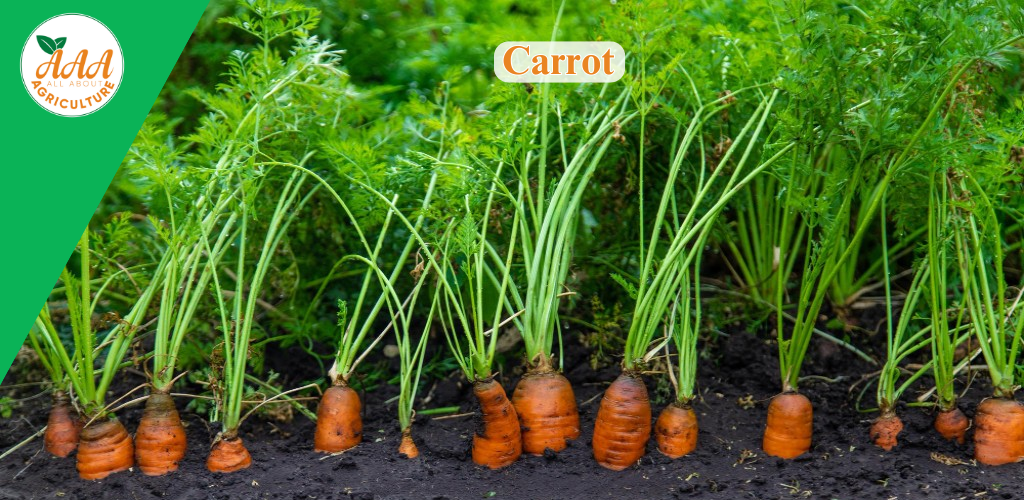
Understanding About Crop
Nutritional Value:
- Carrots are rich in beta-carotene (vitamin A precursor), fiber, vitamins C, K, and B6.
- They provide antioxidants like lutein and zeaxanthin supporting eye health.
- Low in calories but high in dietary fiber aiding digestion and maintaining healthy cholesterol levels.
- Good source of potassium and antioxidants which support heart health.
- Consume raw or cooked, offering varying bioavailability of nutrients.
- Contains vitamins and minerals that aid immune function and skin health.
- Carrots support enhanced cognitive function and may reduce cancer risks.
Dietary Diversity:
- Eaten raw, cooked, juiced, or added to salads, soups, stews, and baked dishes.
- Carrot juice is popular for detox and health drinks.
- Carrot powder is used in baby foods and nutritional supplements.
- Different varieties include orange, purple, white, and yellow types with varying taste profiles.
- Carrot greens are also edible and used in some cultures.
- Provides crisp, sweet flavor that enhances meal variety.
- Available year-round in local and global markets.
Economic Importance:
- Carrots are among important commercial root crops in many countries.
- Generate income for smallholder farmers and contribute to vegetable markets.
- Processed into frozen, canned, or juice products, the crop supports agro-industries.
- All about agriculture shares market reports, best practices, and variety guides to enhance farmer earnings.
- Increasing demand in health-conscious markets drives carrot production.
- Supports rural employment across value chains.
- Diversification with carrots reduces farming risk and increases resilience.
Crop Rotation:
- Rotate carrots with cereals, legumes, or brassicas to mitigate soil-borne diseases like carrot fly and root knot nematodes.
- Rotation breaks pest cycles, improves soil structure, and prevents nutrient depletion.
- Incorporate legumes for nitrogen fixation improving soil fertility.
- Crop rotation supports sustainable soil health and microbial diversity.
- Maintains soil organic matter and reduces chemical inputs.
- Diverse crop plans increase farm productivity and profitability.
- Crop rotation is essential for integrated pest and disease management.
Climate Resilience:
- Carrots prefer cool to moderate temperatures of 16–24 °C; high heat reduces quality and yield.
- Optimal rainfall is 600–800 mm distributed evenly, with irrigation during dry periods.
- Sensitive to frost during early growth stages but mature roots tolerate moderate cold.
- Mulching helps regulate soil temperature and moisture fluctuations.
- Choose heat-tolerant varieties for warmer regions.
- Proper water management reduces stress during critical root development stages.
- Climate-adapted practices sustain yield under changing weather conditions.
Health Benefits:
- Carrots support vision health due to high vitamin A content.
- Antioxidants and fiber help reduce cholesterol and improve heart health.
- Contribute to immune support and skin maintenance.
- Aid digestion and weight management with low calories and high fiber.
- Phytochemicals may reduce risk of some cancers.
- Enhance cognitive function and reduce inflammation.
- Excessive raw carrot intake rarely causes allergic reactions but with possible mild digestive issues.
Key Features
Climate and Soil Requirements
- Carrots grow best in cool climates with 16–24°C temperature ranges.
- Require even rainfall distribution or supplemental irrigation totaling 600–800 mm annually.
- Grow well in loose, deep, well-drained sandy loam or loamy soils with pH of 6.0–7.0.
- Avoid heavy clay or waterlogged soil to prevent root deformation and rot.
- Well-aerated soil promotes smooth root development.
- Adequate sunlight ensures healthy plant growth and sugar accumulation in roots.
- Early morning temperature drop benefits early crop development.
- Soil organic matter improves moisture retention and nutrient supply.
- Minimal wind and frost reduce stress and crop losses.
Land Preparation
- Deep plough or rototill soil to 20–30 cm to loosen and aerate soil for root penetration.
- Remove stones, clods, and debris to allow straight root growth.
- Incorporate organic matter such as compost or farmyard manure (10–15 tons/ha).
- Level and fine-till seedbeds to ensure uniform seed germination and moisture retention.
- Avoid prior cropping with root or tuber crops to reduce nematode risk.
- Mulch beds to conserve moisture and suppress weeds.
- Maintain soil pH between 6 and 7 with liming if acidic.
- Prepare raised beds or ridges in heavy soil for drainage.
- Implement land sanitation to minimize pests and diseases before planting.
High-Yielding and Hybrid Seed Selection
- Use certified high-quality seeds or hybrid varieties adapted to local growing conditions.
- Select seeds with high germination rates (>90%) and uniform size for even crop development.
- Popular varieties include Nantes, Kuroda, and Chantenay, each with distinct root shapes and sizes.
- Replace saved seeds periodically to maintain vigor and disease resistance.
- Purchase seeds from reputable suppliers or government sources.
- Conduct germination tests ahead of sowing.
- Store seeds in cool, dry places to preserve viability.
- Trial new varieties on small plots before scaling up planting.
- Adjust seed types seasonally for best adaptation.
Seed Treatment
- Treat seeds with fungicides like Captan or Thiram to protect against damping-off and fungal infections.
- Pre-soak or priming seeds improves germination speed and uniformity.
- Use biocontrol agents in nursery beds for eco-friendly disease suppression.
- Avoid excessive seed moisture after treatment to prevent fungal growth.
- Maintain nursery hygiene and prevent overcrowding to reduce disease spread.
- Apply insecticides if seedling pests are prevalent.
- Use personal protective equipment while handling chemicals.
- Treat seeds shortly before sowing for maximum effectiveness.
- Monitor nursery seedlings for early disease symptoms.
Sowing and Planting Methods
- Sow seeds directly in the field or raise seedlings in nursery beds 4–5 weeks before transplanting.
- Sow seeds 1–2 cm deep on well-prepared seedbeds with adequate spacing (5–10 cm between plants).
- Harden seedlings before transplanting by reducing watering to induce stress tolerance.
- Transplant seedlings when 15–20 cm tall for better establishment.
- Maintain row spacing of 20–30 cm to avoid overcrowding and improve airflow.
- Irrigate soon after sowing or transplanting to reduce stress.
- Use seed drills or manual dibbling for uniform planting depth.
- Fill gaps within 7–10 days to maintain population density.
- Mulch beds to retain moisture and control weeds during early growth.
Nutrient and Fertilizer Management
- Apply farmyard manure or compost (10–15 tons/ha) before sowing for organic matter enrichment.
- Balanced NPK fertilization with recommended doses, e.g., 90 kg N, 45 kg P2O5, and 90 kg K2O per hectare.
- Split nitrogen applications at early vegetative, mid-growth, and pre-harvest stages.
- Foliar feeding of micronutrients (boron, zinc) can correct deficiencies for root development.
- Avoid excessive nitrogen to prevent excessive foliage at expense of root growth.
- Perform soil testing for precise nutrient management.
- Employ organic fertilizers to maintain long-term soil health.
- Adjust fertilization rates based on crop response.
- Timely nutrient application improves yield and quality.
Irrigation and Water Management
- Carrots require frequent light irrigation to keep soil moist but not waterlogged, especially during seedling and root enlargement phases.
- Drip or sprinkler irrigation enhances water use efficiency and reduces disease.
- Avoid water stress during critical stages, as drought causes root splitting and poor quality.
- Mulching lowers evaporation, holding moisture around roots.
- Irrigate early morning or late evening to minimize loss.
- Adjust irrigation frequency with rainfall and temperature fluctuations.
- Avoid standing water to prevent root diseases.
- Use soil moisture indicators to schedule watering.
- Efficient water management improves root shape and sweetness.
Intercultural Operations
- Perform regular hand weeding or shallow mechanical weed control to reduce competition.
- Thin seedlings to proper spacing after germination for optimal root development.
- Hill-up soil gently around carrot roots to support growth in sandy soils.
- Mulch seedbeds to suppress weeds and conserve moisture.
- Remove diseased or damaged plants promptly to limit spread.
- Use cover crops in off-season to improve soil fertility.
- Sanitize tools and prevent contamination.
- Monitor crops regularly and adjust care.
- Maintain farm hygiene to prevent pest and disease buildup.
Pest Management
- Common pests include carrot fly, aphids, leaf miners, and nematodes causing root damage or growth reduction.
- Use crop rotation and good farm hygiene to reduce pest populations.
- Deploy physical barriers such as fine mesh netting against carrot fly.
- Use biopesticides and natural predators like parasitic wasps and ladybirds for control.
- Monitor pest incidence and apply chemicals only when necessary following thresholds.
- Avoid broad-spectrum pesticides that kill beneficial organisms.
- Remove infested crop residues after harvest.
- Rotate chemical classes to prevent resistance.
- Train farmers on pest identification and integrated management practices.
Disease Management
- Major diseases include Alternaria leaf blight, powdery mildew, and root rot affecting plant vigor and yield.
- Use disease-resistant varieties when available.
- Apply fungicides preventively or at first detection.
- Maintain proper plant spacing to improve airflow and reduce humidity.
- Avoid overhead irrigation that promotes fungal infections.
- Remove and destroy infected leaves and debris.
- Practice crop rotation to reduce pathogen carryover.
- Sterilize tools and keep nursery areas clean.
- Keep records of disease outbreaks for improved management.
Harvesting and Post-Harvest Management
- Harvest carrots when roots reach desired size and color but before becoming woody.
- Gently lift roots to avoid cuts or bruises that reduce shelf life.
- Cure roots by drying in shade to toughen skin and reduce moisture loss.
- Store in cool (0–4°C), humid (90–95%) conditions to maintain freshness.
- Grade carrots based on size, color, and quality for market preferences.
- Remove tops to reduce moisture loss during storage.
- Use clean packaging materials to prevent contamination.
- Process surplus carrots into juice, powder, or frozen products.
- Timely marketing reduces losses and improves prices.
Other Important Points
- Carrots improve dietary health by providing essential nutrients and antioxidants.
- Excessive raw carrot consumption rarely causes digestive discomfort; moderation advised.
- Compost carrot residues to return nutrients to soil for next crops.
- Stay updated on new varieties, pest alerts, and market info through All about agriculture.
Do’s
-
Use certified seeds and treat them properly before sowing.
-
Maintain balanced fertilization based on soil tests.
-
Ensure regular and adequate irrigation.
-
Monitor and control pests and diseases early.
Don'ts
-
Don’t sow seeds too deep or overcrowd plants.
-
Don’t over-irrigate or let soil compact.
-
Don’t overuse chemical pesticides.
-
Don’t delay harvesting to avoid root quality loss.
How can farmers prevent carrot root splitting?
Root splitting is caused by irregular watering or sudden heavy rains. Maintaining consistent soil moisture and mulching reduces this problem, ensuring market-quality roots.
What are the best organic fertilizers for carrot cultivation?
Compost, vermicompost, and well-rotted manure improve soil fertility naturally, enhance microbial activity, and promote healthy root development.
How does seed priming improve carrot germination?
Soaking seeds before sowing softens the seed coat, speeds germination, and ensures uniform seedling emergence for better crop establishment.
What are common natural enemies of carrot pests?
Ladybugs, parasitic wasps, and predatory mites help control aphids and carrot flies, reducing the need for chemical pesticides.
How can farmers identify and control carrot leaf blight?
Look for brown spots with yellow halos on leaves; practice crop rotation, apply fungicides early, and maintain good field sanitation.
Why is soil texture important for carrot growth?
Loose, sandy loam soils favor straight, smooth root development, while heavy clays or compacted soils cause deformities and poor growth.
How does crop spacing affect carrot yield?
Proper spacing reduces competition for nutrients and light, improves airflow, and results in uniform, larger roots.
What is the role of drip irrigation in carrot farming?
Drip irrigation conserves water, maintains consistent soil moisture, reduces weed growth, and lowers fungal disease incidence.
How can carrot farmers reduce post-harvest losses?
Careful harvesting to prevent root damage, prompt cooling, and proper storage in cool, humid conditions preserve carrot quality and shelf life.
Can carrots be grown in containers or small gardens?
Yes, carrots grow well in containers or raised beds with deep, loose soil and adequate watering, ideal for small-scale or urban gardeners.
How does temperature affect carrot seed germination and growth?
Optimal temperatures for germination are 15–20°C; extreme heat or cold slows growth and reduces root quality.
Where can carrot growers find updated market prices and farming techniques?
Reliable, up-to-date information is available on our website All about agriculture, assisting farmers with strategic planning and management.