Castor Seed
Castor Seed
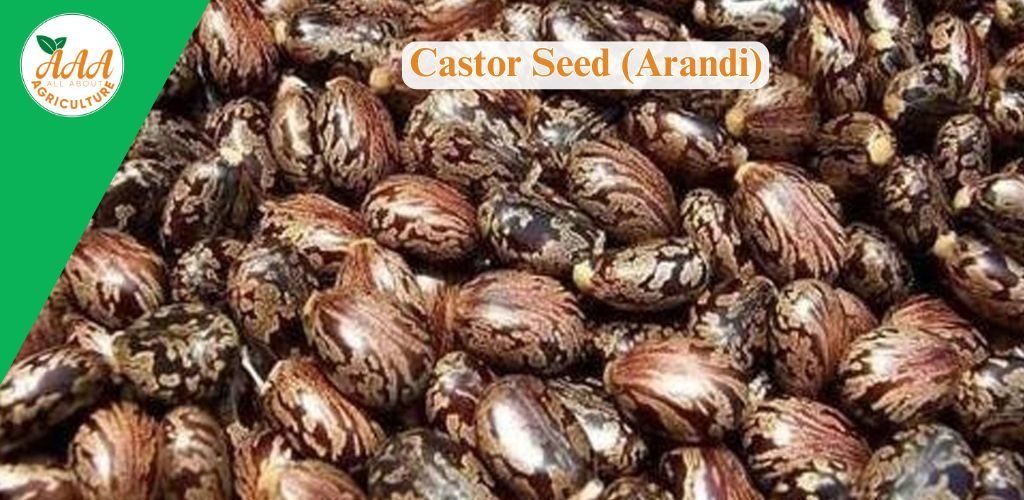
Understanding about Crop
Nutritional Value:
- Castor Seed (Arandi) oil contains ricinoleic acid, a unique fatty acid with medicinal benefits, and also provides calories and essential fatty acids important for body metabolism.
Dietary Diversity:
- Although primarily grown for oil, castor seed derivatives find niche uses in cosmetics and traditional health remedies, adding value beyond culinary use.
Economic Importance:
- Castor Seed (Arandi) is an important commercial oilseed crop with broad industrial applications like lubricants, pharmaceuticals, and biodiesel, offering lucrative income to farmers.
Crop Rotation:
- Including Castor Seed (Arandi) in crop rotations improves soil organic matter and helps break pest life cycles, benefiting overall soil fertility.
Climate Resilience:
- Castor Seed (Arandi) thrives in hot, dry regions with annual rainfall of 500-800 mm, tolerates drought well but is sensitive to frost.
Health Benefits and Side Effects:
- Castor Oil derived from Castor Seed (Arandi) helps relieve constipation and inflammation but seed ingestion is toxic; caution is essential.
Other Important Points:
- Castor Seed (Arandi) plant residues are useful as green manure and fodder. More information and farming tips are on All about agriculture.
Key Features of Castor Seed
Climate and Soil Requirements
- Grows well in temperatures ranging from 20–35°C but sensitive to frost.
- Requires moderate rainfall of 500-800 mm, especially during early growth.
- Prefers well-drained sandy loam soils with pH 6.0–7.0.
- Tolerates drought conditions but poor drainage can cause root rot.
- Adapted to cultivation in arid and semi-arid regions.
- Soil organic matter improves crop health and yield.
- Heavy clay soils with waterlogging are unsuitable.
- Raised beds or ridges recommended in heavy rainfall areas.
- Regular soil testing facilitates nutrient management.
Land Preparation
- Requires 3-4 deep ploughings to loosen soil up to 40 cm depth.
- Remove all weeds and plant residues for a clean seedbed.
- Incorporate 10-12 tons/ha of well-decomposed farmyard manure.
- Level land for uniform sowing and irrigation.
- Create ridges in heavy rainfall areas for drainage.
- Avoid soil compaction by limited use of heavy machinery.
- Maintain adequate moisture in soil before sowing seeds.
- Sanitize land to reduce pests and diseases.
- Early preparation ensures timely sowing.
High-Yielding and Hybrid Seed Selection
- Certified hybrid seeds like GCH-7 and TMV-5 offer high yields and disease resistance.
- Choose seeds suited to local soil and climatic conditions.
- Avoid stale or damaged seeds to maintain germination rates.
- Store seeds in cool, dry, and pest-free conditions.
- Test seed performance on a small plot before full-scale cultivation.
- Preference given to hybrids with improved oil content.
- Rotate seed varieties every few years to prevent genetic erosion.
- Purchase seeds from trusted certified suppliers.
- Seed purity impacts crop uniformity and yield.
Seed Treatment
- Treat seeds with Carbendazim (2 g/kg) fungicide to prevent fungal infections.
- Seed priming with potassium chloride (1%) enhances germination under rainfed conditions.
- Dry treated seeds under shade to protect seed viability.
- Use Rhizobium inoculants to boost soil nitrogen fixation.
- Apply biofertilizers for improved nutrient uptake.
- Follow safety and application guidelines for chemical treatments.
- Store treated seeds properly before sowing.
- Timely seed treatment enhances uniform crop establishment.
- Avoid soaking seeds for too long, preventing rotting.
Sowing and Planting Methods
- Sow seeds 4–5 cm deep in rows spaced 90–120 cm apart.
- Keep spacing of 40–60 cm between plants in the row.
- Ideal sowing period is June to September, coinciding with monsoon.
- Use seed drills or hand dibbling methods based on field size.
- Soil should be moist at sowing for rapid germination.
- Sow seeds 7 days before monsoon in rainfed areas for better establishment.
- Gap filling after 15 days improves plant population.
- Uniform sowing depth ensures even germination and growth.
- Avoid deep sowing which delays emergence.
Nutrient and Fertilizer Management
- Apply 30-50 kg nitrogen, 20-40 kg phosphorus, and 20-30 kg potassium per hectare.
- Use 10-12 tons/ha well-decomposed organic manure or compost.
- Avoid excess nitrogen to prevent excessive vegetative growth.
- Foliar sprays of micronutrients like zinc and boron may increase yield.
- Balanced fertilizer application improves oil content and seed size.
- Use soil tests to tailor fertilizer application precisely.
- Crop residues should be incorporated to maintain soil health.
- Apply fertilizer in split doses for efficient nutrient uptake.
- Organic amendments enhance soil microbial activity.
Irrigation and Water Management
- Rainfed crop; irrigate during drought in early growth and flowering to enhance pods.
- Avoid waterlogging; poor drainage reduces yield.
- Drip irrigation is suitable where water is scarce.
- Mulching reduces evaporation and conserves moisture.
- Stop irrigation 15 days before harvest for pod drying.
- Schedule irrigation based on soil moisture and weather.
- Harvest timing affected by irrigation practices.
- Efficient water use promotes healthy seed and oil production.
- Water management affects crop resistance to stress.
Intercultural Operations
- Weed control is important, especially in early stages to reduce competition.
- Earthing-up supports plant stability and nutrient uptake.
- Remove unhealthy plants to reduce pest/disease spread.
- Crop residue mulching conserves moisture and restricts weed growth.
- Practice crop rotation with cereals and pulses.
- Use mechanical or manual weeding as applicable.
- Maintain field sanitation to limit pest incidence.
- Monitor crops regularly for early pest and disease detection.
- Use foliar feeding if required to support growth between irrigations.
Pest Management
- Major pests include aphids, leafhoppers, and caterpillars.
- Integrated pest management (IPM) practices recommended.
- Use bio-pesticides and neem oil as eco-friendly options.
- Handpick and remove infested plants when possible.
- Chemical pesticides recommended only when thresholds exceed economic limits.
- Remove crop residues to reduce pest habitats.
- Encourage natural predators like ladybugs.
- Crop rotation minimizes pest colonization.
- Store harvested seeds properly to avoid storage pests.
Disease Management
- Common diseases: wilt, leaf spot, and powdery mildew.
- Resistant varieties and seed treatment help control diseases.
- Maintain recommended plant spacing for airflow.
- Uproot and destroy diseased plants promptly.
- Avoid overhead irrigation to reduce fungal infection.
- Rotate with non-host crops to break disease cycles.
- Fungicide spray as per expert recommendation during disease outbreaks.
- Proper field and equipment sanitation to prevent disease transmission.
- Monitor fields frequently for early disease symptoms.
Harvesting and Post-Harvest Management
- Harvest Castor Seed (Arandi) when pods turn brown and dry, usually 90–120 days after sowing.
- Manual or mechanical harvesting is possible; avoid seed damage.
- Dry pods sufficiently in sunlight before threshing.
- Thresh seeds carefully to maintain quality.
- Store dried seeds in moisture-proof and pest-free containers.
- Regular inspection and fumigation of stored seeds prevent spoilage.
- Proper seed cleaning and grading before sale improve market value.
- Timely processing of seeds maximizes oil quality.
- Maintain proper hygiene in storage to extend shelf life.
Other Important Points
- Castor Seed (Arandi) residues improve soil organic content.
- Castor oil is important for lubricant, pharmaceutical, and biofuel industries.
- The crop supports sustainable and profitable dryland farming.
- Traditional uses of Castor oil include medicinal and cosmetic applications.
- Soaking Castor seeds before processing enhances oil extraction.
- Follow guidelines on cultivation, harvesting, and marketing on All about agriculture for success.
Do’s
- Use certified, treated Castor Seed (Arandi) seeds.
- Maintain correct spacing and sowing depth.
- Timely weed and pest control.
- Balanced fertilization as per soil tests.
- Proper irrigation avoids waterlogging.
- Apply mulch and maintain good soil cover.
- Harvest at correct pod maturity.
- Proper post-harvest seed handling and storage.
- Follow crop rotation and sanitation.
Don'ts
- Use old or untreated seeds.
- Neglect pest or disease symptoms.
- Over-irrigate causing waterlogging.
- Continuous monocropping of Castor (Arandi).
- Burn crop residues; compost instead.
- Overapply nitrogen fertilizers.
- Delay harvesting leading to pod shattering.
- Store seeds in humid places.
- Ignore soil testing recommendations.
What are the primary industrial applications of Castor Seed (Arandi) oil?
Castor Seed (Arandi) oil is widely used in lubricants, paints, plastics, pharmaceuticals, and cosmetics due to its unique fatty acid composition, making it important beyond food uses.
How does Castor Seed (Arandi) contribute to sustainable farming systems?
By growing Castor Seed (Arandi), farmers improve soil organic content and break pest cycles, helping maintain soil health and reducing chemical inputs in rotations.
Can Castor Seed (Arandi) be grown in saline soils?
Castor Seed (Arandi) shows moderate tolerance to salinity, allowing cultivation on slightly saline soils, providing farming options in marginal lands.
What are natural pest management practices for Castor Seed (Arandi)?
Use of neem-based biopesticides, crop rotation, and beneficial insects helps control major pests on Castor Seed (Arandi) organically and sustainably.
What precautions should be taken while handling Castor Seed (Arandi) seeds?
Castor Seed (Arandi) seeds contain toxins; avoid direct ingestion and handle carefully to prevent skin irritation or poisoning risks.
How does Castor Seed (Arandi) farming support rural livelihoods?
The crop offers income through both seed oil sales and byproduct utilization, providing diverse economic opportunities for smallholder farmers in semi-arid regions.
What are common diseases affecting Castor Seed (Arandi) and their control?
Wilt, root rot, and leaf spot affect Castor Seed (Arandi); disease-resistant varieties and proper crop hygiene reduce these risks.
How important is timely harvesting in Castor Seed (Arandi) cultivation?
Harvesting Castor Seed (Arandi) at the right maturity avoids seed loss and ensures quality oil content, influencing market value and yield.
In what forms is Castor Seed (Arandi) oil marketed globally?
Castor Seed (Arandi) oil is available as refined, semi-refined, and cold-pressed oils for different industrial and cosmetic uses worldwide.
How can farmers improve yield quality of Castor Seed (Arandi)?
Use hybrid seeds, maintain proper spacing, timely irrigation, and integrated pest management to boost Castor Seed (Arandi) yield and quality.
What are the benefits of Castor Seed (Arandi) residues in agriculture?
Residues increase soil organic carbon when composted and serve as fodder, contributing to diversified farm income and sustainable soil management.
Where can updated cultivation practices and market prices for Castor Seed (Arandi) be found?
Farmers can access best cultivation methods, market rates, and government support schemes for Castor Seed (Arandi) on platforms like All about agriculture.