Cowpea
Cowpea
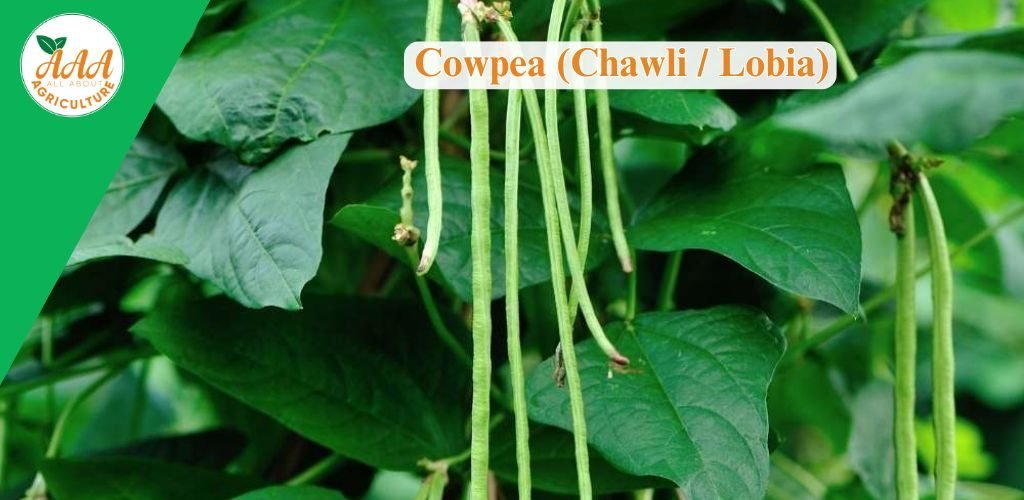
Understanding about Crop (Cowpea / Chawli / Lobia)
Nutritional Value:
- Cowpea (Chawli / Lobia) is a rich source of protein, complex carbohydrates, dietary fiber, and essential minerals like iron, potassium, and magnesium. It supplies energy and supports muscle growth, immunity, and overall health. Important for vegetarian diets, Cowpea offers a high-quality, plant-based protein that aids in body repair and maintenance. The presence of antioxidants and vitamins also contributes to disease prevention. For detailed nutritional info, learn more on All about agriculture.
Dietary Diversity:
- Cowpea (Chawli / Lobia) can be consumed in multiple forms – fresh pods, dried beans, flour, and sprouts – used in soups, curries, snacks, and salads. It enriches meal variety and provides essential nutrients in daily diets. Eating Cowpea alongside cereals enriches protein intake and helps in dietary balance. Its leaves are also edible and provide green vegetables, especially in rural meals.
Economic Importance:
- Cowpea is a valuable cash crop providing income through grain, fresh vegetable sales, and fodder. It supports smallholder farmers with quick returns due to its short growth cycle and drought tolerance. The crop also enhances soil fertility by fixing atmospheric nitrogen, reducing fertilizer costs for subsequent crops. Market demand for Cowpea remains stable, ensuring income assurance. For market trends and updates, All about agriculture offers timely advice.
Crop Rotation:
- Cowpea plays a critical role in crop rotation systems, restoring soil nitrogen and breaking pest cycles. Rotating Cowpea with cereals like maize or sorghum improves soil health and reduces reliance on synthetic inputs. Intercropping with crops like cotton utilizes land efficiently and increases farmer income. Crop rotation with Cowpea protects against soil degradation and boosts sustainable farming.
Climate Resilience:
- Cowpea thrives in warm, dry climates with moderate rainfall (400–700 mm), showing excellent drought tolerance. It adapts well to poor, sandy, or loamy soils and can withstand heat up to 30°C but is sensitive to frost. Its resilience against harsh weather makes it a reliable crop for arid and semi-arid regions. Choosing heat-hardy varieties improves climate adaptability.
Health Benefits and Side Effects:
- Cowpea (Chawli / Lobia) promotes digestion, controls blood sugar levels, and supports heart health due to fiber, antioxidants, and low fat. Beans support weight management and provide sustained energy release. However, some may experience bloating or gas from consumption; proper cooking or soaking reduces this. Moderation is advised to avoid digestive discomfort.
Other Important Points:
- Cowpea straw is a good fodder source post-harvest. Leftover biomass improves soil structure when composted. Its cultivation supports food and nutritional security in many regions. Learn detailed farming practices and benefits at All about agriculture.
Key Features of Cowpea (Chawli / Lobia)
Climate and Soil Requirements
- Cowpea grows best in temperatures between 25–35°C, with annual rainfall of 400–700 mm and frost-free periods.
- It prefers well-drained sandy loam to clay loam soils, pH ranging from 5.5 to 7.5, avoiding waterlogging.
- Soil rich in organic matter promotes healthy root and nodule development for nitrogen fixation.
- Cowpea tolerates moderately acidic to neutral soils; extremely alkaline or saline soils reduce yield.
- Avoid compacted soils and ensure adequate drainage to prevent root and stem rot.
- Conduct soil testing before sowing to adjust soil pH and nutrient levels for optimum growth.
- Well-prepared land with good aeration supports rapid germination and seedling establishment.
- In regions with heavy rainfall, raised beds or ridges help reduce water stagnation.
- Climate variability requires selecting varieties suited to local temperature and rainfall patterns.
Land Preparation
- Clear land from weeds, crop residues, and stones to provide a clean seedbed for Cowpea.
- Plough land 2-3 times to loosen the soil to a depth of 20-30 cm, improving aeration and root penetration.
- Harrow the field to break soil clods and level the surface for uniform planting depth.
- Mix well-decomposed organic matter or compost into soil to enrich nutrient content and moisture retention.
- Mark rows using stakes and string for organized sowing, ensuring proper spacing for crop growth.
- Avoid waterlogging by preparing furrows or ridges especially in areas prone to heavy rains.
- Ensure soil is moderately moist before planting Cowpea seeds to promote germination.
- Practice conservation tillage where possible to maintain soil structure and moisture.
- Use contour ploughing in sloped areas to reduce soil erosion and promote water retention.
High-Yielding and Hybrid Seed Selection
- Select certified Cowpea seeds from reliable sources to ensure high germination and disease resistance.
- Choose locally-adapted Cowpea varieties such as CBC 1, CBC 2, CBC 3, or IT18 known for high yields.
- Consider growth habits: bushy types for grain production, spreading types for fodder or dual purpose.
- Evaluate seed size, shape, and color uniformity for consistent crop performance.
- Use hybrid Cowpea seeds when available for improved vigor, disease resistance, and higher yields.
- Avoid old, damaged, or shriveled seeds to ensure successful field establishment.
- Test small seed lots to identify best-performing Cowpea types under local conditions.
- Maintain genetic diversity by occasionally introducing new varieties in crop rotations.
- Store seeds properly in cool, dry places to maintain viability until sowing.
Seed Treatment
- Treat Cowpea seeds with fungicides such as Thiram or Captan to control fungal diseases like damping-off.
- Use insecticidal seed treatments to prevent early-season insect pest damage.
- Apply Rhizobium inoculants specifically for Cowpea to enhance nitrogen fixation and plant growth.
- Solarize seeds by drying in the sun before treatment to improve effectiveness of fungicides.
- Avoid soaking seeds in water too long to prevent rotting; follow recommended treatment durations.
- Use biofertilizer treatments to boost soil microbial activity and improve nutrient uptake.
- Dry treated seeds under shade immediately after treatment to avoid heat damage.
- Use treated seeds promptly for best germination and disease protection.
- Follow safety instructions and use proper dosages to prevent seed damage or environmental harm.
Sowing and Planting Methods
- Sow Cowpea seeds at 4–7 cm depth using row spacing of 45 x 15 cm (bushy types) or 75 x 20 cm (spreading types).
- Planting is done from November to January in most regions, adjusting timing to avoid excessive rains during maturity.
- Use seed rates of 20–40 kg per hectare depending on crop type and sowing method.
- Employ direct row sowing or seed drilling for uniform germination and easy intercultural operations.
- Cover seeds lightly with soil and press gently to ensure good seed-to-soil contact.
- Water immediately after sowing to initiate germination, maintaining soil moisture in early stages.
- Avoid deep sowing to prevent seedling stress and patchy emergence.
- In intercropping systems, maintain wider spacing between rows for companion crops.
- Mechanical seeders may be used in large-scale cultivation for better efficiency.
Nutrient and Fertilizer Management
- Conduct soil tests before fertilization to determine nutrient deficiencies and tailor application rates.
- Cowpea fixes its own nitrogen through root nodules, reducing the need for nitrogenous fertilizers.
- Apply basal phosphorus and potassium fertilizers to support root and pod development.
- Incorporate well-decomposed farmyard manure or compost to enhance soil fertility and moisture retention.
- Avoid excessive nitrogen fertilization, which promotes vegetative growth over pod formation.
- Use micronutrient sprays (zinc, boron) if deficiency symptoms appear to improve yields.
- Practice balanced fertilization according to soil and crop needs for optimum health and productivity.
- Utilize organic amendments to sustain long-term soil quality and microbial activity.
- Monitor crop nutritional status during growth stages and adjust inputs accordingly.
Irrigation and Water Management
- Cowpea requires moderate water; irrigation is critical during flowering and pod set stages.
- Avoid waterlogging, which increases risk of root diseases and reduces Cowpea yield.
- Employ drip or furrow irrigation systems for efficient water use and uniform distribution.
- Monitor soil moisture regularly, irrigating when the top 5 cm of soil becomes dry.
- Adjust irrigation frequency based on seasonal rainfall and soil type to prevent stress or excess moisture.
- Mulching around plants helps conserve moisture and reduces irrigation needs.
- Stop irrigation 10–15 days before harvest to improve pod drying and maturity.
- Avoid late irrigation to prevent pod shattering and quality loss.
- Implement rainwater harvesting techniques where possible to support sustainable irrigation.
Intercultural Operations
- Weed Cowpea fields as soon as weeds appear and before canopy closure to reduce competition.
- Earthing-up increases soil aeration and supports stem strength against wind damage.
- Use mulching with crop residues to conserve moisture and suppress weeds.
- Fill gaps by replanting to maintain optimal plant density and maximize yield.
- Remove diseased or stunted plants to improve air circulation and reduce disease spread.
- Monitor fields weekly for pest or disease early warning signs.
- Practice timely intercultural operations for healthy crop growth and high productivity.
- Use manual or mechanical weeders depending on field size.
- Avoid excessive tillage, which can damage nodules and reduce nitrogen fixation.
Pest Management
- Common Cowpea pests include aphids, pod borers, whiteflies, thrips, and stink bugs.
- Use integrated pest management (IPM) practices such as crop rotation, resistant varieties, and natural predators.
- Employ yellow sticky traps to monitor and control flying pests.
- Apply neem oil and biopesticides as environmentally friendly pest control options.
- Remove and destroy infested plants to reduce pest populations.
- Maintain field sanitation to minimize pest breeding sites.
- Spray chemical insecticides only when pest levels exceed economic threshold.
- Regular scouting helps early pest detection and timely intervention.
- Avoid indiscriminate pesticide use to preserve beneficial insects.
Disease Management
- Major Cowpea diseases include powdery mildew, fusarium wilt, anthracnose, and viral mosaic.
- Use disease-resistant Cowpea varieties and practice seed treatment for disease control.
- Ensure proper spacing for airflow and reduce humidity that favors fungi.
- Uproot and burn infected plants to prevent spread.
- Rotate Cowpea with non-legume crops to break disease cycles.
- Avoid overhead irrigation to reduce leaf wetness and fungal infections.
- Apply fungicides only when necessary, following agronomic advice.
- Regularly clean tools and equipment to prevent contamination.
- Avoid planting Cowpea continuously on the same land.
Harvesting and Post-Harvest Management
- Harvest Cowpea when pods turn brown and dry, typically 90–130 days after sowing.
- Cut plants early in the morning to minimize pod shatter losses.
- Dry harvested plants in the sun for 2–3 days before threshing to ensure proper seed drying.
- Use clean threshing tools to maintain seed quality.
- Store Cowpea seeds in airtight containers to protect from pests and moisture.
- Regularly inspect stored seeds for spoilage or pest infestation.
- Clean storage facilities before storing new seeds.
- Avoid mixing old and new seeds to prevent quality degradation.
- Proper post-harvest handling enhances shelf life and market value.
Other Important Points
- Cowpea (Chawli / Lobia) leaves serve as nutritious fodder for livestock.
- The crop improves soil nitrogen, benefiting subsequent crops in rotations.
- Incorporating Cowpea in farming systems supports climate-resilient agriculture.
- Excessive consumption may cause flatulence; cooking well reduces discomfort.
- Cowpea-based products include flour, snacks, and instant mixes.
- Sustainable practices in Cowpea farming reduce environmental impact and improve farmer profitability.
- Detailed cultivation tips and market info are available on All about agriculture.
Do’s
- Use certified Cowpea (Chawli / Lobia) seeds for quality crops.
- Treat seeds with fungicide and Rhizobium inoculant before sowing.
- Ensure proper spacing and timely weeding.
- Monitor pests and diseases regularly and use control measures.
- Rotate crops to maintain soil health.
- Apply balanced fertilizers after soil testing.
- Practice proper irrigation scheduling avoiding waterlogging.
- Harvest at maturity for best yield and quality.
- Store dried Cowpea seeds in cool, pest-free places.
Don'ts
- Don’t use old, diseased seeds.
- Don’t over-irrigate; Cowpea dislikes waterlogged soil.
- Don’t neglect field sanitation; remove debris and infected plants.
- Don’t overuse chemical pesticides; follow recommended doses.
- Don’t plant Cowpea continuously on the same field.
- Don’t delay harvesting as pod shattering causes loss.
- Don’t skip soil testing before fertilizer application.
- Don’t ignore crop monitoring for early pest or disease signs.
- Don’t burn crop residues; compost for soil improvement.
Frequently Asked Questions
What are the common culinary uses of Cowpea (Chawli / Lobia)?
Cowpea (Chawli / Lobia) is used in curries, soups, salads, and snacks across different cuisines. It can be cooked fresh or dried, ground into flour, or sprouted for added nutrition and taste.
How does Cowpea (Chawli / Lobia) support soil health besides nitrogen fixation?
In addition to nitrogen fixation, Cowpea (Chawli / Lobia) contributes organic matter through leaf fall and residue decomposition, improving soil structure and fertility over time.
What are effective natural pest deterrents for Cowpea (Chawli / Lobia) farming?
Neem extracts, companion planting, and encouraging beneficial insects help reduce pest damage in Cowpea (Chawli / Lobia) without heavy pesticide use, supporting sustainable farming.
How is Cowpea (Chawli / Lobia) used as animal feed?
Cowpea (Chawli / Lobia) leaves and vines are nutritious fodder for livestock, rich in protein and digestible fiber, providing an excellent feed option during dry seasons.
What post-harvest storage tips help preserve Cowpea (Chawli / Lobia) grain quality?
Store Cowpea (Chawli / Lobia) grains in airtight containers, keep in cool, dry places, and use natural insect repellents like ash or neem leaves to prevent infestation.
Can Cowpea (Chawli / Lobia) be grown in small home gardens?
Yes, Cowpea (Chawli / Lobia) adapts well to container or small-space gardening and grows quickly, making it ideal for home cooks seeking fresh pulses and greens.
What traditional medicines use Cowpea (Chawli / Lobia) or its extracts?
Various parts of Cowpea (Chawli / Lobia) are used in folk remedies to treat digestive issues, inflammation, and skin conditions due to its anti-inflammatory and antioxidant properties.
How does Cowpea (Chawli / Lobia) contribute to food security in drought-prone areas?
Cowpea (Chawli / Lobia)’s drought tolerance and short growing season make it a reliable crop for vulnerable communities, ensuring a steady food supply under tough conditions.
What are the common traditional culinary pairings with Cowpea (Chawli / Lobia)?
Cowpea (Chawli / Lobia) pairs well with rice, millet, and wheat, often cooked with spices and vegetables, providing balanced meals with adequate protein and fiber.
Are there any health warnings or allergies associated with Cowpea (Chawli / Lobia)?
Some people may have mild allergic reactions or digestive discomfort like gas; cooking thoroughly and gradual introduction can reduce such effects when eating Cowpea (Chawli / Lobia).
How does Cowpea (Chawli / Lobia) cultivation impact rural livelihoods?
Growing Cowpea (Chawli / Lobia) supports smallholder farmers by providing income through grain and fodder sales and improving soil health, reducing input costs.
What innovations exist to improve Cowpea (Chawli / Lobia) yields and quality?
Modern breeding programs focus on pest-resistant, high-yield, and drought-tolerant Cowpea (Chawli / Lobia) varieties, while improved storage and processing enhance market opportunities.