Finger Millet
Finger Millet
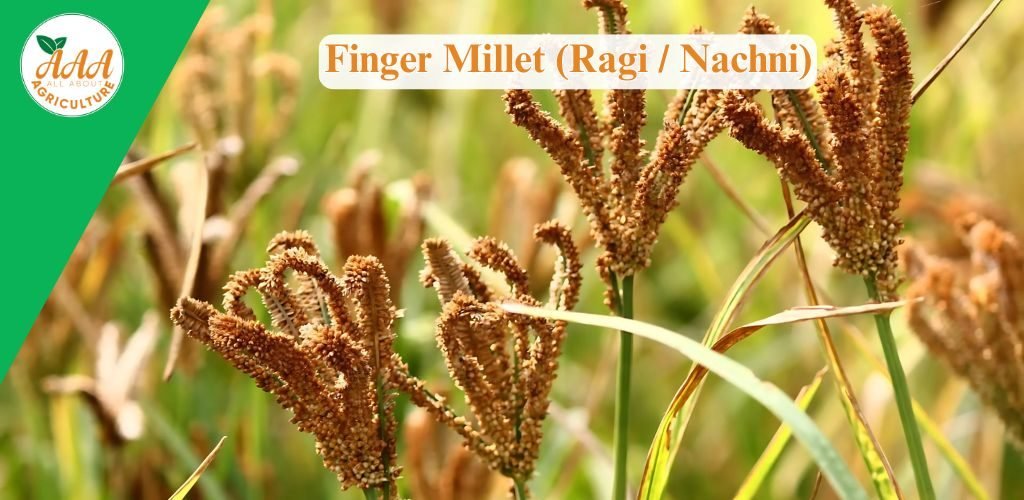

Understanding About Crop
Nutritional Value:
- Ragi is a powerhouse of calcium, iron, dietary fiber, and plant-based protein, making it excellent for bones, blood health, and energy.
- Low in fat and gluten-free, finger millet supplies slow-release carbs, helping manage diabetes and weight.
- Contains essential amino acids, antioxidants, and polyphenols that boost overall health and immunity.
- The grain offers more calcium than most cereals, supporting child and elderly nutrition.
- Regular consumption improves hemoglobin levels and supports good digestion.
- All parts of the plant (grain, straw) provide nutritional benefits for humans and livestock.
- Easy to digest, ragi is a superfood for infants, pregnant women, and elderly people.
Dietary Diversity:
- Can be eaten as roti, mudde (balls), porridge, dosa, idli, malt, and biscuits – making it extremely versatile.
- Sprouted ragi enhances nutrition and digestibility for health-conscious diets.
- Ragi flour is used in baby foods, diabetic diets, and traditional festive recipes.
- Ragi-based fermented drinks and snacks are growing in popularity.
- Grain, malt, flakes, and even popped ragi support wide food industries.
- Ragi straw can be used as cattle feed or for making mats and crafts.
- Its mild, earthy taste makes it suitable for both savory and sweet recipes.
Economic Importance:
- A reliable income source for small farmers especially in dry, marginal soils with limited inputs.
- Ragi is a major crop in Karnataka, Tamil Nadu, Andhra Pradesh, and several tribal regions in India.
- It fetches better market value as a nutrition grain with rising urban demand.
- All about agriculture provides market price updates, new variety alerts, and tips for profitable millet farming.
- Local processing, flour mills, and traditional snack makers create rural jobs.
- Ragi’s drought resistance offers security in erratic rainfall years.
- Export potential is rising with global demand for gluten-free grains.
Crop Rotation:
- Commonly rotated after legumes (pulses) to improve soil fertility and break pest cycles.
- Can follow oilseeds or be rotated with cotton, groundnut, or sorghum for maximizing yields.
- Supports double or mixed cropping, often with pigeon pea, green gram, or soybean for better land use.
- Crop rotation limits buildup of weeds and soil-borne diseases.
- Increases organic matter and balances nutrient usage in the soil.
- Makes use of fallow or marginal lands productively.
- Well-planned rotation reduces dependency on chemical inputs.
Climate Resilience:
- Thrives in dryland farming with rainfall of 400–1000 mm and temperature of 18–32°C.
- Can survive drought, poor soils, and fluctuating weather much better than rice or wheat.
- Its deep roots help conserve soil and withstand long dry spells.
- Improved, quick-maturing varieties further reduce climate risk for farmers.
- Mulching and low tillage support resilience in rainfed areas.
- Stable yields in challenging years make ragi a “famine reserve” crop.
- Ragi is not much affected by pests or harsh climate, making it ideal for climate-smart farming.
Health Benefits:
- Supports strong bones due to high calcium; prevents anemia with rich iron content.
- Dietary fiber and amino acids improve gut health, reduce cholesterol, and help weight management.
- Suitable for gluten-free and diabetic diets; prevents blood sugar spikes.
- Lowers blood pressure naturally with its potassium and magnesium.
- Antioxidants protect the body from chronic diseases and aging.
- Rare side effect: excessive intake might cause minor digestive discomfort in sensitive individuals.
- Consistent use improves children’s growth, maternal health, and anemia resistance.
Key Features
Climate and Soil Requirements
- Finger millet grows well in temperatures between 18–32°C, with annual rainfall of 400–1000 mm.
- Performs best in well-drained red, loamy, or sandy soils, pH between 5.5 and 7.5.
- Suitable for marginal, less fertile soils and rainfed uplands where many cereals cannot survive.
- Tolerates some soil acidity but avoids waterlogged and saline soils which reduce grain yield.
- Needs good seedbed preparation for strong root growth and early weed suppression.
- Mulching conserves moisture and keeps the soil cool in hot climates.
- Fields should have gentle slopes for good drainage, avoiding low-lying flood-prone areas.
- Soil with moderate organic matter supports healthy growth and better nutrient use.
- Prior green manure or legume crops improve soil structure and available nitrogen.
Land Preparation
- Plough field 2–3 times and harrow to achieve a fine tilth for easy seeding and weed control.
- Remove all weeds, crop residues, stones, and lumps for even germination and growth.
- Farmyard manure or compost (5–10 tons/ha) should be mixed in before sowing for fertility.
- Create beds, ridges, or flat plots based on rainfall and drainage; beds suit high rainfall, ridges for dry zones.
- Level land for uniform irrigation and easier intercultural operation.
- Prepare the field well in advance for timely sowing at the start of monsoon.
- Mark rows with rope or marker sticks for precise planting and plant stand.
- Use laser leveling if available for large fields to save water and nutrients.
- Keep boundary bunds strong to minimize soil erosion and nutrient run-off.
High-Yielding and Hybrid Seed Selection
- Use improved varieties like GPU 28, Indaf-5, KMR-204, or local recommended hybrids for high yields.
- Always purchase certified seeds with a high germination rate from verified sources.
- Select short-duration varieties for rainfed/dryland and long-duration for irrigated conditions.
- Small, uniform, healthy and disease-free seeds promote strong, uniform stands.
- Breeder seeds should be multiplied in small plots before full-field use if in doubt.
- Mix multiple varieties for climate resilience only if recommended by experts.
- Store seeds in airtight, moisture-free containers to protect from pests.
- Test seed germination before sowing using a small home test.
- Maintain records for each seed lot used for field tracking.
Seed Treatment
- Treat seeds with Trichoderma, bavistin, or thiram to prevent seed-borne fungal diseases and boost survival.
- Optional soaking of seeds in water for 6–8 hours can speed early sprouting and boost establishment.
- Seed pelleting with micronutrients (Zn/Fe) can be done for poor soils to ensure nutrition at start.
- Sun-dry seeds briefly after treatment to avoid clumping during sowing.
- Use bio-fungicide dips or biolife seed coating for organic farming.
- Do not mix treated seed with untreated or food grain for safety.
- Ensure seed rate is accurate post-treatment – about 8–10 kg seed/ha traditional or 5 kg/ha for line sowing.
- Clean all sowing tools to avoid cross-contamination.
- Clearly mark treated batches to avoid mixups at sowing time.
Sowing and Planting Methods
- Direct broadcast or line sowing at onset of monsoon is common for ragi; use row spacings of 22.5–30 cm.
- Transplanting seedlings (18–22 days old) boosts yield and uniformity, especially in irrigated areas.
- Maintain plant spacing of 8–10 cm within rows for optimum tillering and grain size.
- Use ferti-seed drills for uniform seeds and fertilizer placement.
- Avoid sowing in standing water or before major rains to reduce seed rot.
- Mulch lightly after sowing to conserve moisture and reduce weeds.
- Fill in gaps by re-seeding within 15 days to avoid crop stand loss.
- Intercrop ragi with short pulses for weed control and higher profit.
- Tag planting dates, varieties, and plot layout for field management.
Nutrient and Fertilizer Management
- Add 5–10 tons/ha FYM or compost, then apply fertilizers as per soil test or standard dose (40–60 kg N, 20–30 kg P2O5, 20–30 kg K2O/ha).
- Split nitrogen dose: half at sowing, rest at tillering and ear head stages for best results.
- Foliar sprays of micronutrients (zinc, iron, boron) help in deficient soils and boost yield.
- Green manure or biofertilizer (Rhizobacteria, Azospirillum) improves soil life.
- Avoid excess N as it promotes leafy growth and reduces grain filling.
- Apply fertilizer in bands 5 cm to the side of the seed row – not directly with seed to prevent burn.
- Top-dress after rains in dryland to avoid nutrient leaching.
- Maintain detailed fertilizer and yield records for planning next seasons.
- Organic farming is possible – use enriched composts and natural sprays.
Irrigation and Water Management
- Rainfed crops often need only life-saving irrigation at major spells of drought.
- Where available, one irrigation at tillering and another at flowering/booting increases yield.
- Avoid overwatering and waterlogging; ragi is drought-tolerant but sensitive to poor drainage.
- Use furrow or sprinkler irrigation as per available water supply, avoid flooding methods.
- Mulch and intercropping reduce soil evaporation and need for supplementary irrigation.
- Monitor soil moisture (by hand or probes) to schedule watering efficiently.
- Install farm ponds for harvesting excess rainwater for supplementary irrigation.
- Drain excess water promptly after heavy rains to protect roots.
- Maintain field bunds, cracks, and leaks for water efficiency.
Intercultural Operations
- Start weeding 15 days after sowing, repeat 2–3 times as needed for clean, healthy plants.
- Early thinnings (at 8–10 cm plant spacing) give better tillers and help root growth.
- Light hoeing or inter-cultivation aerates the soil and reduces weed seedling growth.
- Avoid deep hoeing to protect shallow ragi roots.
- Intercrop with short-duration pulses and green manures for pest, weed, and nitrogen control.
- Remove diseased or stunted plants quickly to avoid spread.
- Practice earthing up if needed in sandy soils to strengthen plants.
- Maintain field hygiene – remove crop trash, weeds, and debris regularly.
- Train labor in correct hoeing and weeding for better crop results.
Pest Management
- Ragi is mostly pest-resistant. Key pests: ragi pink borer, shoot fly, aphids, and armyworm.
- Monitor fields regularly and use pest traps or manual picking for control.
- Opt for neem oil sprays or bioinsecticides to control major pests.
- Crop rotation with pulses and regular field sanitation reduce major pests.
- Use light traps for night pests and encourage natural enemies (ladybugs, parasitoids).
- Only use chemical pesticides if population thresholds are crossed – targeted, not blanket sprays.
- Avoid spraying when grain is in the milky stage to protect food safety.
- Remove and destroy pest-affected plants and trash promptly.
- Keep grazing animals out to prevent accidental spread of pests.
Disease Management
- Main diseases: blast, leaf spot, rust, and smut.
- Use certified, disease-free seed and resistant varieties for best prevention.
- Apply seed treatment and maintain field cleanliness for early defense.
- Rogue out (remove) and destroy diseased patches at first sign.
- Apply recommended fungicides or bio-control agents if needed.
- Crop rotation and good spacing reduce fungal and bacterial risks.
- Avoid overhead irrigation, which raises humidity and leaf disease rates.
- Record all disease sightings and treatments for future reference.
- Use proper personal protection and tool cleanliness in infected fields.
Harvesting and Post-Harvest Management
- Harvest when finger millet ear heads turn brown and grain is hard – usually 3.5–4 months after sowing.
- Cut ear heads and dry in sun before manual threshing to separate grains.
- Store grain in clean, dry, airtight containers to prevent mold and pest attack.
- Grade and clean properly for market or home mill use; sun-dry if needed.
- Secure straw for animal feed or compost after harvest for complete value.
- Remove left-over stubble and clear fields for the next crop cycle.
- Avoid delays in harvesting to prevent shattering and grain loss.
- Market immediately or as price improves post-harvest.
- Keep track of yield, loss, and price for next season’s planning.
Other Important Points
- Finger millet is a superfood for all ages and climate-smart for small/marginal farmers.
- Ragi straw and chaff can be turned to compost for next crop use.
- Rare allergies or digestive issues may occur in sensitive people; eat in moderation.
- For updated seed news, agronomy tips, or market rates, rely on All about agriculture.
Do’s
- Use certified seeds and treat well before sowing.
- Rotate crops, intercrop with pulses and use organics for soil wellness.
- Monitor crops weekly for weeds, pests, and symptoms.
- Apply irrigation, fertilizer, and weed control as per crop stage and weather.
Don'ts
- Don’t sow in ill-prepared soils or at the wrong season - wait for the right moisture.
- Don’t over-fertilize - this reduces grain quality and raises costs.
- Don’t ignore disease, pest, or weed outbreaks - act quickly.
- Don’t burn straw in the field - compost or feed livestock instead.
Frequently Asked Questions
Can finger millet be grown organically, and what are the steps?
Yes, ragi can be grown organically using compost, green manures, crop rotation, and organic pest control; certification requires following organic guidelines and record keeping.
What are common value-added products made from finger millet?
Finger millet is used to make instant mixes, noodles, energy bars, cookies, breakfast cereals, and malted beverages, expanding market and diet options.
Can finger millet be cultivated in saline or alkaline soils?
Ragi grows best in neutral to slightly acidic soils and is not recommended for highly saline or alkaline soils, as high salt hampers germination and yield.
How to store finger millet after harvest for longer shelf life?
Dry the grain thoroughly, clean well, and store in airtight, moisture-free containers, away from sunlight and humidity to prevent mold and pest attack.
What are the best home uses of finger millet straw?
Straw can be used as animal fodder, bedding, organic compost, or as material for mats and baskets in rural households.
How long does finger millet take from sowing to harvest?
Depending on the variety, ragi matures in about 3.5 to 4.5 months after sowing, with some quick-maturing types ready slightly earlier.
Are there any health concerns with eating too much finger millet?
Most people can safely enjoy ragi, but in rare cases, high intake may cause mild indigestion; always introduce new foods gradually, especially for children.
How is research helping in the development of better finger millet varieties?
Breeding work focuses on drought-resistance, higher yields, early maturity, and better grain quality, making farming easier and more rewarding for growers.
What is the role of finger millet in climate-smart agriculture?
Ragi’s ability to thrive in drylands with low input makes it a key climate-resilient crop, suitable for areas facing water shortages and erratic rainfall.
Can finger millet be used in gluten-free diets?
Yes, finger millet is naturally gluten-free, making it ideal for people with gluten intolerance or celiac disease who want a nutritious grain.
Are finger millet leaves or greens edible or useful for feeding animals?
While leaves are not commonly eaten by humans, they serve as nutritious green fodder for cattle and can be composted to enrich soil.
Where can farmers get the newest ragi seed varieties and cultivation updates?
You will get the information about this on our website All about agriculture, including improved seeds, expert tips, and market news for finger millet.