Green Gram
Green Gram
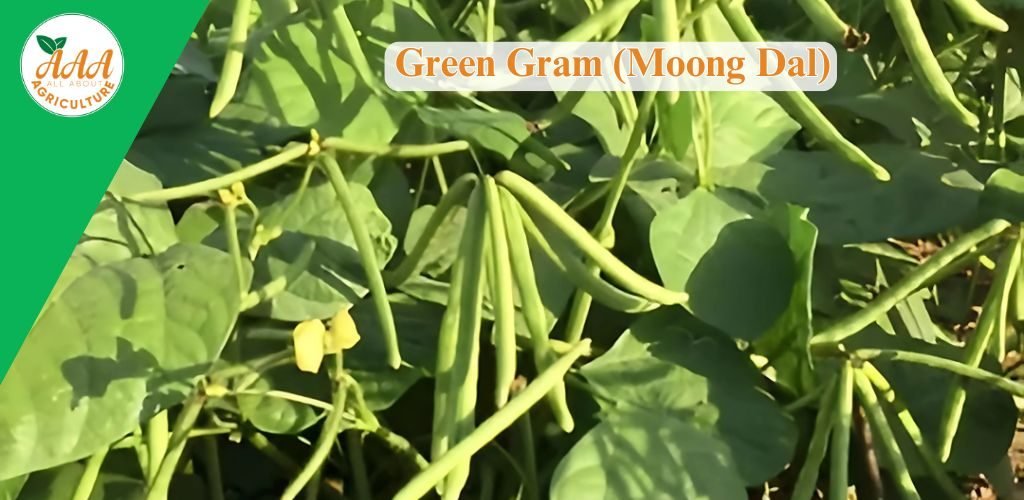
Understanding about Crop (Green Gram / Moong Dal)
Nutritional Value:
- Green Gram, widely known as Moong Dal, is rich in protein, fiber, vitamins (especially B complex), iron, potassium, magnesium, and antioxidants. Eating Green Gram helps build and repair body tissues, support immune health, and improve digestion. The high protein in Moong Dal makes it a staple for vegetarians, while its low fat and cholesterol support heart health. Consuming Green Gram regularly can lower the risk of chronic diseases and help with balanced diets for all ages. As Moong Dal is easily digestible and gluten-free, it’s recommended for children, elderly, and even those recovering from illnesses. For updated nutrition info and use cases, visit All about agriculture.
Dietary Diversity:
- Green Gram is cooked whole or split as Moong Dal, used in curries, soups, sprouts, dosas, and sweets. Its sprouted form increases vitamin C, boosting dietary diversity for families. Moong Dal flour is used in Indian snacks, pancakes, and desserts. Green Gram consumption provides variety to meal plans, meeting different taste and nutrition needs. As Green Gram can be eaten by people of any age, it fits well into daily home-cooked meals. Households can use Moong Dal for breakfast, lunch, and snacks easily.
Economic Importance:
- Green Gram is a high-value pulse crop for small and big farmers. Sales of Moong Dal generate steady income, and there is always demand in markets for Green Gram, both split and whole. Its ability to grow quickly and give returns within 60–70 days helps in crop planning and budgeting. Green Gram also increases farmers’ profits by fixing nitrogen naturally and saving fertilizer cost. With government support and steady prices, Moong Dal is a reliable money source. For market updates, check All about agriculture.
Crop Rotation:
- Moong Dal is ideal for crop rotation, especially between cereals or after rice–wheat cycles. Planting Green Gram restores soil fertility through nitrogen fixation, making soil healthier for the next crop. Moong Dal breaks pest and disease cycles, reducing chemical use and improving yields of future crops. Intercropping Green Gram with maize or sugarcane improves land utilization. The quick harvest of Green Gram allows farmers to grow multiple crops per year.
Climate Resilience:
- Green Gram or Moong Dal adapts easily to different climates, including warm and semi-arid areas. It can withstand short drought periods because of deep roots. Growing Moong Dal helps stabilize farmer income and food security during unexpected weather. Drought-resistant Green Gram varieties are now available, making it even more climate-friendly. As the monsoon arrives, Moong Dal can be sown quickly for a secure harvest.
Health Benefits and Side Effects:
- Eating Moong Dal improves digestion, helps control weight, and provides quick energy due to high protein. Green Gram is great for diabetic and heart patients if eaten in moderation. Some people may get gas or bloating from Green Gram, especially if not cooked well or eaten in excess. Green Gram is safe for daily use but should not be overconsumed in raw form by those with weak digestion.
Other Key Points:
- Moong Dal is used as green manure to enrich soils. By-products like husk and straw feed cattle. Green Gram and Moong Dal are important, not just for farmers, but for normal families needing a healthy, affordable pulse. More usage tips are available at All about agriculture.
Key Features of Green Gram (Moong Dal)
Climate and Soil Requirements
- Green Gram thrives in warm climates (25–35°C), needing 600–900 mm rainfall.
- Moong Dal grows best in sandy loam to loamy soils with good drainage, pH 6.2–7.2.
- Waterlogging harms Green Gram roots, so well-prepared soil is essential.
- Green Gram is sensitive to soil salinity, so avoid salty fields and use raised beds if needed.
- Growing Moong Dal after monsoon ensures enough residual moisture for sprouting.
- Deep soils allow strong root development; shallow stony soils reduce Moong Dal yield.
- Use organic manure or compost in soil before sowing Green Gram for best results.
- Avoid fields infested with root-knot nematodes to prevent yield loss.
- Soil testing helps balance nutrients needed by Moong Dal crops.
Land Preparation
- Plough land 2–3 times deeply before sowing Moong Dal.
- Level and break soil clods for easy Green Gram seed sowing and seedling growth.
- Prior clean-up of weed roots helps Moong Dal seedlings germinate better.
- Add 8–10 tons per hectare of decomposed cow dung or compost for Green Gram.
- Raised beds or flat beds are suitable for Green Gram planting.
- Remove previous crop residues for disease-free Moong Dal growth.
- Prepare ridges in heavy rainfall regions to improve Green Gram drainage.
- Harrow and cross-plough to mix manure evenly and improve Green Gram productivity.
- After land prep, irrigate the field lightly to settle the soil for Moong Dal sowing.
High-Yielding and Hybrid Seed Selection
- Choose Moong Dal seeds from high-yielding, disease-resistant Green Gram varieties (like Pusa Vishal, SML 668, IPM 02-14).
- Hybrid and improved Moong Dal seeds give uniform, strong Green Gram plants.
- Always select certified Green Gram seeds from reputable suppliers.
- Use fresh Moong Dal seeds – old or shriveled seeds affect germination rates.
- Check for healthy, undamaged Moong Dal seeds – avoid ones with discoloration or holes.
- Local Green Gram varieties work well in their regions; ask agri experts for the right type.
- Sowing high-yielding Moong Dal seeds ensures better market value.
- If possible, try small test plots to find the best Green Gram seed for your field.
- Change Moong Dal seed stock every 2–3 years to maintain vigor.
Seed Treatment
- Treat Green Gram seeds with Rhizobium culture before sowing for better nitrogen fixation.
- Use fungicides (like Thiram or Carbendazim) to prevent Moong Dal seedling diseases.
- Solarize Moong Dal seeds by drying in the sun for 2–3 hours before treating.
- Avoid soaking Green Gram seeds in water for too long – can rot the seeds.
- Mix Moong Dal seeds with biofertilizer for root health and stronger plants.
- Treating seeds prevents seed-and-soil borne diseases in Green Gram.
- Moong Dal seeds may also be dipped in cow-dung slurry as a natural treatment.
- After treatment, dry Moong Dal seeds under shade; sow on the same day.
- Only sow treated Green Gram seeds – untreated seeds risk poor stand and yield.
Sowing and Planting Methods
- The best time to sow Green Gram is just after rains or during summer with irrigation.
- Use row spacing of 30–45 cm, plant Moong Dal seeds 5–7 cm deep.
- Broadcast or line sowing are both possible, but row sowing helps crop management.
- Seed rate for Green Gram is about 15–20 kg/ha for the best stand.
- Avoid over-crowding by proper Green Gram spacing – improves airflow, reduces disease.
- Cover Moong Dal seeds lightly with soil after sowing for good germination.
- Early sowing of Green Gram escapes many common pests and diseases.
- Uniform Moong Dal seed depth ensures even emergence and strong establishment.
- Mechanical planters make Green Gram sowing easier on big fields.
Nutrient and Fertilizer Management
- Moong Dal fixes nitrogen naturally, reducing need for chemical fertilizers.
- Apply 12–20 kg nitrogen, 40–60 kg phosphorus (P2O5), and 20–30 kg potash (K2O) per hectare at planting.
- Foliar sprays of micronutrients like zinc and molybdenum help Green Gram yield.
- Use farmyard manure or compost for long-term soil health in Green Gram fields.
- Avoid over-fertilizing Green Gram, as it causes more stems and less pod formation.
- Split fertilizer application helps Moong Dal during early growth.
- Green Gram responds well to organic matter; mix in crop residues if possible.
- Crop rotation with Moong Dal improves soil nitrogen for the next crop.
- Top-dress Green Gram fields if leaves show pale color or weak growth.
Irrigation and Water Management
- Moong Dal needs light irrigation at flowering and pod-forming stages.
- Green Gram is mostly rainfed but yields better with timely irrigation when dry.
- Avoid standing water in Green Gram fields; it causes root rot.
- Use drip or furrow irrigation for efficient Moong Dal water use.
- Moisture at seed sowing is vital – dry soil reduces Green Gram germination.
- Overwatering can reduce Moong Dal seed quality.
- Skip irrigation during heavy rainfall, but water promptly in dry spells.
- Proper scheduling of water increases Green Gram pod set and seed weight.
- Harvest Green Gram after pods mature and dry; late irrigation delays harvest.
Intercultural Operations
- Weed Green Gram fields twice: once after two weeks, next before flowering.
- Light hoeing aerates Moong Dal soil, encouraging root growth.
- Earthing up helps Moong Dal plants stand against wind and rain.
- Intercrop Green Gram with maize or cotton for better income.
- Remove diseased or stunted Moong Dal plants early in season.
- Spraying safe herbicides helps large Green Gram fields (as advised locally).
- Mulch with crop residues around Moong Dal to save moisture.
- Fill vacant spots with new Green Gram seedlings for a uniform stand.
- Keep field edges clear to check pest entry into Moong Dal plots.
Pest Management
- Monitor for common Green Gram pests like aphids, whiteflies, pod borers, and thrips.
- Use yellow sticky traps to control flying insect pests in Moong Dal fields.
- Neem oil or biopesticides are safe for Moong Dal pest control.
- Early sowing helps avoid major Moong Dal pest attacks.
- Remove infested Moong Dal plants and destroy them away from the field.
- Keep field weed-free; many Moong Dal pests breed in leftover weeds.
- Spray recommended insecticides when pest levels go above economic threshold.
- Maintain clean Moong Dal storage to avoid stored grain pests.
- Encourage natural predators in the Moong Dal ecosystem for IPM.
Disease Management
- Prevent diseases like Yellow Mosaic Virus, Powdery Mildew, Root Rot in Green Gram.
- Grow disease-resistant Moong Dal varieties as the first line of defense.
- Treat seeds and follow crop rotation; don’t grow Moong Dal after moong/urad to stop wilt.
- Uproot and destroy diseased Moong Dal plants immediately.
- Apply fungicides only if disease levels are high and after expert advice.
- Watering early in the morning helps avoid Moong Dal fungal attacks.
- Use only certified seed to reduce seed-borne diseases in Green Gram.
- Remove crop debris after harvest to prevent next season’s Moong Dal disease.
- Timely sowing avoids many seasonal diseases in Moong Dal.
Harvesting and Post-Harvest Management
- Harvest Green Gram when 80% pods turn yellow and dry.
- Cut Moong Dal plants early in morning to avoid pod shattering.
- Dry harvested plants under sun 2–3 days, then thresh and clean.
- Store Moong Dal seeds in airtight bags or containers.
- Check Green Gram stocks regularly for pests or spoilage.
- Avoid over-drying, which reduces Moong Dal seed viability.
- Timely harvesting avoids yield loss and maintains Moong Dal quality.
- Separate stones, chaff, and broken grains from cleaned Green Gram.
- Use improved Moong Dal processing machines for commercial farms.
Other Important Points
- Green Gram or Moong Dal straw is valuable as cattle fodder after pod harvest.
- Moong Dal husk can be added to compost to improve soil fertility.
- Phytate in Green Gram blocks some minerals, so soaking or sprouting is best.
- Overeating raw or undercooked Moong Dal can cause gas or bloating.
- Moong Dal (Green Gram) is suitable for gluten-free diets.
- Children, pregnant women, and elderly benefit most from regular Green Gram.
- Moong Dal is considered a cooling food in Ayurveda, good in hot weather.
- Green Gram can be processed into flour for use in baby food.
- For best tips and schemes on Green Gram, visit All about agriculture.
Do’s
-
Use healthy, certified Green Gram seeds for sowing.
-
Treat Moong Dal seeds before planting every time.
-
Rotate crops and keep records of Moong Dal fields.
-
Irrigate Moong Dal at proper times for best results.
-
Weed and inspect Green Gram fields weekly.
-
Use biofertilizers and green manure to boost Moong Dal yield.
-
Harvest pods at the correct stage before shattering.
-
Store Green Gram in clean, dry, pest-free godowns.
-
Attend local agri training for latest Moong Dal updates.
Don'ts
-
Don’t sow Green Gram in waterlogged, saline, or pest-infected land.
-
Don’t delay sowing; late Moong Dal planting reduces yield.
-
Don’t skip inter-cultural operations - weak crops yield poorly.
-
Don’t burn Moong Dal residues; compost for next crop.
-
Don’t overuse chemical sprays; use as per need and advice only.
-
Don’t store Green Gram in moist, humid places.
-
Don’t mix old and new seeds together for sowing.
-
Don’t ignore field scouting for pests and diseases.
-
Don’t grow Moong Dal on the same land year after year - rotate crops.
Frequently Asked Questions
How is Green Gram (Moong Dal) different from Soybean in nutrition?
Green Gram (Moong Dal) is rich in easily digestible protein and fiber, while Soybean has more oil content and complete protein. Both pulses complement each other in daily diets for balanced nutrition.
Can Green Gram (Moong Dal) and Soybean be grown together in crop rotation?
Yes, rotating Green Gram (Moong Dal) with Soybean improves soil nitrogen and breaks pest cycles, enhancing soil health and boosting yields for both crops.
What are the main pests affecting Soybean compared to Green Gram (Moong Dal)?
Soybean often faces pests like leaf miners and pod borers, different from Green Gram’s aphids and whiteflies. Integrated pest management works for both crops for healthy farming.
How does the water requirement for Green Gram (Moong Dal) compare to Soybean?
Green Gram (Moong Dal) requires less water and is more drought-tolerant than Soybean, making it suitable for dry areas, while Soybean needs moderate irrigation for better yields.
What are the soil preferences for growing Soybean versus Green Gram (Moong Dal)?
Soybean prefers well-drained loam soils rich in organic matter, similar to Green Gram (Moong Dal), but Soybean tolerates slightly heavier soils. Both avoid waterlogged fields.
Can Green Gram (Moong Dal) and Soybean seeds be treated similarly before sowing?
Both require seed treatment with fungicides to prevent soil-borne diseases. Rhizobium inoculation improves nitrogen fixation in both Green Gram (Moong Dal) and Soybean crops.
What are the economic benefits of adding Soybean alongside Green Gram (Moong Dal) in farming?
Growing Soybean along with Green Gram (Moong Dal) diversifies income streams, reduces risk, and boosts soil fertility, helping farmers stabilize earnings and minimize inputs.
How does the harvesting time of Green Gram (Moong Dal) differ from Soybean?
Green Gram (Moong Dal) is a short duration crop maturing in 60–70 days, while Soybean needs 90–150 days depending on varieties, allowing multiple cropping options for farmers.
Are there health benefits unique to Soybean compared to Green Gram (Moong Dal)?
Soybean contains isoflavones beneficial for heart and bone health, different from Green Gram’s high fiber and antioxidant properties. Both are valuable for a healthy diet.
What role does Green Gram (Moong Dal) play in sustainable farming with Soybean?
Both crops improve soil nitrogen naturally through fixation, reducing fertilizer use and promoting eco-friendly farming practices, which conserve soil health and reduce costs.
Can farm machinery used for Green Gram (Moong Dal) be used for Soybean harvesting?
Some seeders and harvesters fit both Green Gram (Moong Dal) and Soybean, but adjustments may be needed due to different seed sizes and crop heights.
Where to find market price updates for Green Gram (Moong Dal) and Soybean?
Up-to-date prices for Green Gram (Moong Dal) and Soybean are regularly published on agricultural portals and websites like All about agriculture, helping farmers make better decisions.