Niger Seed
Niger Seed
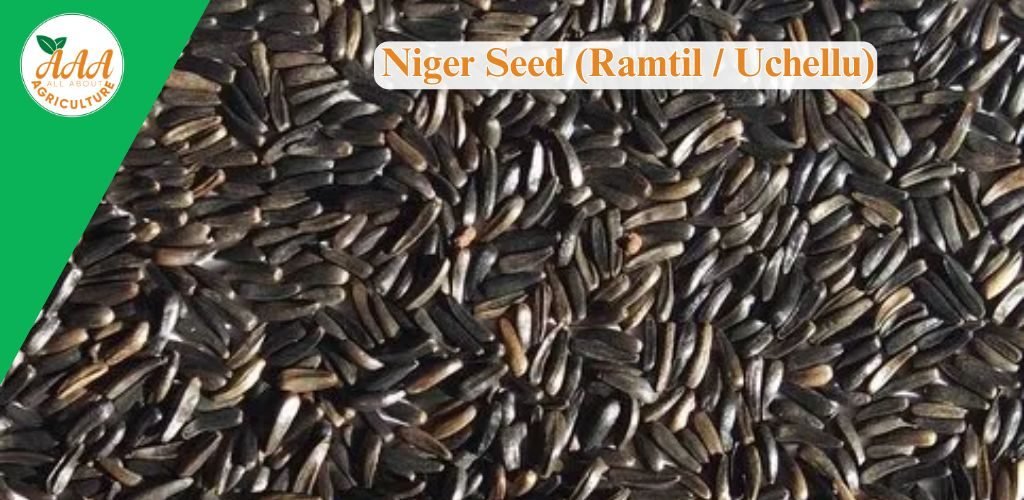
Understanding about Crop
Nutritional Value:
- Niger Seed (Ramtil / Uchellu) is rich in healthy fats, especially linoleic acid, proteins, vitamins E and K, and minerals like calcium and magnesium. It supports heart health, skin nutrition, and energy production. More nutritional insights are available on All about agriculture.
Dietary Diversity:
- Used mostly as an oilseed, Niger Seed (Ramtil / Uchellu) oil is popular for cooking and in cosmetic industries. The seed cake is a valuable protein-rich animal feed supplement, enriching diets across sectors.
Economic Importance:
- Niger Seed (Ramtil / Uchellu) is an important commercial oil crop with increasing demand in food, feed, and industrial markets. It provides farmers with good income potential especially in semi-arid regions. All about agriculture offers price updates and cultivation advice.
Crop Rotation:
- Including Niger Seed (Ramtil / Uchellu) in crop rotations with cereals and pulses improves soil structure and fertility, promoting sustainable farming systems by reducing pest pressure and improving nutrient cycling.
Climate Resilience:
- Grows best in warm, subtropical to tropical climates with moderate rainfall (1000–1250 mm). It tolerates drought and poor soils but dislikes waterlogging and frost.
Health Benefits and Side Effects:
- Niger Seed oil supports respiratory health, reduces inflammation, and promotes skin and hair vitality. However, allergy cases are rare but possible; moderation in consumption is advisable.
Other Important Points:
- The crop flowers attract pollinators supporting biodiversity. Residues improve soil health. In-depth farming tips are available at All about agriculture.
Key Features of Niger Seed
Climate and Soil Requirements
- Optimal temperature range 20–30°C; tolerates heat up to 35°C.
- Requires moderate rainfall between 1000 and 1250 mm annually.
- Prefers well-drained, sandy loam to black soils with moderate fertility.
- Sensitive to heavy rainfall or waterlogging which damages roots.
- Thrives in slightly acidic to neutral soils (pH 5.2 to 7.3).
- Adapted to semi-arid and dry tropical regions.
- Raised beds help drainage in heavy rainfall areas.
- Heavy clay soils are less suitable.
- Soil testing helps to gauge fertility and plan amendments.
Land Preparation
- Two deep ploughings followed by harrowing for soil aeration.
- Removal of previous crop residues and weeds.
- Leveling the field for uniform seed sowing and irrigation.
- Incorporation of organic manures improves soil moisture retention.
- Avoid excessive tillage to prevent soil compaction.
- Ridge planting recommended in sloping or heavy soils.
- Maintain field sanitation to reduce pest and disease incidence.
- Soil moisture should be adequate for seed germination.
- Preparation planned to match the sowing calendar for best results.
High-Yielding and Hybrid Seed Selection
- Certified seeds from reliable suppliers ensure high germination and purity.
- Select cultivars known for stable yield and oil content like “TS-282” and “TS-67”.
- Choose disease-resistant and adapted varieties for local conditions.
- Test seeds on small scales to confirm performance before large sowings.
- Avoid old or damaged seeds that reduce yield and quality.
- Seed storage should be in dry, cool places to maintain quality.
- Hybrid breeding efforts focus on high gum and oil content.
- Seed selection impacts crop uniformity and market acceptance.
- Use seed certification documents as proof of quality.
Seed Treatment
- Seed treatment with fungicides like Carbendazim prevents seed and soil-borne diseases.
- Application of phosphorus-solubilizing bacteria enhances early seedling vigor.
- Seed priming or soaking aids in uniform and rapid germination.
- Ensure drying after treatment but before sowing to avoid seed spoilage.
- Biological seed treatments promote soil microbial health.
- Follow safety measures when handling chemicals for treatment.
- Limit treatment to recommended doses to avoid toxicity.
- Treated seeds show higher field emergence and better crop stand.
- Store treated seeds in sealed containers till sowing time.
Sowing and Planting Methods
- Sow seeds at 2–3 cm depth in lines spaced 30 x 10 cm or 20 x 10 cm in high rainfall areas.
- Seed rate about 5 kg/ha for sole cropping; adjust rates in intercropping systems.
- Broadcasting mixed with sand or ash ensures even seed distribution if mechanized sowing is unavailable.
- Planking after sowing improves seed-soil contact and moisture retention.
- Sow during monsoon or early post-rain periods for best germination.
- Avoid sowing during dry soil or extreme temperatures.
- Line sowing is preferred for management and mechanization.
- Thinning after emergence maintains a proper plant population.
- Sowing across contours on slopes helps soil and moisture conservation.
Nutrient and Fertilizer Management
- Apply basal nitrogen of about 20 kg/ha, combined with phosphorus and potassium as per soil fertility.
- Organic manure or compost incorporation enhances nutrient availability and water retention.
- Balanced fertilizer application promotes oil quality and crop health.
- Micronutrients might be needed in deficient soils; foliar sprays recommended.
- Split nitrogen doses for efficient use and crop uptake.
- Soil testing before nourishment guides precise nutrient management.
- Avoid excessive nitrogen to prevent lodging and reduce seed quality.
- Efficient nutrient management improves yield and oil content.
- Crop residues act as natural organic fertilizer for succeeding crops.
Irrigation and Water Management
- Niger Seed (Ramtil / Uchellu) is predominantly rain-fed, needing moderate water.
- Protective irrigation during flowering and seed development boosts yield in dry spells.
- Avoid waterlogging to prevent root diseases and crop losses.
- Drip irrigation optimizes water use, reduces waste.
- Mulching conserves moisture and reduces weed growth.
- Stop irrigation prior to harvest to ensure seed drying.
- Monitor rainfall patterns and soil moisture for timely nourishment.
- Use water harvesting and soil moisture conservation practices to maximize efficiency.
- Adequate water management sustains crop development and quality.
Intercultural Operations
- Weeding is done 15-20 days post-sowing, repeated if necessary before fertilization.
- Removal of parasitic weed Cuscuta is essential to avoid crop yield loss.
- Hand weeding is preferred in initial stages to preserve delicate seedlings.
- Crop residue management improves soil health post-harvest.
- Intercrop with millets or pulses for diversified farming systems.
- Maintain field hygiene to reduce pest and disease buildup.
- Avoid excessive mechanical disturbance to roots and nodules.
- Fill gaps by replanting early to maximize plant population.
- Use mulching techniques to suppress weeds and retain moisture.
Pest Management
- Major pests include aphids, whiteflies, and pod borers affecting Niger Seed.
- Use integrated pest management approaches with biopesticides and natural predators.
- Remove infested plants promptly to minimize damage.
- Monitor pest populations regularly to apply treatment on threshold breach.
- Crop rotation breaks pest life cycles, reducing chemical dependency.
- Pheromone traps may be effective in controlling specific pests.
- Promote insect biodiversity for natural pest suppression.
- Avoid indiscriminate pesticide use which harms beneficial insects.
- Store harvested grain in pest-proof conditions.
Disease Management
- Niger Seed suffers from diseases like root rot and leaf spots.
- Seed treatment helps prevent seed-borne fungal infections.
- Use resistant varieties when available to lower disease incidence.
- Maintain proper spacing for air circulation and reduce humidity.
- Remove and destroy infected plant materials timely.
- Crop rotation with non-host plants minimizes disease impact.
- Fungicides applied based on advisory recommendations during epidemics.
- Avoid over-irrigation to reduce fungal disease risks.
- Field sanitation and equipment cleaning decrease pathogen transmission.
Harvesting and Post-Harvest Management
- Harvest usually at 95–105 days after sowing when leaves dry and flower heads turn dark.
- Cut and stack plants for drying before threshing.
- Thresh by gently beating or mechanical methods; avoid seed damage.
- Clean and sieve seeds to remove debris and broken grains.
- Dry seeds to 8% moisture content for safe storage and quality preservation.
- Store seeds in insect and moisture-proof containers.
- Regularly inspect storage areas to avoid pests.
- Properly graded and cleaned seeds fetch higher market prices.
- Processing Niger Seed for oil extraction requires clean, well-dried seeds.
Other Important Points
- Niger Seed flowers are attractive to bees, aiding pollination and honey production.
- Guizotia or Niger Seed cake is a nutrient-rich feed supplement for dairy and poultry animals.
- The crop supports environment-friendly farming via nitrogen fixation and drought tolerance.
- The oil derived is rich in linoleic acid, used widely in the cooking and cosmetics industry.
- Cultural importance exists in various regions as a food and feed crop.
- Detailed cultivation advice and market trends can be studied at All about agriculture for best practices.
Do’s
- Use only certified and treated Niger Seed (Ramtil / Uchellu) seeds.
- Follow recommended sowing depths and spacing for optimal growth.
- Regularly scout and manage pests or diseases.
- Apply balanced fertilizers as per soil test results.
- Perform weeding and intercultural operations timely.
- Use drip irrigation and mulching for moisture conservation.
- Harvest timely to prevent seed losses.
- Store seeds in dry, pest-free environments.
- Maintain crop residue management for soil health.
Don'ts
- Avoid using old, infested, or untreated seeds.
- Don’t over-irrigate; avoid waterlogging which damages roots.
- Don’t ignore early signs of pest or disease infestations.
- Avoid monocultures by including crop rotation.
- Don’t burn crop residues; compost instead.
- Avoid excessive nitrogen fertilizer application.
- Don’t delay harvesting beyond pod maturity.
- Don’t store seeds in humid or poorly ventilated spaces.
- Don’t skip soil testing and field monitoring.
What are the traditional medicinal uses of Niger Seed (Ramtil / Uchellu)?
Niger Seed (Ramtil / Uchellu) oil is traditionally used to ease respiratory problems like asthma and coughs and is applied to skin for healing and anti-inflammatory benefits.
How can Niger Seed (Ramtil / Uchellu) be incorporated into daily diets?
The seeds are used to make dry chutneys, added as spices in curries, and can be eaten roasted or sprouted for nutritional benefits.
What role does Niger Seed (Ramtil / Uchellu) play in animal nutrition?
Niger Seed (Ramtil / Uchellu) seed cake, a byproduct of oil extraction, is high in protein and commonly used as a nutritious feed supplement for livestock.
How does Niger Seed (Ramtil / Uchellu) contribute to soil health?
Growing Niger Seed (Ramtil / Uchellu) adds organic matter from residues and supports sustainable farming by improving soil microflora.
What are common pests and their management in Niger Seed (Ramtil / Uchellu) cultivation?
Aphids and leafhoppers affect Niger Seed crops; natural predators and neem oil applications reduce pest damage sustainably.
Can Niger Seed (Ramtil / Uchellu) oil be used in cosmetics?
Yes, Niger Seed oil is valued for its moisturizing and healing properties and is used in skincare and hair products.
How does Niger Seed (Ramtil / Uchellu) adapt to drought conditions?
Its resilience to dry and semi-arid climates makes Niger Seed (Ramtil / Uchellu) a reliable crop for water-scarce regions.
What are the benefits of Niger Seed (Ramtil / Uchellu) oil for heart health?
Rich in linoleic acid and antioxidants, Niger Seed oil supports cardiovascular health and reduces inflammation.
How should Niger Seed (Ramtil / Uchellu) seeds be stored?
Store in cool, dry, airtight containers to prevent moisture absorption and insect infestation, preserving seed quality longer.
Is there any risk of allergic reactions to Niger Seed (Ramtil / Uchellu)?
Though rare, some individuals may experience skin or respiratory allergies; patch tests and gradual introduction are advised.
How can farmers maximize the economic potential of Niger Seed (Ramtil / Uchellu)?
By optimizing cultivation techniques, timely harvesting, and accessing market information, farmers can achieve better profitability.
Where can one find updated guidance and market rates for Niger Seed (Ramtil / Uchellu)?
Reliable cultivation advice, price trends, and government schemes are available on agricultural platforms like All about agriculture.