Onion
Onion
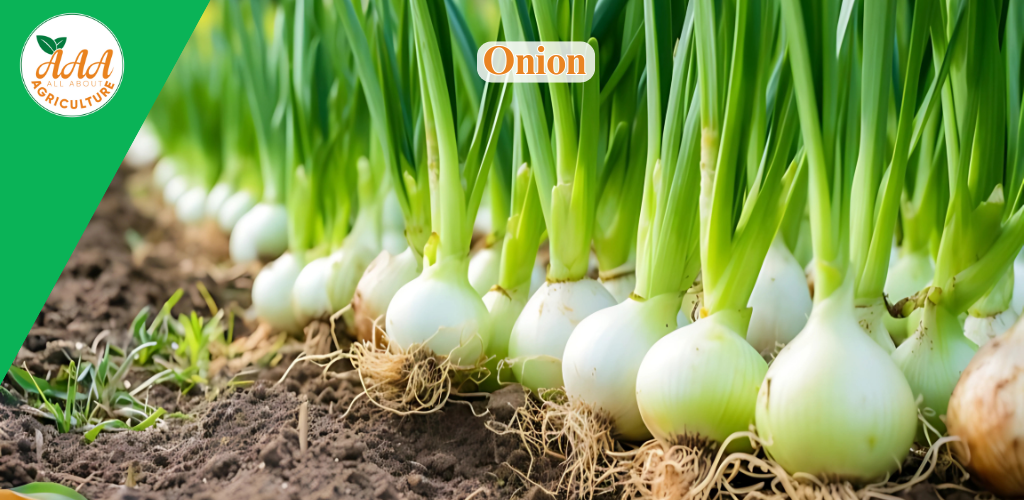
Understanding About Crop
Nutritional Value:
- Onions are rich in vitamins (C, B6), minerals (potassium, manganese), and antioxidants like quercetin, contributing to immune support and heart health.
- They contain dietary fiber that aids digestion and balances blood sugar levels.
- Onions have low calories but provide essential nutrients promoting overall wellness.
- Sulfur compounds contribute to anti-inflammatory and antimicrobial effects.
- Regular consumption is linked to reduced risks of certain cancers and cardiovascular diseases.
- Raw onions retain the highest nutrient content, while cooking reduces some antioxidants.
- Onions also help regulate cholesterol and improve bone health.
Dietary Diversity:
- Used fresh, cooked, pickled, or dried, onions add flavor across global cuisines in salads, soups, curries, and snacks.
- Onion powder and flakes serve as convenient spice forms in various food industries.
- Different onion varieties like red, white, and yellow offer color and taste variety in cooking.
- Onions complement vegetables, meats, and grains, enhancing meal diversity.
- Pickled onions add probiotics for gut health.
- Onion juice and extracts appear in some traditional drinks and remedies.
- Onion greens are edible and used as herbs or garnishes in dishes.
Economic Importance:
- Onions rank among top vegetable crops worldwide, generating substantial income for small and large farmers.
- India’s onion exports contribute significantly to foreign revenue.
- Processing industries produce onion powder, dehydrated onions, and canned products globally.
- Onion cultivation generates rural employment in seed production, farming, and marketing.
- Price volatility can impact farmer incomes; diversified marketing and storage reduce risks.
- All about agriculture provides market trends, variety updates, and agronomic tips.
- Value addition from processing creates new business and exporting opportunities.
Crop Rotation:
- Onions are rotated with cereals, legumes, and solanaceous crops to break pest and disease cycles.
- Crop rotation maintains soil fertility and prevents continuous nitrogen depletion.
- Rotation reduces buildup of onion thrips, root maggots, and fungal diseases.
- Including legumes in rotation supports biological nitrogen fixation.
- Rotation helps improve soil structure and tilth by preventing exhaustion.
- It creates ecological balance, reducing chemical dependence.
- Proper planning based on crop calendars maximizes land use and sustainability.
Climate Resilience:
- Onions grow well in moderate climates with temperatures between 13–24°C for bulb formation.
- Excessive heat or frost adversely affects bulb quality and yield.
- Onions need 10–12 hours of daylight and moderate humidity for optimal growth.
- The crop tolerates slight drought but requires adequate irrigation at critical growth stages.
- Well-drained soils and controlled watering prevent bulb rot and diseases.
- Climate-smart practices include mulching and shade nets to manage heat stress.
- Varieties suitable for specific agro-climatic zones improve resilience.
Health Benefits:
- Onions have anti-inflammatory, antibacterial, antiviral, and antioxidant properties.
- They help regulate blood sugar and improve insulin sensitivity.
- The sulfur compounds aid heart health by lowering blood pressure and cholesterol.
- Regular consumption may reduce cancer risks by neutralizing free radicals.
- Onions support respiratory health by clearing mucus and soothing cough.
- Their fiber promotes digestive health and reduces constipation.
- However, excessive raw onion intake may cause digestive discomfort in sensitive people.
Key Features
Climate and Soil Requirements
- Onions prefer cool to moderate temperatures for bulb formation: 13–24°C is optimal.
- Require well-drained sandy loam to clay loam soils with pH 6.0–7.5 for good root and bulb development.
- Avoid waterlogging and very acidic or alkaline soils which reduce growth and increase disease risk.
- Uniform temperature promotes even maturity; high day and low night temperatures delay bulb formation.
- Light intensity and day length influence bulb size and storage life.
- Mulching helps regulate soil temperature and moisture.
- Soil testing before planting helps in balanced fertilization and amendments.
- Crop location should have good air circulation to reduce fungal diseases.
- Select sites with access to good quality irrigation water and drainage.
Land Preparation
- Deep ploughing (20–25 cm) or ripping breaks compacted soils, improving root penetration.
- Harrow well to break clods, create a fine tilth free of stones and residues to facilitate planting.
- Remove weeds and crop residues as they harbor pests and diseases like thrips and purple blotch.
- Incorporate well-rotted farmyard manure or compost (4–6 tons/ha) to enrich soil fertility.
- Create raised beds or ridges for moisture conservation and drainage, especially in heavy soils.
- Level land for uniform water distribution during irrigation.
- Proper soil preparation reduces seedling stress, promotes uniform emergence, and improves yield.
- Avoid planting in the same plot consecutively without a break or rotation.
- Use green manure crops before planting to enhance soil organic matter where possible.
High-Yielding and Hybrid Seed Selection
- Use certified, high-yielding bulb and short-day varieties suitable for local climate and market demand.
- Hybrid seeds offer uniform size, better disease resistance, and early maturity.
- Select seeds with >85% germination and free from mechanical damage or fungal infections.
- Bulb color and pungency should match consumer preferences for marketing success.
- Avoid planting saved seeds repeatedly due to genetic degeneration risks.
- Purchase seeds from trusted suppliers or government agricultural nurseries.
- Evaluate seed performance regularly and replace annually for best crop outcomes.
- Maintain seed hygiene to reduce storage losses and disease incidence.
- Follow recommended seed rate: 1–2 kg/ha for direct sowing or 10–15 tons/ha for transplanting nursery-raised seedlings.
Seed Treatment
- Treat seeds with systemic fungicides like Captan or Thiram @ 2–3 g/kg seed to prevent seed-borne diseases.
- Soak seeds in water 8–10 hours and dry before sowing for uniform germination.
- Use biocontrol agents (Trichoderma viride) as eco-friendly alternatives.
- Treat nursery seed beds with insecticides and fungicides to protect seedlings.
- Maintain nursery hygiene to prevent disease spread.
- Seed treatment enhances germination percentage and seedling vigor.
- Proper chemical handling and personal protective equipment (PPE) reduce health risks to farmers.
- After-treatment, treat seeds should be sown promptly to avoid loss of effectiveness.
- Monitor nursery conditions for moisture and temperature to optimize seedling health.
Sowing and Planting Methods
- Direct sowing or transplanting from nurseries are common methods depending on season and region.
- Sow seeds at 1–2 cm depth with row spacing 15–20 cm and plant spacing 5–10 cm for direct sowing.
- Nursery transplants are raised for 6–8 weeks and planted at 20–30 cm row spacing and 10–15 cm plant spacing.
- Plant during cool weather or just before monsoon for best establishment.
- Ensure optimum soil moisture during germination and early growth.
- Use seed drills or manual line sowing for uniform distribution.
- Fill gaps timely after planting to maintain crop density.
- Mulching conserves moisture and reduces weed growth at planting sites.
- Adjust planting dates based on local conditions to avoid heat or frost damage.
Nutrient and Fertilizer Management
- Apply organic manure (5–7 tons/ha) before planting to improve soil structure and fertility.
- Typical fertilizer application: 120–150 kg N, 50–60 kg P2O5, and 80–90 kg K2O/ha split over growth stages.
- Foliar sprays of micronutrients (boron, zinc) improve bulb size and quality.
- Balanced nutrient management enhances bulb development, storage life, and disease resistance.
- Over-fertilizing nitrogen causes excessive leaf growth at the expense of bulbs.
- Use soil tests to tailor fertilizer programs and avoid wastage.
- Side dressing after first and second weeding maximizes nitrogen use.
- Apply potassium during the swelling stage for firm and tasty bulbs.
- Incorporate crop residues or green manures to maintain long-term soil fertility.
Irrigation and Water Management
- Onions require 500–700 mm water through the growing season, especially critical during bulb formation.
- Frequent light irrigations maintain soil moisture without waterlogging to prevent bulb rot.
- Drip irrigation improves water use efficiency and reduces diseases by keeping foliage dry.
- Stop irrigation 10–15 days before harvest to facilitate bulb maturity and reduce cracking.
- Mulching reduces evaporation, conserves moisture, and stabilizes soil temperature.
- Scheduling irrigation after soil moisture monitoring prevents stress during critical stages.
- Excessive water leads to disease; insufficient water limits bulb size and yield.
- Use rainwater harvesting or recycled water where feasible for sustainability.
- Efficient water management increases yield and reduces costs.
Intercultural Operations
- Early and regular hand weeding reduces nutrient and moisture competition.
- Thin seedlings to optimum spacing for bulb growth; overcrowding reduces size and quality.
- Hoe carefully to avoid root disturbance; earthing-up strengthens roots support.
- Remove yellow or diseased leaves to improve air circulation and reduce disease.
- Mulch and cover crops improve soil health and moisture retention.
- Timely intercultural practices reduce pest habitat and improve plant vigor.
- Maintain weed control especially during bulb swelling to prevent yield loss.
- Clean tools and machinery to avoid pest and pathogen transfer.
- Monitor for volunteer plants and rogue seedlings to maintain quality.
Pest Management
- Common pests: onion thrips, cutworms, armyworms, aphids, and bulb mites cause yield loss.
- Use integrated pest management (IPM) combining cultural, biological, and chemical controls.
- Install yellow sticky traps and pheromone traps to monitor pest populations.
- Encourage natural enemies like ladybugs and lacewings to reduce pests.
- Avoid excessive pesticide use to prevent resistance and protect beneficial insects.
- Rotate chemical classes to reduce resistance development.
- Use neem-based biopesticides as eco-friendly alternatives.
- Remove infested plant debris to lower pest pressure.
- Early detection and action is critical to minimize damage.
Disease Management
- Key diseases: purple blotch, downy mildew, neck rot, white rot, and leaf spots affect crop health.
- Use disease-resistant varieties and treat seeds and soil with fungicides.
- Maintain field sanitation by removing infected plants and residues.
- Crop rotation with cereals and legumes reduces pathogen buildup.
- Avoid overhead irrigation during humid weather to limit fungal growth.
- Proper spacing enhances airflow and reduces moisture retention on leaves.
- Regular scouting and timely fungicide application prevent major outbreaks.
- Record disease incidences to improve future management.
- Educate farm workers on disease symptoms to ensure early identification.
Harvesting and Post-Harvest Management
- Harvest onions when they are yellow and begin to fall, indicating bulb maturity.
- Pull out bulbs carefully to avoid bruising which reduces shelf life.
- Cure onions by drying in sunlight or shade for 10–15 days to reduce moisture.
- Store bulbs in ventilated, dry, cool places away from direct sunlight and moisture.
- Grading and cleaning before packaging enhance market price and shelf life.
- Proper post-harvest handling reduces losses and maintains quality.
- Early marketing after curing fetches better prices.
- Sort bulbs for uniformity in size and quality for better consumer acceptance.
- Follow hygiene and pest control in storage areas.
Other Important Points
- Onions improve soil with leftover organic matter after harvest.
- Excess raw onion intake may cause digestive discomfort or allergic reactions in sensitive persons.
- Crop residues can be composted to improve fertility.
- Stay updated with All about agriculture for the latest tips, pest alerts, and market information.
Do’s
-
Use certified quality seeds and disease-resistant varieties.
-
Practice balanced fertilizer application based on soil tests.
-
Irrigate adequately, avoiding waterlogging and drought stress.
-
Monitor and control pests and diseases early with IPM.
Don'ts
-
Don’t delay weed control or thinning; it affects bulb formation.
-
Don’t over-fertilize nitrogen risking excessive leafy growth.
-
Don’t use untreated or old seeds prone to diseases.
-
Don’t harvest late as bulbs split easily, reducing storage life.
What are the common post-harvest storage challenges for onions?
Onion storage challenges include sprouting, rotting, and moisture loss. Proper curing, cool and ventilated storage prevent these problems and extend shelf life.
How does soil type influence onion bulb quality?
Sandy loam or loamy soils with good drainage produce firm, well-shaped bulbs. Heavy clay soils may cause bulb rot and affect size negatively.
What is the role of mulching in onion cultivation?
Mulching conserves soil moisture, controls weeds, and maintains soil temperature, promoting healthy bulb growth and reducing water needs.
How can farmers manage weed growth effectively in onion fields?
Timely hand weeding, mulching, and using recommended herbicides reduce competition for nutrients and water, leading to bigger bulbs and better yields.
What is the impact of day length on onion bulb formation?
Onions are classified as short, intermediate, or long-day types. Proper matching of variety and day length ensures timely bulb development and good size.
How does crop diversification help onion farmers?
Growing other crops with onions reduces pest buildup, improves soil fertility, and provides alternate income reducing overall farm risk.
What are safe pesticide practices for onion growers?
Use recommended pesticides, follow label instructions, avoid spraying during windy days, and wear protective gear to ensure safety and effectiveness.
How does spacing affect onion yield and quality?
Proper spacing (both between rows and plants) reduces competition, improves air circulation, and results in uniform, quality bulbs with high yields.
Can onions be grown organically?
Yes, onions can be grown using organic fertilizers, biopesticides, and cultural practices, appealing to health-conscious markets and improving soil health.
What are effective irrigation techniques for onions?
Drip irrigation and scheduled watering conserve water, ensure soil moisture consistency, and prevent diseases caused by excess water on foliage.
How do climatic variations affect onion production?
Changes in temperature and rainfall can influence germination, bulb size, and disease outbreak, requiring climate-adapted varieties and management.
Where can farmers find updated information on onion prices and farming practices?
Farmers can access reliable price updates, best agronomic practices, and pest alerts on our website All about agriculture and local agriculture offices.