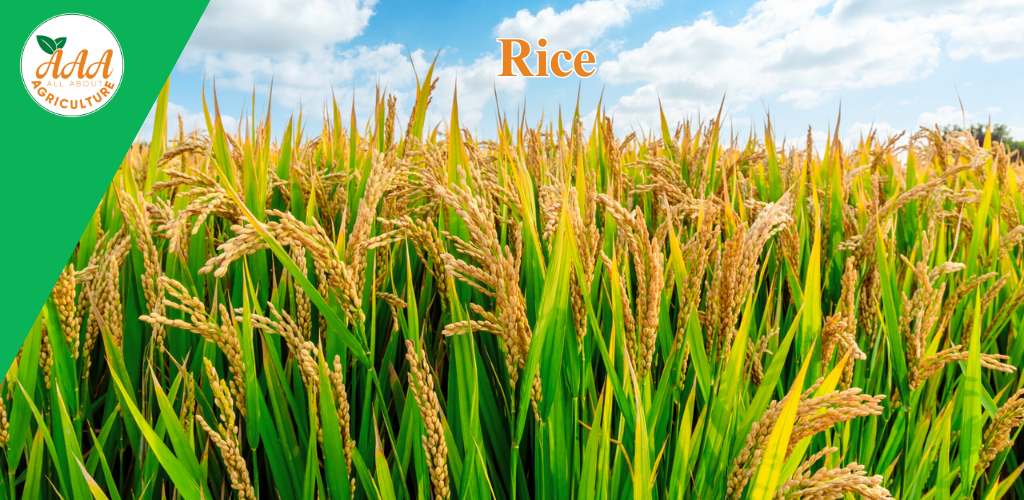
Rice
Rice
Understanding About Crop
- Rice is one of the most important staple foods consumed worldwide, especially in Asia.
- It grows well in warm, wet environments and is essential for food security in many countries including India.
- On All about agriculture, we share practical, easy steps and tips that help farmers maximize rice production with sustainable methods.
- Rice can be grown by direct seeding or transplanting seedlings from nurseries to fields.
Key Features
Climate and Soil Requirements
- Ideal Climate: Rice requires warm temperatures between 20°C to 35°C for optimum growth; it is sensitive to frost and requires a long sunny growing season.
- Rainfall Needs: Requires abundant and well-distributed rainfall or irrigation, ideally 100-200 cm annually; water is critical during the growing season, especially during tillering and flowering.
- Soil Requirements: Prefers clayey loam or silty clay soils with high water retention capacity; soils should be fertile and well-structured to hold water and nutrients.
- pH Range: Slightly acidic to neutral soil pH from 5.5 to 7.0 is best for nutrient availability.
- Water Management: Fields are usually kept flooded during most of the growth period to suppress weeds and support rice growth.
- All about agriculture Tip: Avoid drought-prone or poorly drained areas; soil testing helps to adjust fertility and pH before planting.
Land Preparation
- Pre-Planting Flooding: Flood the field 2-3 weeks before transplanting to soften soil and kill weeds and pests.
- Ploughing and Puddling: Plough the land deeply (about 10 cm) multiple times; puddling breaks soil aggregates and creates a soft, impermeable layer to retain water.
- Weed and Debris Removal: Remove all weeds, stubbles, and old vegetation to prevent pest carryover and improve soil aeration.
- Leveling: Precisely level the field using a plank or laser leveling tool for uniform water distribution and proper crop growth.
- Organic Matter: Incorporate well-rotted compost or organic manure during land preparation to boost soil fertility.
- All about agriculture Advice: Proper field preparation helps reduce water loss and increases yield; early preparation reduces transplanting stress.
High-Yielding and Hybrid Seed Selection
- Seed Quality: Use certified, high-yielding, and disease-resistant varieties adapted to your local climate and soil conditions.
- Popular Varieties: Varieties like Swarna, IR64, MTU1010, and hybrids suited for irrigated or rainfed conditions.
- Resistance: Choose seeds resistant to common pests and diseases such as blast and bacterial leaf blight for sustainable production.
- Seed Source: Purchase seeds from trusted suppliers or government certified agencies to ensure good germination rates.
- All about agriculture Suggestion: Changing seed variety every few years and using hybrids can greatly improve productivity.
Seed Treatment
- Purpose: Protects seeds from fungal and bacterial diseases during germination and early growth.
- Chemical Treatment: Treat seeds with fungicides such as Carbendazim or Thiram at recommended doses to prevent smut, blast, and seed rot.
- Bio-Treatment: Use biofertilizers containing Azospirillum or PSB to enhance seedling vigor and soil nutrition naturally.
- Drying After Treatment: Dry seeds in shade before drying to retain viability and improve sowing uniformity.
- All about agriculture Tip: Seed treatment reduces disease outbreaks and supports early seedling establishment with higher survival rates.
Sowing and Planting Methods
- Nursery Preparation: Sow seeds in well-prepared seedbeds, keeping soil moist and pest-free for 20-30 days until seedlings are ready to transplant.
- Transplanting: Transplant seedlings aged 20-30 days in puddled fields spaced about 20 cm x 15 cm for optimal growth.
- Direct Seeding: In some areas, direct sowing is used by broadcasting pre-germinated seeds in dry or wet fields.
- Planting Depth: Sow seeds shallowly (2-3 cm) to ensure quick germination; planting too deep delays emergence.
- Timing: Time sowing or transplanting to coincide with the start of monsoon or irrigation availability, ensuring a full growing season.
- All about agriculture Advice: Transplanting generally gives better yields, but direct seeding saves labor and time.
Nutrient and Fertilizer Management
- Organic Input: Apply 5-10 tonnes/ha of well-rotted farmyard manure or compost before transplanting to improve soil organic matter.
- Chemical Fertilizers: Rice generally requires Nitrogen (100–140 kg/ha), Phosphorus (30–60 kg/ha), and Potassium (30–50 kg/ha), adjusted to local soil fertility.
- Application Timing: Split nitrogen into basal (at transplanting), tillering, and panicle initiation doses for efficient use.
- Micronutrients: Zinc and iron deficiencies are common; apply micronutrient fertilizers as per soil test recommendations.
- All about agriculture Tip: Balanced nutrient management improves plant health, grain quality, and yield stability.
Irrigation and Water Management
- Water Depth: Maintain 5-10 cm water level during vegetative growth to suppress weeds and provide adequate moisture.
- Drainage: Around 10-15 days before harvest, drain water to allow field drying and grain maturation.
- Water Management Techniques: Alternate Wetting and Drying (AWD) saves up to 30% water without yield loss.
- Rainfed Areas: Use bunds and channels for water retention; practice mulching to conserve moisture.
- All about agriculture Guidance: Proper water scheduling reduces water waste and protects yield under changing climate conditions.
Intercultural Operations
- Weeding: Regular hand weeding or mechanical weeding at 15-30 days after transplanting removes competition.
- Fertilizer Incorporation: Apply fertilizers during interculture stages for better uptake.
- Puddling After Weeding: Helps maintain water retention and control weeds between plants.
- Crop Residue: Incorporate residue back into soil after harvest to enhance organic matter.
- All about agriculture Suggestion: Timely intercultural operations protect crop health and improve productivity.
Pest Management
- Common Pests: Stem borers, leaf folders, and brown plant hoppers damage rice plants.
- Identification: Look for holes in leaves, wilting, and hopper burn marks.
- Cultural Control: Crop rotation and removal of wild grasses reduce pest habitat.
- Chemical Control: Use pesticides only when pest population crosses economic threshold; follow label instructions carefully.
- All about agriculture Advice: Integrated pest management (IPM) combining cultural, mechanical, and chemical methods is best.
Disease Management
- Common Diseases: Blast, bacterial leaf blight, sheath blight, and tungro virus cause significant losses.
- Prevention: Use resistant varieties and healthy seeds; maintain field sanitation and balanced fertilization.
- Fungicide Use: Apply timely fungicide sprays as per disease severity and stage.
- Water Management: Avoid prolonged stagnant water to reduce fungal diseases.
- All about agriculture Tip: Regular field scouting and disease monitoring helps control outbreaks early.
Harvesting and Post-Harvest Management
- Harvest Timing: Harvest rice when grains are hard and moisture content is about 20-24%.
- Method: Cut plants carefully using sickles or mechanized harvesters to reduce grain loss.
- Drying: Sun-dry harvested grains immediately to reduce moisture to 12-14% to prevent spoilage.
- Storage: Store grains in clean, dry, and ventilated places; use airtight containers or bags to protect from pests.
- All about agriculture Suggestion: Proper post-harvest handling increases grain quality and market value.
Other Important Points
- Practice crop diversification and system of rice intensification (SRI) for better yields and sustainability.
- Stay updated on weather, pest alerts, and market prices through All about agriculture.
- Attend local workshops and training sessions to learn modern rice cultivation methods.
Do’s
- Select certified seeds, prepare land well, monitor fields regularly, and use recommended doses of fertilizer and pesticide.
- Maintain proper spacing and water levels, and rotate crops to prevent pests and diseases.
Don'ts
- Use old or untreated seeds, ignore water management, or delay harvesting.
- Over-apply fertilizer or pesticides as it can harm plants and environment.
Frequently Asked Questions
How can farmers manage weed problems in rice fields effectively?
Weed control is crucial in rice farming as weeds compete for nutrients and water. Besides manual weeding, farmers can use integrated weed management practices such as herbicide application, proper field flooding, and maintaining vegetation buffers around fields to reduce weed spread. Timely weed control improves rice growth and yield.
What are the best practices to handle lodging (falling over) in rice crops?
Lodging reduces yield and grain quality. Prevent it by selecting semi-dwarf varieties, managing nitrogen fertilizer carefully, and timing irrigation to avoid overly soft soil. Mechanical supports or draining fields before harvest can also help reduce lodging risk.
How does climate change affect rice cultivation and what can farmers do?
Climate change impacts rice through altered rainfall, temperature stress, and increased pests. Farmers can adapt by using climate-resilient rice varieties, adjusting sowing dates, improving water management, and diversifying crops. Staying informed via platforms like All about agriculture helps farmers adopt timely strategies.
What are common post-harvest losses in rice and how to minimize them?
Losses often happen during harvesting, drying, and storage due to improper methods, moisture, pests, or poor handling. Using mechanical harvesters, sun-drying grains promptly, and storing in clean, dry, airtight containers reduce losses and maintain grain quality.
How important is field leveling in rice cultivation?
Field leveling ensures uniform water distribution, reduces water usage, and promotes even crop growth. Precise leveling reduces dry spots and weed growth aiding in higher yields. Modern tools like laser leveling improve efficiency and labor savings.
What role do beneficial microbes play in rice farming?
Beneficial microbes enhance soil fertility by fixing nitrogen, decomposing organic matter, and suppressing harmful pathogens. Using biofertilizers boosts rice plant growth naturally, reduces chemical fertilizer use, and supports sustainable farming practices.
How can farmers efficiently manage water use in rice farming?
Implementing water-saving techniques like Alternate Wetting and Drying (AWD), maintaining proper bunds, and adopting drip irrigation where possible optimize water use. These methods conserve water, reduce methane emissions, and maintain good yields.
What are some traditional methods still useful in modern rice cultivation?
Traditional methods include manual transplanting, using organic manures, crop rotation, and maintaining waterlogged conditions to control weeds. Combining these with modern techniques ensures balanced farming practices and sustainable yields.
How to prevent rat damage in stored rice grains?
Store rice in sealed, elevated containers or metal bins. Regular inspection and cleanliness of storage areas prevent rat infestation. Using safe rodenticides and natural repellents also protects grains without harming quality.
What is the significance of proper nursery management in rice cultivation?
Healthy nursery seedlings lead to a robust crop. Proper seedbed preparation, seed treatment, timely watering, and protection from pests ensure uniform crop establishment and reduce transplant shock.
How do farmers monitor rice crop health during growth?
Regular field scouting helps detect early signs of pests, diseases, or nutrient deficiencies. Using simple tools like hand lens, observing color and growth patterns, and consulting expert advice (like on All about agriculture) aid in timely interventions.
What marketing tips help rice farmers get better prices for their crop?
Farmers should time harvesting to market demand, store grains properly to maintain quality, engage with local buyers or cooperatives, and stay updated on price trends using agri-information platforms. Diversifying sales channels improves income stability.