Sesame
Sesame
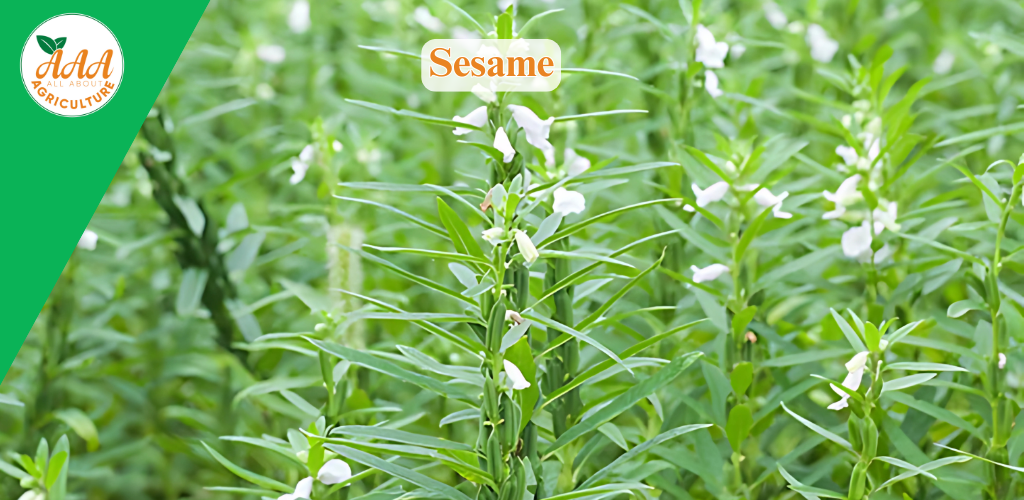
Understanding About Crop
Nutritional Value:
- Sesame seeds are rich in oils (40-60%), protein (20-28%), fiber, calcium, iron, magnesium, and antioxidants like sesamin and sesamolin.
- These nutrients support heart health, bone strength, and antioxidant protection in the human body.
- Sesame oil derived from seeds is light, nutritious, and widely used in cooking and traditional medicine.
Dietary Diversity:
- Sesame is used in cooking oil, tahini, snacks, sweets, and health supplements, enriching diets globally.
- Its seeds are also added to breads, salads, and traditional dishes, providing taste and nutrition.
- This versatile crop complements various food cultures and dietary needs.
Economic Importance:
- Sesame farming yields both oil and protein-rich meal with strong demand in domestic and export markets.
- Residues serve as fodder and organic matter improving soil fertility.
- All about agriculture supports farmers with market trends and cultivation best practices for profitability.
Crop Rotation:
- Growing sesame after cereals or pulse crops helps break pest and disease cycles and improves soil organic matter.
- It enhances nutrient cycling and reduces dependency on synthetic inputs.
- Diverse rotations promote soil health and sustainable farming systems.
Climate Resilience:
- Sesame is drought-tolerant, growing well in tropical and subtropical conditions with temperatures between 21-32°C.
- It thrives in well-drained soils and can tolerate heat, but is sensitive to waterlogging and heavy rain during seed development.
- Adaptability makes it a climate-smart crop for rainfed and dryland farming.
Health Benefits:
- Sesame seeds improve cardiovascular health, aid digestion, and boost immunity due to fiber, antioxidants, and healthy fats.
- They contribute to bone strength and have anti-inflammatory properties.
- Consumption in moderation is beneficial, but excessive intake might cause allergies or digestive discomfort in sensitive individuals.
Key Features
Climate and Soil Requirements
- Sesame grows best in warm climates with temperatures from 21-32°C; it requires 90-120 frost-free days to mature fully.
- Prefers well-drained sandy loam or clay loam soils with pH 5.5-7.5.
- Avoid waterlogged or saline soils as they damage roots and reduce yield.
- Moderate rainfall between 500-700 mm is ideal; too much rain during maturity can cause seed loss by shattering.
- Test and amend soils for optimal fertility, as per All about agriculture recommendations.
Land Preparation
- Deep plough the field 2-3 times to break up compact soil and improve drainage.
- Remove weeds, residues, and stones to ensure a clean seedbed and reduce pest habitat.
- Incorporate 5-7 tons/ha of organic compost to raise soil organic matter and moisture retention.
- Level the land carefully to prevent water stagnation during the crop cycle.
- Proper land prep ensures good seed-soil contact and supports uniform germination.
High-Yielding and Hybrid Seed Selection
- Use certified, high-yielding varieties or hybrids known for disease resistance and adaptability to your climate.
- Select seeds with good size, uniformity, and high oil content; examples include varieties like Til-1, TMV-3, and local hybrids.
- Avoid using old or mixed-quality seed to prevent poor germination and crop failure.
- Seed replacement every 2-3 years keeps vigor and yield potential high.
- Follow All about agriculture for regular updates on recommended varieties.
Seed Treatment
- Treat seeds with fungicides (e.g., Thiram) and insecticides to protect from soil-borne diseases and early pests.
- Seed priming (soaking and drying) improves germination rates and seedling vigor, especially under dry conditions.
- Bioinoculants such as phosphorus-solubilizing bacteria may help nutrient uptake.
- Proper seed treatment reduces early losses and ensures uniform crop establishment.
- Adhere to safety instructions and use treatments recommended by All about agriculture.
Sowing and Planting Methods
- Sow seeds at 1.5-2.5 cm depth in well-prepared fields with spacing of 30 cm between rows and 15 cm between plants.
- Use seed drills or line sowing for even spacing and easy management; broadcasting reduces uniformity.
- The ideal sowing time depends on local climate, mostly June to July during the monsoon for rainfed crops.
- Maintain moist soil during sowing for better germination; irrigation may be needed in dry spells.
- Avoid deep planting which delays emergence and weakens seedlings.
Nutrient and Fertilizer Management
- Apply 5-7 tons/ha of organic manure before land preparation to boost fertility and soil microbes.
- Apply NPK fertilizers based on soil test; commonly recommended is 25-50 kg N, 40-60 kg P2O5, and 20-40 kg K2O per hectare.
- Avoid excessive nitrogen which can promote lush foliage but reduce seed and oil yield.
- Micronutrient sprays (zinc, boron) improve flowering and seed setting if deficiencies are present.
- Follow soil test reports and All about agriculture’s fertilization guidance for best yields.
Irrigation and Water Management
- Sesame needs soil moisture mainly during germination, flowering, and seed filling stages.
- Ensure adequate but not excessive irrigation; overwatering causes root rot and reduces yield.
- Drip or furrow irrigation saves water and maintains uniform moisture.
- Mulching helps conserve moisture and reduce weed growth.
- Monitor soil moisture regularly using weather and soil sensors; apply irrigation efficiently using All about agriculture’s advisory.
Intercultural Operations
- Perform first weeding 15-20 days after sowing to reduce competition.
- Use shallow cultivation or hand weeding to avoid damaging shallow roots.
- Timely removal of weeds reduces pest hideouts and disease sources.
- Remove crop residues to limit fungal disease spread in the next crop.
- Consistent intercultural care ensures proper plant growth and higher yields.
Pest Management
- Major pests: Whitefly, aphids, sesame webworm, and stem borers damage leaves and seeds.
- Use integrated pest management combining biological controls, neem extracts, pheromone traps, and timely chemical use.
- Crop rotation and field sanitation reduce pest pressure sustainably.
- Monitor pest population and spray only based on thresholds to avoid resistance.
- Refer to All about agriculture for pest alert updates and management plans.
Disease Management
- Common diseases: Powdery mildew, phyllody, and leaf spot affect yield and quality.
- Use resistant varieties and treat seeds to minimize infection.
- Crop rotation and removal of infected plant debris cut disease spread.
- Apply recommended fungicides only on confirmed outbreaks.
- All about agriculture provides updates on emerging diseases and control techniques.
Harvesting and Post-Harvest Management
- Harvest when 75-80% of capsules turn brown and dry; avoid over-maturity to prevent shattering.
- Use combines or manual methods carefully; dry harvested seeds to below 8% moisture for storage.
- Clean and store seeds in cool, dry, airtight containers free from pests to retain quality.
- Proper post-harvest handling maintains oil quality and seed germination capacity.
- All about agriculture offers post-harvest and marketing advice for best profits.
Other Important Points
- Sesame is a low-input crop compared to others, making it affordable for small farmers.
- Excess consumption may cause allergies or digestive issues in sensitive individuals; consume in moderation.
- Sesame contributes to soil fertility, biodiversity, and resilience in farming systems.
- Stay connected to All about agriculture for latest technologies, market, and government schemes.
Do’s
- Use certified, treated seeds.
- Maintain balanced fertilization with organic inputs.
- Monitor pests and diseases regularly for early management.
- Harvest at correct maturity to prevent seed loss by shattering.
Don'ts
- Don’t over-irrigate or plant in poorly drained soils.
- Don’t sow seeds too deep or too shallow.
- Don’t ignore signs of nutrient deficiencies or pest infestations.
- Don’t delay harvesting; it risks seed shedding and quality loss.
What are the common methods used for extracting sesame oil?
Sesame oil is extracted mainly by mechanical pressing (cold or hot pressing) and solvent extraction using hexane. Cold-pressed oil retains more nutrients and flavor, while solvent extraction yields more oil. Filtration and refining improve quality before sale.
How does sesame processing affect oil quality?
Roasting seeds before pressing improves oil aroma and shelf life but excessive heat may reduce nutrition. Cold-pressed oil is richer in antioxidants, whereas hot-pressed oil has higher yield but less flavor. Proper processing preserves sesame oil’s health benefits.
What is cold-pressed sesame oil, and why is it preferred?
Cold-pressed sesame oil is extracted without heat, preserving flavor, vitamins, and antioxidants. It is healthier than hot-pressed oil and preferred for culinary and medicinal uses. Though yield is lower, the nutritional value and taste make it popular.
How can farmers improve sesame seed quality before oil extraction?
Using certified seeds, proper drying to under 8% moisture, and removing foreign materials improve oil yield and quality. Avoiding seed damage during harvesting and storage also maintains seed oil content.
What are the environmental impacts of sesame oil extraction?
Mechanical pressing uses less energy and chemicals, making it eco-friendly. Solvent extraction, though efficient, can harm the environment if solvents aren’t handled properly. Sustainable processing involves waste recycling and low-emission technologies.
How can small-scale farmers extract sesame oil efficiently?
Small farmers use manual or motorized expeller presses to mechanically crush seeds for oil. Cold pressing at low temperatures retains oil quality. Training and affordable machinery improve yield and farmer incomes.
What are the health benefits of consuming sesame oil?
Sesame oil is rich in antioxidants, vitamin E, and healthy fats that support heart health, reduce inflammation, and promote skin wellness. It also provides anti-aging and immunity-boosting effects.
Can sesame oil be used for non-food purposes?
Yes, sesame oil is used in cosmetics, traditional medicines, massage oils, and sometimes biofuels. Its moisturizing and healing properties make it valuable beyond cooking.
What storage conditions are best for sesame seeds before oil extraction?
Store seeds in cool, dry, airtight containers to prevent mold, pest infestation, and oil degradation. Avoid high humidity and direct sunlight for maintaining seed quality and oil yield.
How is solvent extraction of sesame oil performed?
It involves pressing seeds mechanically first, then using hexane solvent to extract remaining oil from the seed cake. This method maximizes oil recovery but requires refining and safety measures due to chemical use.
Are there any risks associated with consuming too much sesame oil?
Excessive consumption may cause allergic reactions in sensitive individuals. Also, high oil intake can contribute to excess calories; moderation balanced with diet diversity is key.
Where can farmers learn about latest sesame oil production techniques?
Reliable resources, including our website All about agriculture, provide updated information on harvesting, processing, and sustainable practices to enhance yield and oil quality.