Sorghum
Sorghum
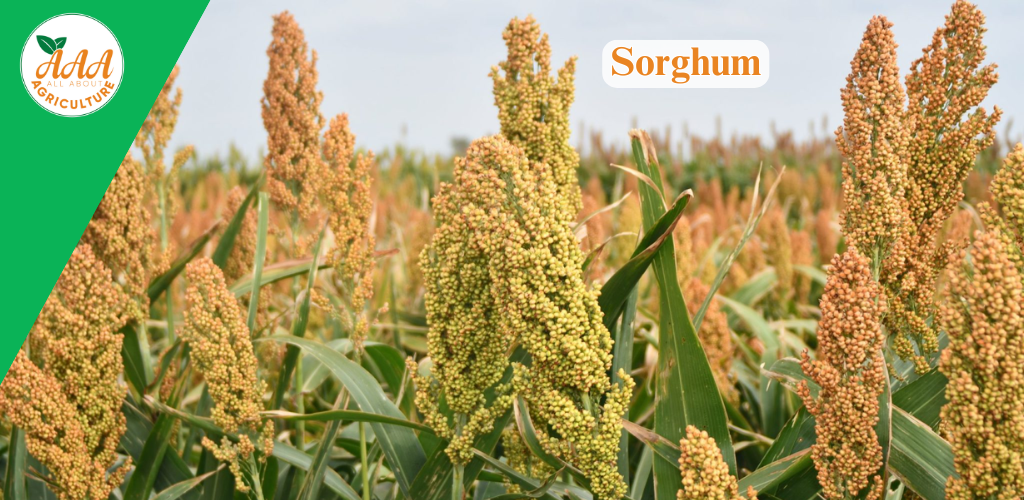

Understanding About Crop
- Sorghum is a warm-season, drought-tolerant cereal crop grown widely in Africa, Asia, and parts of America.
- It is used for food, fodder, biofuel, and industrial products and is known for its ability to survive in hot, dry climates.
- The grain is staple food in many countries and is also valuable as animal feed and raw material in industries.
- At All about agriculture, we provide practical cultivation tips to improve sorghum yield, quality, and sustainability.
Key Features
Climate and Soil Requirements
- Ideal Climate: Sorghum thrives best at temperatures between 25°C to 35°C and tolerates heat stress up to 38°C.
- Drought Tolerance: It grows well in low rainfall zones (as low as 450-600 mm) making it perfect for semi-arid regions.
- Soil Type: Prefers well-drained loamy, sandy loam, or clay-loam soils with good organic matter and pH between 5.5 and 7.5.
- Soil Drainage: Avoid waterlogged or poorly drained soils as sorghum roots need air to flourish and excess moisture promotes root diseases.
- Adaptability: Can grow on a wide range of soils from light sandy to moderately heavy soils.
- All about agriculture Tip: Test soil before planting to optimize amendments and fertilizer use for best results.
Land Preparation
- Primary Tillage: Plough deeply 20-30 cm to loosen soil and break compaction, ensuring proper root penetration.
- Secondary Tillage: Follow with harrowing and leveling to form a fine, firm, and even seedbed for seed-to-soil contact.
- Weed and Debris Clearance: Remove old crop residues, stones, and weeds to minimize pest pressure and enhance aeration.
- Manure or Compost Application: Incorporate 3-5 tons/ha of well-decomposed farmyard manure 2-3 weeks before sowing for nutrient supply.
- Soil Moisture: Prepare land so that soil moisture is retained but drained to avoid seed rotting.
- All about agriculture Advice: Proper land prep improves seed germination uniformity and crop vigor.
High-Yielding and Hybrid Seed Selection
- Seed Quality: Use certified seeds from government or trusted suppliers to avoid spurious or mixed seeds.
- Variety Selection: Choose varieties/hybrids suited to your climate and soil type (e.g. drought-tolerant hybrids for dry regions).
- Yield Traits: Opt for varieties with good grain size, pest/disease resistance, and maturity length fitting local rainfall patterns.
- Seed Renewal: Regular replacement of seeds (every 2-3 years) preserves vigour and enhances production.
- All about agriculture Recommendation: Follow local agricultural advisories for latest recommended sorghum varieties.
Seed Treatment
- Fungi Prevention: Treat seeds with fungicides like Thiram or Carbendazim at 2g/kg to protect against seed and soil-borne diseases.
- Biofertilizers: Use Rhizobium or Azospirillum inoculants to stimulate nitrogen fixation and improve seedling health.
- Drying Seeds: Shade-dry treated seeds before sowing to maintain optimal germination rates.
- Benefits: Seed treatment reduces early seedling diseases and minimizes dependence on chemical pesticides later.
- All about agriculture Note: Always comply with safety and dosage guidelines during treatment.
Sowing and Planting Methods
- Sowing Time: Plant sorghum after the onset of reliable rains, generally late spring to early summer (May–July).
- Seed Rate: Use 8-12 kg per hectare depending on variety and sowing method.
- Depth: Sow seeds 4-5 cm deep ensuring soil moisture beneath seed bed for quick germination.
- Spacing: Recommended spacing is 75 cm between rows and 20-25 cm between plants within the row to optimize sunlight and air circulation.
- Sowing Method: Use seed drills for uniform distribution; broadcasting is less efficient and can lead to overcrowding.
- Thinning: Thin seedlings 15-20 days after sowing to maintain plant population and reduce competition.
- All about agriculture: Uniform sowing and correct spacing support robust plant health and easier intercultural management.
Nutrient and Fertilizer Management
- Organic Matter: Incorporate well-rotted manure or compost to improve soil structure and nutrient content before sowing.
- Major Nutrients: Recommended fertilizer rates per hectare: Nitrogen 50-80 kg, Phosphorus 20-40 kg, Potassium 20-30 kg, adjusted by soil test results.
- Application Timing: Apply basal phosphorus and potassium at sowing; split nitrogen application half at sowing and half during tillering/elongation.
- Micronutrients: Zinc and sulfur may be deficient in certain soils – foliar or soil application boosts growth where needed.
- All about agriculture Advice: Balanced nutrition is key to drought tolerance and maximizing grain yield and quality.
Irrigation and Water Management
- Water Use: Sorghum is drought resistant but responds well to 3-4 irrigations at critical growth stages: seedling, tillering, flowering, and grain filling.
- Avoid Waterlogging: Excess water harms roots and encourages fungal diseases.
- Irrigation Methods: Drip irrigation or flood irrigation may be used based on availability; water-saving methods preferred in water stress areas.
- Rainfed Management: Mulching or conservation tillage improves moisture retention during dry spells.
- All about agriculture: Timely irrigation scheduling following weather forecasts enhances productivity and water efficiency.
Intercultural Operations
- Weeding: Early and regular weeding within the first 30 days prevents nutrient competition and improves soil aeration.
- Hoeing: Light soil loosening at seedling and tillering stages helps roots breathe and water infiltration.
- Herbicides: Use selective herbicides responsibly when mechanical control is not feasible.
- Residue Management: Incorporate crop residues to replenish organic matter or use as mulch to conserve moisture.
- All about agriculture Tips: Timely intercultural operations reduce pest habitat and promote vigorous crop growth.
Pest Management
- Common Pests: Sorghum midge, stem borer, shoot fly, aphids, and armyworms affect yield.
- Early Detection: Regular field scouting crucial to identify and control pest outbreaks early.
- Control Options: Use cultural controls like crop rotation, biological agents (e.g., Trichogramma), neem extracts, and selective insecticides when required.
- Avoid Overuse: Minimize indiscriminate pesticide use to prevent pest resistance and conserve beneficial insects.
- Integrated Pest Management: Follow IPM principles promoted by All about agriculture for sustainable control.
Disease Management
- Key Diseases: Anthracnose, grain mold, leaf blight, and downy mildew reduce crop health and grain quality.
- Disease Prevention: Use resistant varieties and seeds treated with fungicides.
- Field Management: Rotate crops and remove infected debris to reduce pathogen load.
- Chemical Treatment: Fungicides applied only at economic threshold levels based on monitoring.
- All about agriculture Advice: Early disease detection and timely management reduce losses significantly.
Harvesting and Post-Harvest Management
- Maturity: Sorghum is ready to harvest 90-130 days after sowing depending on variety and climate.
- Harvest Timing: When grains harden and moisture content drops to 20-25%.
- Methods: Harvest manually with sickles or mechanically with combine harvesters minimizing grain loss.
- Drying: Sun-dry grains promptly to save moisture (12-14%) to prevent spoilage.
- Storage: Store in clean, dry, well-ventilated places using airtight containers or bags to avoid pest damage.
- Market Awareness: Track market prices through All about agriculture for timely selling and profit optimization.
Other Important Points
- Sorghum stalks can be used as fodder or for bioenergy, adding farm profitability.
- Practice crop diversification with legumes for better soil health and income stability.
- Stay updated with new varieties, pest alerts, and climate-smart farming practices via All about agriculture.
Do’s
- Use certified seeds, prepare land thoroughly, apply balanced fertilizers, monitor pests and diseases, and irrigate timely.
- Maintain recommended spacing, practice crop rotation, and harvest at maturity.
Don'ts
- Use uncertified or old seeds, over-irrigate, ignore pest/disease signs, or delay harvest.
- Mix varieties leading to irregular crop growth and difficult management. Adhering to these practices supported by All about agriculture can boost your sorghum yields and farm income.
Frequently Asked Questions
What are effective soil fertility management practices for sorghum?
Regular soil testing helps identify nutrient deficiencies and tailor fertilizer application. Incorporating organic compost improves soil structure and microbial life, enhancing nutrient uptake. Balanced nutrient management boosts plant growth and drought resilience, crucial for sorghum success.
How can farmers manage the parasitic weed Striga in sorghum fields?
Striga reduces sorghum yield drastically. Use resistant sorghum varieties, practice crop rotation with non-host crops, and maintain good soil fertility to suppress Striga. Early weeding and applying organic amendments also help control this tough parasite.
What modern technologies can improve sorghum yield and management?
Precision agriculture tools like satellite imaging, soil moisture sensors, and variable rate technology optimize water, fertilizer, and pesticide use. Drones assist in early pest detection and crop health monitoring, improving timely interventions and overall productivity.
How important is integrated pest management (IPM) for sorghum?
IPM reduces reliance on chemical pesticides by combining cultural, biological, and chemical methods. Encouraging beneficial insects, crop rotation, and using pest-resistant hybrids minimize pest outbreaks and support sustainable sorghum farming.
What are water conservation methods suitable for sorghum cultivation?
Techniques like drip irrigation, mulching, and rainwater harvesting reduce water use while ensuring consistent moisture. Timely irrigation scheduling based on weather forecasts and soil moisture data helps avoid water stress and improves yield.
How can smallholder farmers access government support for sorghum farming?
Farmers can benefit from subsidies, input schemes, and crop insurance programs offered by local agricultural offices and government bodies. Joining Farmer Producer Organizations (FPOs) helps gain collective benefits and better market access.
What post-harvest practices are essential to reduce sorghum grain losses?
Harvest sorghum at proper maturity to avoid shattering. Rapid drying and cleaning of grains prevent spoilage. Store grains in clean, dry, pest-proof containers and regularly inspect for infestations to maintain quality and market value.
How can crop residue management add value in sorghum farming?
Sorghum stalks can be used as animal fodder or incorporated back into soil as organic matter. Using residue as mulch conserves moisture, reduces erosion, and improves soil fertility, enhancing sustainability of sorghum production.
What are common nutritional benefits of sorghum for human and animal consumption?
Sorghum is gluten-free and rich in antioxidants, fiber, and minerals. It provides energy and helps manage diabetes. Its residues are nutritious fodder that supports animal health, making sorghum a versatile crop.
How do climate change challenges affect sorghum, and how to adapt?
Variable rainfall and temperature extremes stress sorghum growth. Adopting drought-tolerant hybrids, adjusting planting dates, and improving water-use efficiency are key adaptations. Platforms like All about agriculture provide guidance on climate-smart practices.
What are some natural pest control alternatives for sorghum farmers?
Neem oil, pheromone traps, and biological agents like predatory insects serve as eco-friendly pest management tools. These reduce chemical pesticide use, protect beneficial species, and lead to healthier ecosystems in sorghum fields.
How can farmers improve sorghum seed quality for better germination?
Store seeds in cool, dry places to maintain viability. Treat seeds with suitable fungicides or biofertilizers before sowing. Using fresh, certified seeds ensures uniform germination and vigorous seedlings, vital for high yields.