Safflower
Safflower
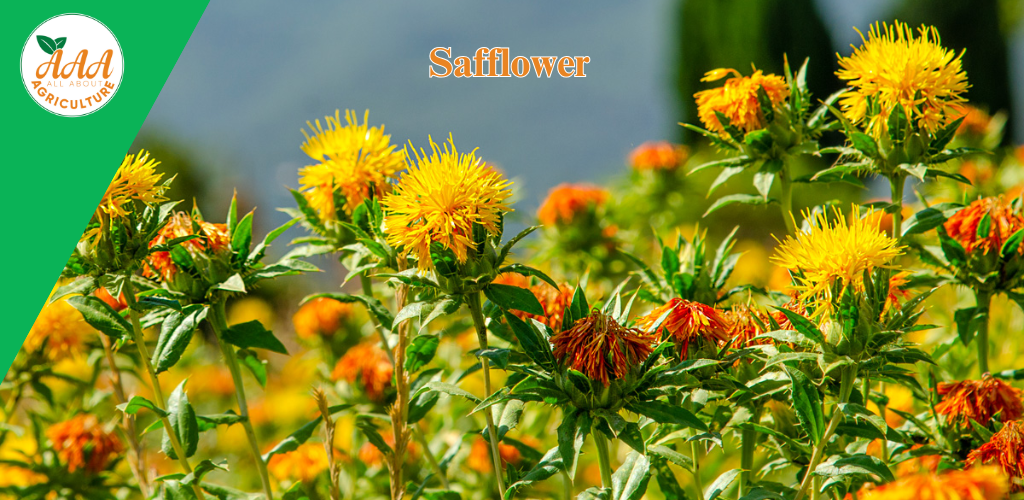
Understanding About Crop
Nutritional Value:
- Safflower seeds are a rich source of oil high in unsaturated fatty acids, especially linoleic acid, providing heart-healthy benefits.
- The oil is high in vitamin E (an antioxidant), which protects cells from damage.
- Safflower oil is light and commonly used for cooking, salad dressings, and nutritional supplements.
Dietary Diversity:
- Besides cooking oil, safflower seeds are used in snacks, health foods, and cosmetics, increasing diet options.
- The oil substitutes for sunflower or corn oil in recipes and food processing, catering to allergy-sensitive individuals.
- Its mild flavor and health benefits make it popular worldwide.
Economic Importance:
- Safflower cultivation provides income from oil production and meal byproducts for animal feed.
- Markets for organic and conventional safflower oil are growing due to health awareness.
- All about agriculture guides farmers in best practices and market trends for higher returns.
Crop Rotation:
- Safflower works well in crop rotations with cereals and legumes, breaking pest and disease cycles and enhancing soil health.
- Its deep rooting improves soil structure and nutrient cycling.
- Rotations reduce input costs and support sustainable agriculture.
Climate Resilience:
- It thrives in semi-arid, temperate, and subtropical climates tolerating drought and heat better than many oilseeds.
- Safflower prefers well-drained soils and is not suited for heavy rains or water stagnation.
- This adaptability makes it suitable for rainfed and dryland farming systems.
Health Benefits:
- Safflower oil may reduce cholesterol and inflammation, supporting cardiovascular health.
- Its antioxidants help protect skin and may aid in managing diabetes and obesity.
- People with sesame or nut allergies should consume cautiously as rare cross-reactions can occur.
Key Features
Climate and Soil Requirements
- Safflower grows best in warm climates with temperatures ranging from 20 to 30°C.
- It requires well-drained, loamy to sandy soils, with pH between 6 and 8 suitable for growth.
- Avoid waterlogged or saline soils as they reduce plant health and yield.
- Moderate rainfall of 400-600 mm throughout the growing period is ideal.
- A good soil base ensures healthy roots and nutrient availability supported by All about agriculture’s advice.
Land Preparation
- Deep ploughing to loosen compacted soil and improve aeration is essential.
- Follow with harrowing to get a fine seedbed free from clods, stones, and weeds.
- Incorporate well-rotted organic matter like compost or farmyard manure to enhance fertility and water retention.
- Level the field to ensure uniform irrigation and prevent waterlogging.
- Proper land preparation supports uniform germination and reduces early crop stress.
High-Yielding and Hybrid Seed Selection
- Use high-yielding, disease-resistant varieties recommended by local agri departments or All about agriculture.
- Varieties should be selected based on growth duration, oil content, and climatic adaptability.
- Hybrid seeds offer better vigor and resilience under diverse environmental conditions.
- Ensure seed purity with certified producers and replace stocks every 2-3 years.
- Healthy seed selection directly impacts productivity and oil quality.
Seed Treatment
- Treat seeds with approved fungicides to control early infections like damping-off and root rot.
- Use bio-inoculants to promote beneficial microbial activity and improved nutrient uptake.
- Seed priming (soaking and drying) enhances germination rates and uniformity.
- Proper seed handling improves stand establishment and lowers the need for later chemical interventions.
- Follow seed treatment guidelines from reliable sources including All about agriculture.
Sowing and Planting Methods
- Sow safflower seeds at 2-3 cm depth in well-prepared seedbeds for ideal moisture.
- Row spacing of 30-45 cm and plant spacing of 10-15 cm allows healthy canopy growth and airflow.
- Timing varies from late spring to early summer depending on regional climate and frost-free period.
- Precision sowing by seed drills ensures uniform crop density, easy management, and higher yields.
- Maintain soil moisture around sowing to boost seedling survival.
Nutrient and Fertilizer Management
- Organic inputs like compost (5-7 tons/ha) improve soil fertility and structure before sowing.
- Balanced NPK fertilization tailored by soil testing: typically 50–60 kg N, 40–50 kg P2O5, and 30–40 kg K2O per hectare.
- Excess nitrogen may delay flowering and cause lodging, so monitor rates carefully.
- Micronutrients such as boron and zinc improve flowering and seed quality.
- Customized nutrient management using All about agriculture’s soil fertility advice maximizes outputs.
Irrigation and Water Management
- Safflower requires moisture during germination, flowering, and seed filling but is drought tolerant.
- Avoid over-irrigating to prevent root diseases and reduce seed quality.
- Drip irrigation is water-efficient and supports consistent soil moisture.
- Mulching helps conserve moisture and moderate soil temperature.
- Adjust irrigation based on rainfall and soil moisture monitoring with All about agriculture tools.
Intercultural Operations
- Timely hand weeding and mechanical cultivation 2-3 times after sowing reduce nutrient competition.
- Removal of weeds prevents pest habitats and disease reservoirs in the field.
- Crop residue management via incorporation enhances organic matter and suppresses weeds.
- Store sown seeds safely and thinning is essential to maintain plant density.
- Intercultural practices improve plant vigor and final yield.
Pest Management
- Common pests: aphids, whiteflies, and caterpillars can damage leaves and buds.
- Use integrated pest management combining natural predators, neem oil, and biological pesticides.
- Crop rotation and removing infested plants reduce pest buildup.
- Avoid overuse of chemicals to maintain ecosystem balance and reduce resistance.
- All about agriculture provides up-to-date pest management information.
Disease Management
- Powdery mildew and rust are common, controlled by resistant varieties and timely fungicides.
- Good field sanitation and crop rotation reduce disease incidence.
- Remove infected plant parts and maintain proper spacing to improve airflow.
- Apply fungicides only based on field scouting to prevent resistance.
- Stay updated with emerging disease threats through All about agriculture resources.
Harvesting and Post-Harvest Management
- Harvest when 70-80% of seed capsules turn dry and brown.
- Use mechanical harvesters or hand-pick carefully to minimize seed loss.
- Dry seeds properly below 10% moisture before storage.
- Store in cool, dry, pest-proof containers to maintain quality.
- Use All about agriculture’s market guides for best selling times.
Other Important Points
- Safflower oil is used in food, cosmetics, and pharmaceuticals due to its health benefits.
- Seeds and residues can be used as animal feed or organic matter.
- Moderation in consumption is advised; excessive intake may cause allergies.
- Keep updated with government schemes and technical support through All about agriculture.
Do’s
Don'ts
What are the common methods for extracting safflower seed oil?
Common methods include cold pressing, expeller pressing, and solvent extraction. Cold pressing retains more nutrients and flavor, whereas solvent extraction gives higher yield but requires refining.
How does cold pressing affect the quality of safflower oil?
Cold pressing extracts oil without heat, preserving antioxidants, vitamins, and flavor. This results in higher-quality oil beneficial for cooking and health supplements, though yield may be less than hot pressing.
What role does solvent extraction play in large-scale safflower oil production?
Solvent extraction uses chemicals like hexane to pull oil from seed cake after pressing, maximizing total yield. The process requires refining for safety and flavor but supports industrial-scale production.
How can small farmers produce high-quality safflower oil at home?
Small farmers use manual or semi-automatic expeller presses to cold-press oil, maintaining nutrition and taste. Proper seed cleaning and drying improve extraction efficiency and oil purity.
What are the health benefits of consuming safflower oil?
Safflower oil is rich in linoleic acid and vitamin E, which help reduce cholesterol, improve heart health, and provide anti-inflammatory effects. Regular moderate consumption supports skin and immune health.
Are there any side effects or allergies linked to safflower oil?
Though rare, some individuals may experience allergic reactions or digestive upset from safflower oil. It’s important to use it in moderation and consult a doctor if sensitivities appear.
How should safflower seeds be stored before oil extraction?
Store seeds in cool, dry, airtight containers away from light and moisture to prevent mold, rancidity, and insect attack, maintaining seed viability and oil quality.
What environmental considerations are important in safflower oil production?
Cold pressing uses less energy and chemicals, making it eco-friendly. Solvent extraction requires careful handling of solvents to avoid pollution. Waste management and recycling improve sustainability.
How does seed quality influence safflower oil yield and flavor?
High-quality, mature seeds with low moisture content and no damage produce better oil yield and taste. Seeds should be properly dried and cleaned before processing.
What traditional uses of safflower oil exist beyond cooking?
Safflower oil is used in cosmetics, massage oils, folk medicine, and sometimes in making candles and soaps, valued for moisturizing and healing properties.
How is safflower oil's fatty acid composition beneficial to health?
Its high linoleic acid content (an omega-6 fatty acid) supports cardiovascular function and lowers LDL cholesterol. Vitamin E antioxidants protect cells from damage.
Where can updated information on safflower cultivation and processing be found?
Farmers and processors can access reliable, updated guides and market trends on our website All about agriculture for improving yield, processing, and sales.