Areca Nut
Areca Nut
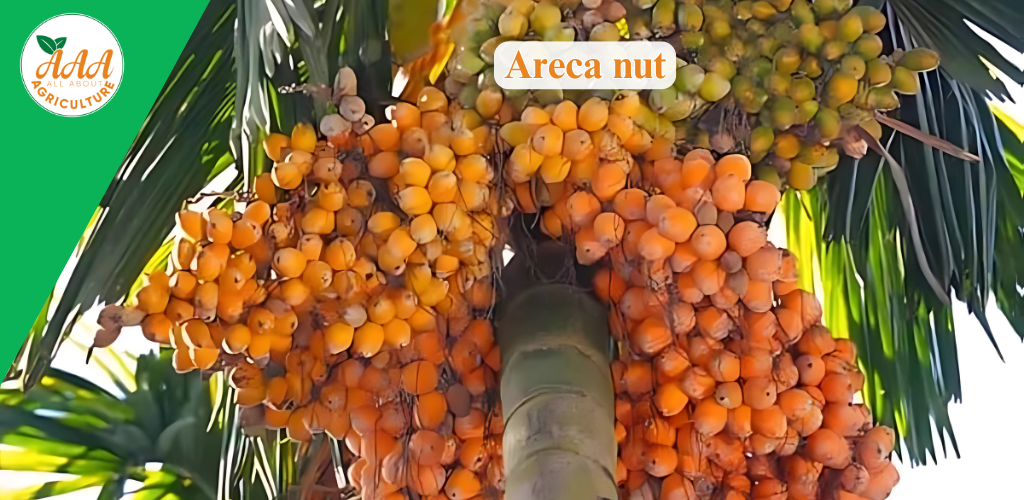
Understanding About Crop
Nutritional Value:
- Areca nuts are a source of carbohydrates, fiber, fats, and small amounts of proteins.
- It contains essential minerals such as calcium, potassium, and iron.
- The seeds have natural alkaloids like arecoline, which have psychoactive effects if chewed.
- Used in traditional medicine but excessive use poses health risks due to alkaloid content.
- Nut also contains tannins which act as natural preservatives.
- Dried areca nuts are valued for their astringent and digestive properties in small doses.
- Casually chewed as a stimulant, but overuse can harm teeth and gums.
Dietary Diversity:
- Main use is in chewing mixes like betel quid (paan) across Asia and the Pacific.
- Areca nut extracts are used in some medicines and traditional remedies.
- Used in religious ceremonies and as a social offering.
- Not used in conventional cooking due to its tough texture and taste.
- By-products from processing can be used as animal feed or compost.
- Powdered areca nut features in a few herbal teas and digestive formulations.
- The nut shell, after processing, can be ground or used as fuel in some regions.
Economic Importance:
- Prominent cash crops in India, Sri Lanka, Bangladesh, and parts of Southeast Asia.
- Supports millions of smallholder farmers with steady income.
- Processing, grading, and exporting nuts create large employment in rural areas.
- All about agriculture gives market, disease, and farming updates, improving profit margins.
- Resilient market demand due to cultural and social uses.
- By-products such as husk, shells, and leaves provide additional income opportunities.
- Global exports boost foreign exchange earnings and local livelihoods.
Crop Rotation:
- Grown long-term but intercrops like pepper, banana, ginger, or turmeric improve profits and biodiversity.
- Annual crop rotation along plantation borders helps control pests and maintain soil health.
- Green manure and legume intercrops naturally add nitrogen, enriching the soil.
- Rotation and intercropping break the life cycle of major pests and diseases.
- Improving soil structure and fertility, it reduces the need for heavy chemicals over time.
- Rotation supports year-round land use and risk sharing.
- Enhances total farm productivity and stability.
Climate Resilience:
- Grows best in warm, humid climates (20–38°C) with 1500–4000 mm of annual rainfall.
- Needs partial shade, especially for young palms, to prevent sun scorch.
- Deep, well-drained fertile soils (pH 5.5–6.5) are ideal for healthy palms.
- Drought and waterlogging both reduce yield; consistent moisture is key.
- Thrives in both plain and hilly terrain with proper moisture management.
- Shelter belts or windbreaks protect from storms and wind damage.
- Drought-resistant varieties offer resilience to changing climate patterns.
Health Benefits:
- Traditionally believed to aid digestion in very small amounts.
- Used in folk remedies for its astringent and possible antimicrobial effects.
- Claimed to stimulate alertness due to alkaloid content.
- Overconsumption is linked to oral and digestive health problems, so moderate use is vital.
- Long-term chewing causes teeth staining, gum disease, and increased cancer risk.
- Areca nuts should never be used by pregnant women, children, or those with heart problems.
- Properly processed areca nuts are safer, but the lowest consumption is healthiest.
Key Features
Climate and Soil Requirements
- Areca nut thrives in humid tropical climates with temperatures of 20–38°C and annual rainfall of 1500–4000 mm.
- Prefers deep, well-drained fertile loamy or laterite soils with pH 5.5–6.5 for strong root and palm growth.
- Tolerates some salinity but avoids heavy clay, rocky, or waterlogged soils.
- Partial shade or mixed cropping reduces heat stress especially for seedlings.
- Optimum sunlight improves nut setting, but direct afternoon exposure should be avoided for young plants.
- Consistent moisture through rain or irrigation greatly improves yield.
- Gentle slopes with proper drainage prevent root rot and standing water.
- Shelter from strong winds protects the tall palms from snapping.
- Improve soils regularly with compost, manure, and green manures.
Land Preparation
- Clear site of weeds, bushes, and stumps before deep ploughing or trenching up to 50 cm.
- Level land for uniform water movement, avoiding pooling at plant bases.
- Incorporate well-rotted compost or farmyard manure (25–30 tons/ha) into soil before planting.
- Prepare pits 75×75×75 cm and fill with topsoil mixed with compost and sand for each young palm.
- Arrange field layout in a square or triangular pattern with 2.7–3 m between plants.
- Install drainage channels if natural drainage is poor or in high rainfall zones.
- Create windbreaks or live fences for protection if in exposed areas.
- Sanitize tools and clean surrounding land to discourage pest buildup.
- Remove stones, roots, and solid debris that interfere with root growth.
High-Yielding and Hybrid Seed Selection
- Select seed nuts from healthy, high-yielding, disease-free palms aged 15–25 years.
- Prefer medium to large-sized, well-filled nuts; avoid very small or misshapen seeds.
- Improved hybrids and local selections show better nut size, yield, and disease tolerance.
- Always obtain planting materials from certified sources to prevent disease outbreaks.
- Test seed nuts in small nursery batches before field-scale planting.
- Replace poor performers with better varieties every 20–25 years.
- Keep nursery records by mother palm and planting year for tracking.
- Diversify varieties for better overall plantation stability and resilience.
- Use only treated, clean seed nuts to avoid introducing soil pathogens.
Seed Treatment
- Treat seed nuts by soaking in clean water for two weeks to improve germination.
- Apply fungicide dips or biocontrol solutions to control seed-borne and damping-off diseases.
- Germinate seeds in moist, shaded nursery beds for 3–4 months until sprouting.
- Discard or separate out any rotted, unviable, or pest-infested nuts immediately.
- Harden seedlings before transplant by gradual sun and water exposure over 2–4 weeks.
- Use organic treatments – like neem or Trichoderma – as eco-friendly alternatives.
- Keep nursery weed-free and ensure good airflow to reduce disease.
- Record germination rates and follow-up on nursery performance.
- Avoid excessive watering or nursery crowding that fosters fungal infections.
Sowing and Planting Methods
- Transplant 5–7 month old healthy seedlings with at least 5-6 leaves during the rainy season or after good pre-monsoon showers.
- Space plants 2.7–3 m apart in square or triangular layout for efficient field use.
- Place seedlings firmly in the center of the pit, cover roots, and lightly compact soil.
- Water after planting and mulch to protect base and maintain soil moisture.
- Avoid planting too deep or at uneven depth to prevent poor establishment.
- Fill any gaps within a year to maintain orchard density and uniformity.
- Early planting in mornings or evenings avoids heat stress.
- Check regularly for pests/diseases during the establishment phase.
- Provide shade to very young transplants against direct midday sun.
Nutrient and Fertilizer Management
- Apply 15–25 kg farmyard manure per palm annually for steady growth.
- Use recommended NPK, usually about 100–200 g N, 40–160 g P2O5, 140–200 g K2O per palm/year, split in 2-3 doses.
- Supply micronutrients like magnesium and boron via foliar sprays if deficiencies appear.
- Mix fertilizer in a basin 1 to 1.5 m around the base, without touching the trunk.
- Adjust fertilizer input depending on soil fertility, palm growth stage, and yield history.
- Combine organic and chemical inputs for long-term soil balance.
- Avoid excess nitrogen which encourages soft stem and pest attacks.
- Use biofertilizers to enhance root health and reduce chemical inputs.
- Keep fertilization records and observe leaf color and vigor for adjustment.
Irrigation and Water Management
- Areca nuts need frequent, light irrigation during dry spells, especially for young palms and during flowering.
- Drip irrigation minimises wastage and provides uniform moisture for deep root development.
- Avoid stagnant water near roots, as this increases root and collar rot risk.
- Conserve water by mulching around the palms with organic matter.
- Rainwater harvesting structures or small dams help in dryland plantations.
- Irrigate in the early morning or evening to lower water loss from evaporation.
- Reduce irrigation during heavy monsoon periods.
- Establish windbreaks along edges to reduce dry wind stress and evaporation.
- Schedule watering based on rainfall, soil type, and plant size.
Intercultural Operations
- Keep the area around the palm base weed-free for easier nutrient and water uptake.
- Mulch to suppress weeds, keep moisture, and improve soil temperature.
- Remove and compost fallen leaves, old stems, and fruit litter to reduce pest habitats.
- Prune and thin palms only as needed; don’t over-prune, as leaves protect growing nuts.
- Intercrop in early years with shade-tolerant crops for income and soil cover.
- Light tillage in between palms is good – avoid deep cultivation that damages roots.
- Apply organic matter and biofertilizers to maintain soil health.
- Train laborers for proper intercultural and pruning practices safely.
- Monitor regularly for unusual pests, diseases, and correct in time.
Pest Management
- Key pests: spindle bug, shoot borer, red palm weevil, root grubs, and mites.
- Practice integrated management: pheromone traps, field hygiene, and biocontrol agents.
- Remove and destroy heavily infested plant parts quickly.
- Apply neem-based sprays or recommended pesticides if infestation exceeds thresholds.
- Encourage natural enemies like birds and predatory insects.
- Avoid routine or indiscriminate spraying – target treatment for effective results.
- Sanitize all field tools to prevent pest movement between plants.
- Keep the plantation floor clean and debris-free.
- Maintain seasonal monitoring to detect pest outbreaks early.
Disease Management
- Main diseases: fruit/inflorescence rot, yellow leaf disease, root rot, and bud rot.
- Use disease-free planting material and keep field drainage optimal.
- Remove and burn diseased plants or parts to contain infection.
- Foliar fungicide/bactericide applications for rot if initial symptoms occur.
- Avoid injury to stem and roots during intercultural operations.
- Rotate and combine fungicide classes to prevent resistance buildup.
- Sanitize nursery tools and keep beds pest- and disease-free.
- Increase spacing and airflow to minimize humidity and spore spread.
- Keep farm records on outbreaks and control success.
Harvesting and Post-Harvest Management
- Nuts mature 18–24 months after pollination; harvest as bunches turn yellow-orange and sound hollow when tapped.
- Use manual cutting or climbing for bunch harvest; avoid dropping nuts to reduce damage.
- Dry harvested nuts under shade for 6–8 weeks to cure for storage and processing.
- Remove outer husk and grade nuts by size, appearance, and weight for best market value.
- Store nuts in dry, ventilated places; avoid exposure to rain or dampness.
- Shelling, slicing, and drying processes vary based on the end-use market.
- Keep tools and areas clean during harvesting and processing.
- Record post-harvest losses for future improvements.
- Prompt marketing or processing prevents mold and spoilage.
Other Important Points
- Areca nut leaves are used for plates and crafts, and fiber from the stem can be rope or matting.
- Chewing areca nuts is linked to health risks; promotes moderation and alternatives.
- Religious and social uses support the local market but are being regulated in some places.
- For latest growing tips, pest alerts, or market trends, visit All about agriculture regularly
Do’s
Don'ts
How long does it take for an areca nut palm to start yielding nuts?
Most areca nut palms begin to produce nuts 4–7 years after planting, reaching higher yields as the tree matures.
Can areca nuts be intercropped with other plantation crops?
Yes, crops like black pepper, banana, turmeric, or ginger are commonly intercropped with areca nuts to boost land use and improve soil health.
What’s the ideal seed storage condition for areca nuts?
Store areca nut seeds in a cool, dry, and well-ventilated area, avoiding exposure to moisture or pests to maintain high germination rates.
Do areca nut palms need regular pruning, and how is it done?
Remove only dried, dead, or pest-infested leaves regularly by cutting them at the base, which keeps palms healthy and reduces pest harborage.
Is organic areca nut farming possible, and what are basic steps?
Yes, avoid chemical fertilizers, use compost, natural pest repellents, and crop rotation. Certification requires following strict organic protocols.
How can farmers prevent root rot in areca nuts?
Ensure proper drainage, avoid water stagnation, and use disease-free planting material to reduce root rot. Regular soil checks help detect early symptoms.
What by-products can be made from areca nut waste?
Areca nut husks and leaves are used for making biodegradable plates, bowls, and craft items, adding value to farm waste.
Should areca nuts be harvested at a specific time of day?
Harvesting in the morning is ideal when it’s cooler, which reduces fruit spoilage and physical stress for harvesters.
How are areca nuts processed after harvesting?
Nuts are dehusked, sun-dried, and sorted by size and quality. Some are boiled or processed for value addition like supari and mouth fresheners.
Are there any special tools needed for areca nut harvesting?
Harvesters use sickles fitted on long bamboo poles or climb palms using belts for bunch cutting – always use sharp, clean tools for safety and quality.
Does chewing areca nuts have any legal or health restrictions?
In some regions, there are age or sale restrictions on areca nut products due to health risks. Safe use and awareness is always advised.
Where can areca nut growers find up-to-date prices and best cultivation tips?
Visit our website All about agriculture for latest areca nut market rates, disease alerts, and expert farming advice tailored to your region.