Banana
Banana
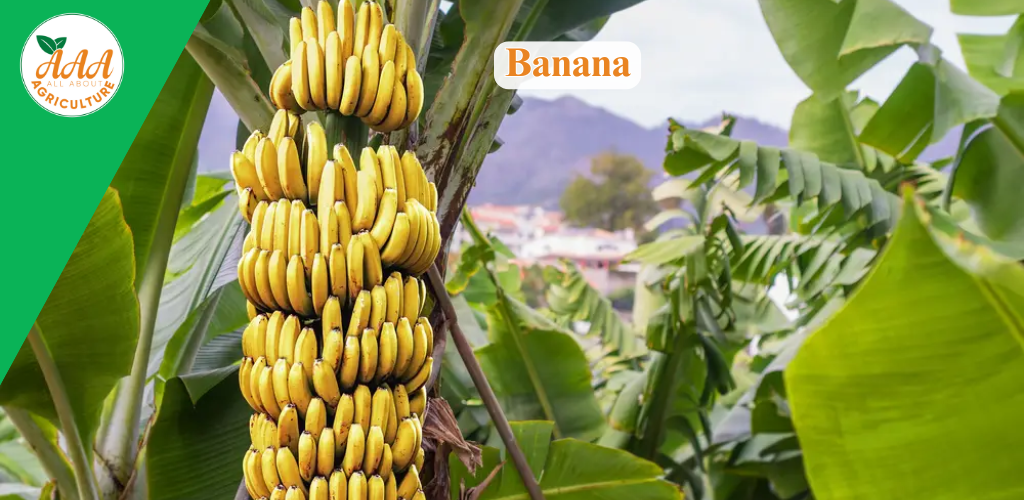
Understanding About Crop
Nutritional Value:
- Bananas are rich in carbohydrates (mainly sugars and fiber) providing quick energy and digestive support.
- High in potassium, magnesium, vitamin C, vitamin B6, and natural antioxidants which help in heart health and immunity.
- Contains low fat and zero cholesterol, suitable for all age groups.
- Bananas also supply manganese, copper, and biotin, vital for metabolism and nerve function.
- The fruit’s fiber (mainly pectin) supports gut health and aids in stabilizing blood sugar.
- Banana flowers and stems are also edible and used in regional dishes.
- Overconsumption may cause temporary digestive discomfort but is safe for daily diets in moderation.
Dietary Diversity:
- Consumed raw, cooked, dried, or as banana flour; used in smoothies, desserts, chips, and baked goods.
- Plantains (cooking bananas) are crucial in savory dishes, fried or steamed in many cuisines.
- Banana flowers, stem pith, and unripe fruit are all edible, providing unique flavors and nutrients.
- Used in making jams, juices, wines, and baby foods worldwide.
- Banana leaves serve as eco-friendly plates and for wrapping during cooking.
- Both fruit and by-products add diversity to farming incomes.
- Works in gluten-free and vegan diets as a key ingredient.
Economic Importance:
- Banana is a major income crop for farmers in India, Ecuador, the Philippines, and many tropical nations.
- Provides year-round harvest and fast returns due to its quick growth cycle.
- All about agriculture shares the latest price updates, high-yielding variety news, and value addition ideas.
- Banana farming creates jobs in production, transport, packaging, and agro-processing industries.
- Both local consumption and exports drive steady market demand.
- By-products like fiber, leaves, and flour are growing income sources.
- Climate-tolerant and short-duration varieties offer farmer security.
Crop Rotation:
- Often grown after legumes or green manure crops to boost soil nitrogen and fertility.
- Rotating bananas with vegetables or cereals disrupts pest and disease cycles.
- Mixed and relay cropping methods keep soil healthy and maximize seasonal earnings.
- Crop rotation lowers input costs and avoids soil exhaustion.
- Bananas can be an intercrop in orchards and plantations.
- Cover crops between banana stands improve soil structure and reduce weeds.
- Good rotation supports organic farming and long-term sustainability.
Climate Resilience:
- Grows best in warm, humid climates (20–35°C) with rainfall of 1200–2500 mm, but has good drought tolerance with irrigation.
- Hardy varieties are available for high winds and mild drought.
- Mulching and drip irrigation help overcome dry spells and heat waves.
- Windbreaks or shelterbelts protect bananas from cyclone or storm damage.
- Can be grown across varied soils and altitudes up to 1,200 meters.
- Certain hybrid varieties resist Panama wilt and viral diseases.
- Good drainage is vital as plants are sensitive to standing water.
Health Benefits:
- Bananas boost energy, regulate blood pressure, and aid muscle function due to high potassium.
- Easy to digest and recommended for babies, elderly, and weak patients.
- Support heart, kidney, and nervous system health.
- High fiber helps relieve constipation and promotes regular bowel movement.
- Their antioxidants lower the risk of some chronic diseases.
- May be used as a natural antacid for gastric issues.
- Rarely, eating too many may cause mild bloating or hyperkalemia in sensitive people.
Key Features
Climate and Soil Requirements
- Bananas grow best in tropical and subtropical climates with 20–35°C temperature and 1200–2500 mm yearly rainfall.
- Prefer well-drained sandy loam to alluvial soils rich in organic matter and a pH of 6–7.5.
- Avoid waterlogged, saline, or heavy clay soils where root rot is common.
- Require high humidity and protection from harsh winds for good growth.
- Gentle slopes with even water movement prevent erosion and pooling.
- Regular organic matter addition improves fertility and water-holding capacity.
- Site selection is vital – strong sunlight encourages higher yields.
- Soil testing helps optimize nutrient supply and prevent over-fertilization.
- Mulching and green manures add further benefits to soil structure.
Land Preparation
- Remove weeds, old crop stubble, and rocks before deep ploughing (to 50 cm) for loose soil.
- Add 20–30 tons/ha of compost or farmyard manure before planting for strong root and early growth.
- Prepare pits (60×60×60 cm) or furrows, filling them with a mix of topsoil and organic matter.
- Level and contour fields for uniform water flow and ease of operations.
- Set aside wide pathways for movement and machinery, especially in commercial setups.
- On slopes, create terraces or bunds to prevent runoff and nutrient loss.
- Carry out soil solarization if pest or disease history is serious.
- Maintain field hygiene; make sure tools and hands are clean to avoid disease spread.
- Remove nearby wild hosts of banana pests and diseases before planting.
High-Yielding and Hybrid Seed Selection
- Use tissue culture plants or well-established suckers from disease-free, healthy mother stools.
- Choose varieties suited to your climate – Grand Naine, Robusta, Dwarf Cavendish, Rasthali, and others for different needs.
- Hybrid and improved types resist major diseases and produce larger bunches.
- Avoid old or small, weak suckers to prevent uneven crop stands and low yields.
- Use certified planting material from trusted nurseries or government centers.
- Replace old planting stock every 8–10 years for sustained productivity.
- Maintain varietal purity by avoiding mixing types in one field.
- Keep planting records for tracking yield performance and disease tolerance.
- Nursery hygiene prevents early spread of diseases among plants.
Seed Treatment
- Treat suckers or tissue culture plants by dipping roots in recommended fungicide or Trichoderma solution before planting.
- Remove old, decayed leaves and roots before treatment and planting.
- Dip roots in insecticide or nematicide if soil nematodes are expected.
- Air-dry treated planting material in shade for one day before planting.
- Sterilize tools regularly to prevent disease movement.
- Use biofertilizer dips to enhance early root growth and microbe activity.
- Tag treated batches for tracking field performance.
- Regularly inspect nurseries for pests and remove affected plants quickly.
- Dispose of any contaminated or rotten planting stock safely.
Sowing and Planting Methods
- Plant bananas at the start of the monsoon or after the first soaking rains.
- Space at 1.5–2 m between plants and 2.5–3 m between rows for most commercial types; adjust for variety.
- Plant suckers upright with roots well spread in each pit or furrow; firm the soil gently.
- Irrigate after planting and mulch immediately to retain moisture and suppress weeds.
- Replace missing plants within a month to keep stand uniformity.
- Early planting morning or late evening avoids transplant shock.
- Tag each row or batch by planting date for farm management.
- Use intercropping or relay cropping for added farm returns during early growth.
- Thin excess suckers regularly for optimum plant health and bunch size.
Nutrient and Fertilizer Management
- Apply 20–30 kg farmyard manure per plant yearly, mixed with recommended NPK fertilizers: 200–250 g N, 100–150 g P2O5, 200–300 g K2O per plant.
- Split fertilizer into 3–4 doses – planting, sucker emergence, pre-flowering, and fruiting.
- Supplement with micronutrients like zinc, boron, and magnesium for robust growth.
- Regularly observe leaf color and plant vigor for signs of deficiency.
- Use both organic and chemical fertilizers to sustain long-term productivity.
- Avoid excess nitrogen as it delays flowering and increases pest risk.
- Mulching and green manure further boost soil nutrients.
- Foliar feeding can correct minor deficiencies rapidly.
- Maintain detailed nutrient and application records field by field.
Irrigation and Water Management
- Bananas need frequent, even irrigation – especially during flowering, fruiting, and dry spells.
- Drip or basin irrigation helps conserve water and supplies moisture directly to roots.
- Raised beds or ridges prevent waterlog problems in areas with heavy rain.
- Irrigate in early morning or late evening for best water use and less evaporation.
- Avoid both severe drought and over-flooding as each reduces yield and quality.
- Use rainwater harvesting structures if rainfall is highly seasonal.
- Mulching reduces evaporation and keeps the root zone cool.
- Clean and maintain irrigation channels and pipes periodically.
- Adjust watering for different field sections based on soil and slope.
Intercultural Operations
- Keep fields weed-free for best nutrient and water use by banana plants.
- Mulching with leaves, straw, or grass suppresses weeds, conserves moisture, and adds organic matter.
- Remove and compost old leaf sheaths and dry leaves to reduce pest hideouts.
- Light tillage and hoeing improve aeration and root growth.
- Prune off excess suckers, leaving 1–2 healthy followers per mother plant.
- Thin out or support bunch stalks to prevent plant toppling.
- Remove dead plant debris promptly after harvest.
- Intercrop with beans, groundnuts, or short greens for extra revenue.
- Monitor fields for pests/disease and train laborers for safe operations.
Pest Management
- Major banana pests include rhizome weevil, banana aphid, root nematode, and fruit scarring beetle.
- Practice integrated control: clean planting materials, pheromone traps, crop rotation, and timely selective chemical use.
- Encourage beneficial insects like lacewings and ladybugs for natural pest suppression.
- Remove and burn pest-infested plants and plant residues quickly.
- Rotate pesticides for effective use and to avoid resistance.
- Use biopesticides and neem-based products when possible.
- Maintain field and tool hygiene always.
- Train workers on pest identification and safe methods.
- Monitor for early pest infestations and act fast to avoid crop loss.
Disease Management
- Key diseases: Panama wilt, Sigatoka leaf spot, banana bunchy top virus, and Erwinia rot.
- Use certified disease-free planting material for planting and replacement.
- Remove and destroy all infected plants and sanitize tools after every cut.
- Apply recommended fungicides at the first leaf spot or wilt sighting.
- Space and prune for good air flow, limiting leaf wetness.
- Practice strict field sanitation, rotating crops after heavy disease outbreaks.
- Monitor for early symptoms weekly during wet seasons.
- Keep drainage channels clear to avoid root and stem rot.
- Rotate with non-host crops like legumes for improved field recovery.
Harvesting and Post-Harvest Management
- Harvest bananas when fruit turns plump and angles round off, usually 9–12 months after planting.
- Cut bunches carefully with a knife or sickle; avoid touching the ground to prevent bruising.
- Clean fruits, remove sap stains, and quickly cool for better shelf life.
- Grade and pack fruits by size and quality; transport in cushioned crates to markets.
- Store in cool, shady, well-ventilated places for short periods.
- Use ripening chambers or safe ethylene sources if needed.
- Market promptly to reduce loss; surplus fruit can be processed into chips, puree, or flour.
- Keep tools and packing areas clean for safe food handling.
- Record post-harvest losses and best sale seasons for business planning.
Other Important Points
- Banana stems, leaves, and peels can be recycled or used for animal feed and organic compost.
- Overripe bananas are ideal for baking, smoothies, and natural fertilizers.
- Some people may have rare allergies to latex in banana plant sap; handle with care if sensitive.
- For newest banana variety updates, pest management tips, and farm technology trends, visit All about agriculture.
Do’s
Don'ts
How can farmers identify and manage banana bunchy top virus?
Look for stunted growth and leaf curling; control aphid vectors, remove infected plants promptly, and use virus-free planting material for prevention.
What are the benefits of tissue culture planting for bananas?
Tissue culture plants are disease-free, uniform, and yield more consistently than traditional suckers, improving production and farm profitability.
How does mulching improve banana cultivation?
Mulching conserves soil moisture, suppresses weeds, controls temperature, and adds organic matter improving root health and yield.
What are common post-harvest diseases in bananas, and how to control them?
Anthracnose and crown rot are common; reduced by prompt cooling, proper sanitation, fungicide application, and minimizing fruit injury during handling.
How important is wind protection in banana farming?
Windbreaks reduce plant damage and toppling, protect leaves, and help in maintaining consistent fruit quality and yield.
What intercropping options are suitable for banana plantations?
Legumes, pineapples, and ginger are common intercropping choices, improving soil fertility and providing additional income with minimal competition.
How to store bananas to prolong freshness?
Keep bananas in cool (13–14°C), humid, well-ventilated areas, avoid bruising, and separate ripe from unripe bananas for longer shelf life.
Can banana peels be used as organic fertilizer?
Yes, banana peels are rich in potassium and natural nutrients; composted peels improve soil fertility and plant growth.
How do farmers manage nematode problems in banana crops?
Use crop rotation, resistant varieties, organic amendments, nematicides if needed, and maintain good field sanitation to reduce nematode damage.
What role do micronutrients play in banana cultivation?
Micronutrients such as zinc, boron, and magnesium enhance flowering, fruit set, and overall plant health; deficiencies reduce yield significantly.
Is pruning necessary in banana farming, and how is it done?
Yes, pruning removes dead leaves and excess suckers to improve air circulation, reduce disease risk, and focus plant energy on fruit production.
Where can banana growers find reliable updates on pest control and market trends?
Our website All about agriculture offers timely expert advice on pest management, crop care, and current market prices for bananas.