Cottonseed
Cottonseed
Understanding about Crop
Nutritional Value:
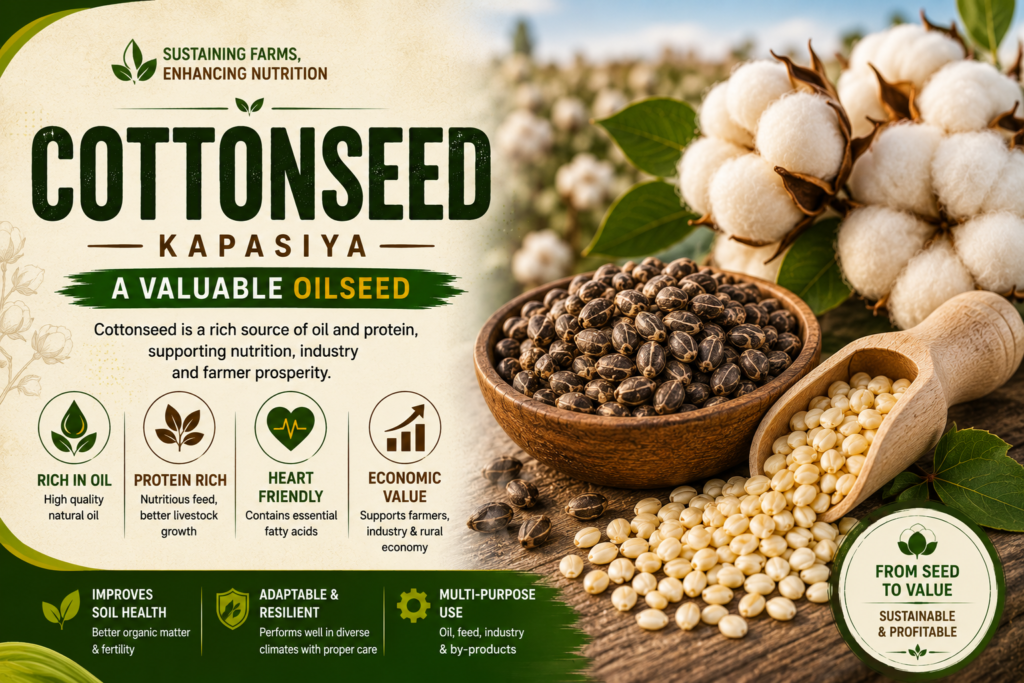
- Cottonseed (Kapasiya) contains around 20-25% protein and 15-20% oil, both valuable for nutrition and industrial applications.
- The oil derived from cottonseed is rich in unsaturated fats, vitamins E and K, playing roles in heart health and antioxidants.
- The seed cake, a byproduct after oil extraction, is a protein-rich animal feed supplement for dairy and poultry.
- Cottonseed also provides essential fatty acids needed for human nutrition though mostly used industrially.
- It is free from cholesterol, supporting healthy diets when refined properly.
- Contains fiber and minerals that contribute to digestive health.
- Nutritional quality varies based on cultivar and processing methods.
Dietary Diversity:
- While primarily grown for oil, cottonseed oil is used in cooking and food products like margarine and salad dressings.
- The seed cake finds wide use in animal feed, indirectly supporting human food systems.
- Refined cottonseed oil is a popular choice for frying due to its thermal stability.
- Byproducts are also used in protein isolates and supplements.
- Integration into food products enhances dietary options for protein and fat.
- Cottonseed oil supplements influence flavor and shelf life of processed foods.
- Both raw and processed forms contribute to economic and dietary diversity.
Economic Importance:
- Cottonseed (Kapasiya) is a significant source of edible oil and protein-rich feed in many countries.
- It supports a wide agro-industrial complex involving oil extraction, animal feed, and bioproduct manufacturing.
- Market demand for cottonseed oil provides income stability for cotton growers.
- Availability of byproducts adds value and increases profitability.
- Export markets for oil and meal enhance foreign exchange earnings.
- Development of new seed varieties improves quality and yield.
- Government policies and subsidies assist farmers engaged in cottonseed cultivation.
Crop Rotation:
- Cottonseed (Kapasiya) fits well in rotation with cereals, pulses, and oilseeds improving soil nitrogen levels.
- Rotation reduces buildup of cotton-specific pests and diseases, preserving yield potential.
- Rotational crops can utilize crop residues as organic matter for better soil management.
- Crop diversification reduces economic risks for farmers dependent on cottonseed.
- Legumes in rotation enhance soil fertility through nitrogen fixation complements cottonseed needs.
- Improved crop rotation practices optimize irrigated and rainfed farming water use.
- Long-term rotation leads to sustainable farming systems and environmental benefits.
Climate Resilience:
- Grows best between 20 to 35°C with moderate rainfall (600-1000 mm) suitable for tropical and subtropical climates.
- Cottonseed (Kapasiya) has moderate tolerance to drought but requires timely irrigation during critical phases.
- It is sensitive to waterlogging which can cause root diseases and reduce yield.
- Adaptation to diverse climatic conditions depends on cultivar selection and management.
- Pest and disease pressure varies with climate, demanding adaptive management strategies.
- Climate variability calls for integrated water and nutrient management in cottonseed cultivation.
- Increased sustainability achieved through resilient crop and farming practices.
Health Benefits:
- Cottonseed oil is a source of essential fatty acids beneficial for cardiovascular health and brain function.
- Contains antioxidants that support skin health and reduce oxidative stress.
- Used in medicinal treatments and topical applications for skin ailments traditionally.
- Consumption in moderate amounts contributes to balanced diets.
- Potential allergenic compounds are reduced during refining, making it safe for most consumers.
- The seed meal, when detoxified, serves as a nutritious feed enhancing livestock health.
- Ongoing research examines further health benefits from bioactive components.
Other Important Points:
- Cottonseed residues offer organic matter that improves soil texture and nutrient content.
- Advances in biotechnology and seed treatment improve yield, quality, and pest resistance.
- Sustainability initiatives encourage integrating cottonseed crop management with eco-friendly practices.
- State and central agricultural agencies provide farmer training and subsidies for cottonseed production.
- More detailed information and updates available at All about agriculture for interested growers.
Key Features of Cottonseed
Climate and Soil Requirements
- Cottonseed (Kapasiya) prefers tropical and subtropical climates with temperatures from 20-35°C.
- Optimal rainfall for cottonseed is between 600-1000 mm annually.
- Requires well-drained, deep loamy soils rich in organic matter with pH between 6.0 and 7.5.
- Avoids areas prone to waterlogging or salinity which negatively affect growth.
- Soil with good moisture retention favors seed germination and seedling establishment.
- Adaptable to various soil types with proper fertility management.
- Performs well under full sunlight with steady moisture availability.
- Regular soil testing is essential to monitor pH and fertility parameters.
- Climate significantly influences pest prevalence and crop maturity.
Land Preparation
- Deep ploughing to 30-40 cm loosens soil for root development.
- Harrowing and field leveling ensure uniform seed sowing and irrigation efficiency.
- Incorporate 10-12 tons/ha of well-decomposed farmyard manure or compost.
- Remove weed and previous crop residues to reduce competition and pest risk.
- Raised beds improve drainage in heavy soils.
- Avoid soil compaction by limiting heavy machinery.
- Maintain proper moisture before planting.
- Proper land prep improves seedling growth and reduces disease incidence.
- Early preparation allows alignment with optimal sowing windows.
High-Yielding and Hybrid Seed Selection
- Certified seeds from reputed suppliers ensure genetic purity and high germination rates.
- Popular hybrid varieties like “MCU-5” and “Suvin” offer higher yields and quality fiber.
- Selection of disease and pest resistant varieties reduces input costs and losses.
- Seed quality affects uniformity and overall crop performance.
- Seed treatment enhances seed health and vigor.
- Adapt seed choice to local agro-climatic conditions.
- Use fresh seed lots for consistency.
- Regular trial evaluation enhances cultivar performance.
- Hybrid technology drives seed quality improvements.
Seed Treatment
- Treat seeds with fungicides like Carbendazim to prevent seed and soil-borne diseases.
- Rhizobium inoculation improves nitrogen fixation efficiency.
- Avoid prolonged soaking which may damage seeds.
- Shade dry treated seeds to maintain viability.
- Use biocontrol agents for eco-friendly seed treatment.
- Adhere to chemical safety guidelines.
- Timely application maximizes seedling establishment.
- Proper storage preserves seed treatment effects.
- Seed health directly affects crop success.
Sowing and Planting Methods
- Sow seeds 3-5 cm deep with 30-50 cm spacing in rows 75-90 cm apart.
- Maintain plant population suited for variety and soil fertility.
- Sow during recommended seasons as per regional climate.
- Use seed drills for uniform distribution in large fields.
- Ensure soil moisture during sowing for quick germination.
- Gap filling after 10-15 days sustains plant population.
- No direct seeding works well for hybrids requiring good nursery care.
- Mulch to conserve moisture and suppress weeds.
- Timely sowing reduces pressure from pests and diseases.
Nutrient and Fertilizer Management
- Nitrogen is applied in split doses totaling 80-120 kg/ha, depending on soil fertility.
- Phosphorus and potassium around 40-60 kg/ha applied as basal.
- Organic manures complement inorganic fertilizers enhancing soil health.
- Micronutrient supplementation improves plant growth and fiber quality.
- Balanced fertilization enhances boll retention and seed cotton weight.
- Soil testing guides precise nutrient management.
- Excess nitrogen can cause luxuriant vegetative growth reducing yields.
- Timely fertilizer application aligns with crop growth stages.
- Integrated nutrient management promotes sustainability.
Irrigation and Water Management
- Cottonseed (Kapasiya) is typically rain-fed but requires irrigation during dry spells.
- Critical stages for irrigation include flowering, boll formation, and seed filling.
- Avoid waterlogging that leads to root diseases.
- Employ drip irrigation systems for water conservation and efficient use.
- Mulching helps reduce evaporation losses.
- Excess water reduces fiber quality and increases pest/disease risks.
- Moisture stress during reproductive stages decreases yield.
- Monitor soil moisture and adjust irrigation accordingly.
- Sustainable practices include rainwater harvesting.
Intercultural Operations
- Regular weeding prevents competition for nutrients and moisture.
- Earthing-up supports root development and crop stability.
- Remove diseased or damaged plants promptly.
- Mulching reduces weed growth and retains soil moisture.
- Crop rotation disrupts pest and disease cycles.
- Use mechanical or manual weed control methods suited to farm size.
- Maintain field sanitation to lower pest infestation.
- Timely intercultural operations improve crop health and yield.
- Regular monitoring helps in early detection of problems.
Pest Management
- Common pests include bollworms, aphids, whiteflies, and jassids.
- Integrated pest management uses natural enemies, pheromone traps, and targeted sprays.
- Neem-based biopesticides provide eco-friendly control options.
- Timely pest scouting prevents outbreak and crop damage.
- Crop residue removal limits pest breeding grounds.
- Avoid over-reliance on insecticides to maintain ecosystem balance.
- Use resistant cotton varieties to reduce pest damage.
- Maintain biodiversity to encourage natural pest predators.
- Store product in pest-proof conditions post-harvest.
Disease Management
- Wilt, leaf curl, and boll rot are significant diseases affecting cottonseed (Kapasiya).
- Use disease-resistant varieties and treated seeds.
- Maintain adequate spacing and field sanitation.
- Apply fungicides during high disease pressure periods.
- Avoid over-irrigation to reduce fungal spread.
- Crop rotation prevents soil-borne diseases.
- Remove infected plants immediately.
- Clean equipment frequently to prevent transmission.
- Early disease detection enables better management.
Harvesting and Post-Harvest Management
- Harvest when bolls turn brown and begin to open, about 150-180 days after sowing.
- Use manual or mechanical harvesting methods carefully to minimize seed damage.
- Dry harvested cottonseeds under shade or sunlight before storage or processing.
- Clean and grade the seeds to remove trash and immature seeds.
- Store in cool, dry, insect-proof containers to maintain seed viability.
- Monitor storage regularly to prevent pest infestation and moisture build-up.
- Proper post-harvest management enhances oil quality and market value.
- Process seeds promptly for oil extraction or sale in animal feed markets.
- Waste byproducts may be used as organic fertilizer or biofuel raw material.
Other Important Points
- Cottonseed (Kapasiya) plays a vital role in sustainable farming due to natural nitrogen fixation and soil improvement.
- The oil and seed cake derived from cottonseed have significant industrial and nutritional uses.
- Continued research and advanced hybrids contribute to increased yield and quality.
- Farmers are encouraged to access cultivation practices and market information on All about agriculture.
- Proper seed handling and farm management practices ensure profitability and sustainability.
- Crop diversification helps mitigate risks linked to market or climate changes.
Do’s
Don'ts
What are the key differences between cottonseed and lint cotton in Cottonseed (Kapasiya) farming?
Cottonseed (Kapasiya) refers to the seeds extracted from cotton bolls after harvesting lint cotton, which is the fiber used in textiles. The seeds are mainly used for oil extraction and as animal feed.
How does Cottonseed (Kapasiya) contribute to the production of animal feed?
After oil extraction, the leftover Cottonseed (Kapasiya) cake is rich in protein and commonly used as livestock feed, improving the nutritional intake of dairy and poultry animals.
What role does Cottonseed (Kapasiya) oil play in the edible oil market?
Cottonseed (Kapasiya) oil is a popular cooking oil known for its light taste and high smoke point, making it suitable for frying and baking.
How is gossypol in Cottonseed (Kapasiya) managed during oil processing?
The toxic component gossypol is largely removed or neutralized during the refining of Cottonseed (Kapasiya) oil to ensure it is safe for human consumption.
Can farmers in semi-arid areas successfully grow Cottonseed (Kapasiya)?
Yes, Cottonseed (Kapasiya) is well adapted to semi-arid climates with moderate rainfall and has good drought tolerance, making it suitable for such regions.
What are the environmental benefits of growing Cottonseed (Kapasiya)?
Cottonseed (Kapasiya) cultivation supports sustainable agriculture through nitrogen fixation in the soil and providing crop residues that enhance soil organic matter.
How does seed treatment improve Cottonseed (Kapasiya) crop establishment?
Treating Cottonseed (Kapasiya) seeds with fungicides and bio-inoculants protects against soil-borne diseases and promotes faster, healthier seedling growth.
What are the major pests impacting Cottonseed (Kapasiya), and how can they be controlled?
Key pests include bollworms and aphids; integrated pest management using biological control agents, pheromone traps, and selective insecticides effectively manages pest populations.
How can integrating crop rotation with Cottonseed (Kapasiya) improve farm productivity?
Rotating Cottonseed (Kapasiya) with cereals or legumes reduces pest and disease build-up and enhances soil fertility through natural nutrient cycling.
What harvesting methods are used for Cottonseed (Kapasiya) to reduce losses?
Cottonseed (Kapasiya) is generally harvested mechanically or manually by picking mature cotton bolls, ensuring minimal seed damage and optimal oil extraction potential.
Are Cottonseed (Kapasiya) by-products useful for other industries?
Yes, by-products like cottonseed hulls are used as fuel and mattress stuffing, while refined oil serves in industrial lubricants and cosmetics.
Where can farmers find reliable updates on Cottonseed (Kapasiya) market prices and farming techniques?
Farmers can access up-to-date market prices, government schemes, and detailed cultivation advice for Cottonseed (Kapasiya) on specialized platforms such as All about agriculture.