Indigo
Indigo
Understanding about Crop (Indigo)
Nutritional Value:
- Indigo is grown primarily for its dye, but its leaves also contain bioactive compounds with medicinal properties.
- The plant contributes to soil nitrogen through nitrogen fixation because it belongs to the legume family.
- Although not consumed as food, indigo’s natural extracts are important in natural health and cosmetic products.
- Indigo dyes are biodegradable and safer alternatives to synthetic dyes, impacting health indirectly through environmental benefits.
- Incorporates antioxidants and anti-inflammatory agents valuable in cosmetics and skincare.
- Indigo-derived products may supplement traditional herbal medicine uses.
- Overall, indigo impacts nutrition and health through ecosystem services and product applications.
Dietary Diversity:
- Indigo plants are not used as a food crop but enhance dietary diversity through their contribution to herbal and natural health products markets.
- Rich in natural colorants, indigo supports traditional foods that use plant-based dyes.
- The dye encourages cultural culinary diversity with colorful preparations in some regions.
- Indigo also supports diverse agricultural practices through intercropping.
- Byproducts of indigo contribute to non-food product industries, enabling agribusiness diversification.
- Plants like indigo in cropping systems provide ecological balance supporting other crops.
- Dietary diversity benefits indirectly through integrated agro-ecosystem management.
Economic Importance:
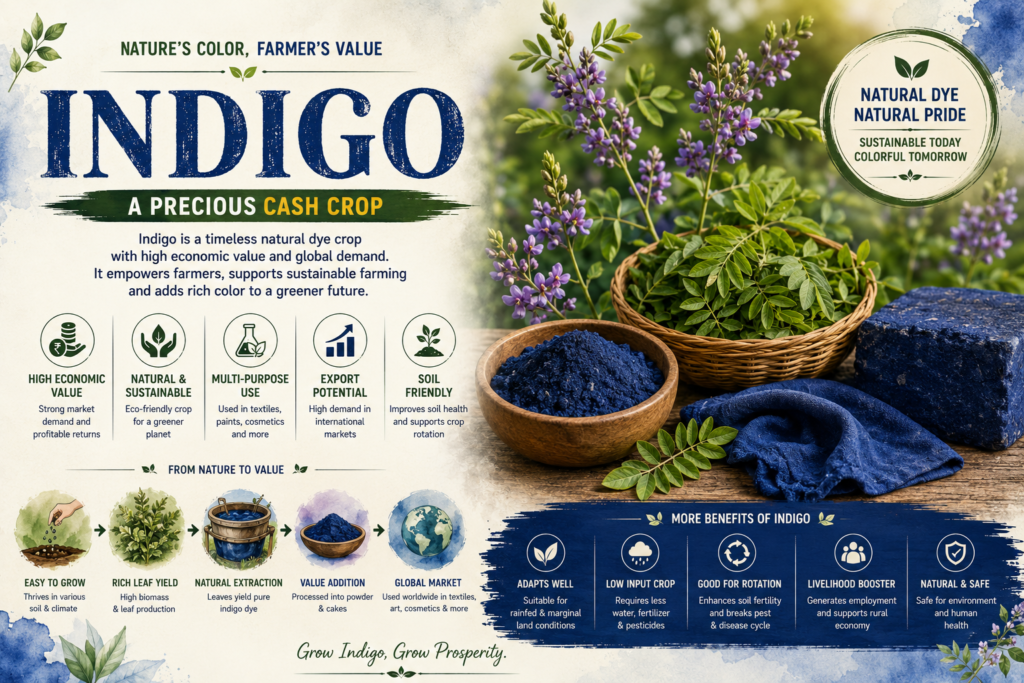
- Indigo farming has historic and economic prominence from natural dye production.
- Global demand for organic and eco-friendly dyes revives indigo cultivation profitability.
- Farm livelihoods benefit from niche markets in natural textiles and cosmetics.
- Processing industries add value through dye extraction and product formulation.
- Export potential exists for high-quality indigo dye products internationally.
- Governments support cultivation through subsidies and research into improved varieties.
- All about agriculture offers detailed insights into economic opportunities in indigo farming.
Crop Rotation:
- Indigo fits well into rotations with cereals and legumes enhancing soil nitrogen and organic matter.
- Crop rotation helps break disease and pest cycles specific to indigo plantations.
- Incorporating indigo improves soil structure and fertility supporting succeeding crops.
- Rotation enables better management of soil-borne pathogens.
- Crop diversity within rotations balances farm ecological health and profitability.
- Sustainable rotations involve integrating indigo with both food and non-food crops.
- Rotation planning considers local agroclimatic and soil conditions for maximum benefit.
Climate Resilience:
- Indigo thrives in tropical climates with temperatures ranging from 20°C to 35°C.
- Requires moderate, well-distributed rainfall between 800-1500 mm annually.
- Tolerates brief dry periods, but prolonged drought affects growth severely.
- Prefers well-drained soils; waterlogging damages roots and reduces dye quality.
- Shade tolerance varies; partial shade improves growth in hotter zones.
- Adapted to altitudes up to 1200 meters above sea level.
- Climate variability necessitates selection of tolerant varieties for sustained yields.
- Resilience to pests and diseases influenced by climate and cultivar selection.
Health Benefits:
- Natural indigo dyes are non-toxic and safer for skin contact compared to synthetic dyes.
- Plant derivatives possess antimicrobial properties used in traditional medicines.
- Indigo extracts are employed in cosmetic products for skin soothing and anti-aging.
- Aromatic qualities offer relaxation benefits in herbal formulations.
- Usage of natural dyes supports reduced chemical exposure, benefiting consumer health.
- Awareness of possible allergic reactions ensures safe handling and usage.
- Overall, indigo contributes to healthier lifestyle alternatives through natural product applications.
Key Features
Climate and Soil Requirements
- Indigo requires warm, humid tropical climates for optimal growth.
- Ideal temperatures range from 20°C to 35°C; frost-sensitive.
- Needs well-drained sandy loam or loamy soils rich in organic matter.
- Avoids heavy clay or waterlogged soils which root stress.
- Soil pH preference is slightly acidic to neutral (6.0-7.0).
- Requires moderate rainfall of 800-1500 mm annually.
- Thrives in well-aerated soils promoting root development.
- Needs good sunlight but partial shade benefits growth in high heat.
- Climatic adaptability varies with particular indigo species and cultivation practices.
- Agriculture planning considers microclimate impacts on plant quality and yield.
Land Preparation
- Clear area of previous vegetation and debris for healthy establishment.
- Deep plough to loosen soil and remove compaction.
- Level plots to facilitate irrigation and easy management.
- Incorporate organic manure or compost to enrich soil nutrients.
- Raise beds in heavy soils to improve drainage and root aeration.
- Early land preparation allows timely transplanting post nursery phase.
- Remove perennial weed sources to reduce competition.
- Maintain soil moisture in preparatory phase for seedling support.
- Avoid use of herbicides that may damage young plants.
- Proper land prep enhances seedling viability and crop uniformity.
High-Yielding and Hybrid Seed Selection
- Use certified seed or clones of Indigofera tinctoria with known dye yield.
- Select high-vigor planting material adapted to local soil and climate.
- Certified stocks reduce disease transmission and poor crop performance.
- Hybrid selections offer better dye yield and plant resilience.
- Regular updates on seed source and variety performance optimize results.
- Seed storage under cool and dry conditions enhances viability.
- Propagation often prefers nursery-raised seedlings for uniformity.
- Seed pre-treatment improves germination and early growth vigor.
- Using genetically diverse stocks reduces crop vulnerability.
- Consult agricultural extension for best local varieties.
Seed Treatment
- Seeds undergo fungicidal treatment to reduce damping-off and rot.
- Use biological seed treatments to improve root colonization.
- Dry seeds post-treatment to maintain planting quality.
- Treat close to sowing date for maximum protection.
- Employ eco-friendly treatments transitioning away from harsh chemicals.
- Seed treatment enhances uniform germination and vigor.
- Follow safety guidelines to avoid chemical exposure.
- Use treated seeds for higher establishment and reduced seedling mortality.
- Maintain seed under moisture-free storage conditions.
- Seed treatment complements integrated disease and pest management.
Sowing and Planting Methods
- Start seeds indoors in seedbeds or flats 6-8 weeks before transplanting.
- Soak seeds 12-24 hours before sowing to enhance germination rate.
- Transplant seedlings after frost risk passes, spacing 90 cm between rows.
- Use raised beds or ridges for suitable moisture drainage.
- Maintain adequate soil moisture during establishment phase.
- Manual or mechanical transplanting depends on plantation scale.
- Use mulch around seedlings to conserve moisture and suppress weeds.
- Early sowing improves crop duration and dye quality.
- Regular thinning supports optimal plant spacing and health.
- Intercropping can maximize land productivity.
Nutrient and Fertilizer Management
- Apply well-composted organic manures to boost soil fertility pre-planting.
- Use balanced NPK fertilizer based on soil analysis for crop nutrition.
- Phosphorus and potassium applications vital for root and leaf health.
- Micronutrients like zinc and manganese improve secondary metabolite production.
- Fertilizers applied in split doses optimize uptake and reduce losses.
- Avoid excessive nitrogen to prevent lush foliage with lower dye concentration.
- Soil testing guides precision fertilization and sustainable use.
- Incorporate biofertilizers for enhanced nutrient cycling.
- Fertilizer timing aligns with plant growth stages to maximize effectiveness.
- Nutritional balance supports overall Indigo plant health and dye yield.
Irrigation and Water Management
- Maintain consistent soil moisture, avoiding both drought and waterlogging.
- Provide supplementary irrigation during dry spells to sustain growth.
- Raised beds facilitate drainage preventing root diseases.
- Mulching techniques conserve soil moisture and moderate temperature.
- Avoid excessive irrigation which may dilute dye precursors.
- Irrigation scheduling depends on soil type, climate, and plant stage.
- Efficient water management helps optimize dye content and plant vigor.
- Rain-fed cultivation depends on regional rainfall distribution.
- Employ water-conserving technologies in water-scarce areas.
- Proper irrigation supports productivity and resource sustainability.
Intercultural Operations
- Control weeds early to reduce competition and pest habitats.
- Pruning encourages bushier growth and higher leaf yield.
- Maintain mulch cover to suppress weeds and improve soil environment.
- Remove diseased or damaged plant parts regularly.
- Incorporate intercropping with compatible species for ecosystem benefits.
- Mechanical or manual weeding suited to field size and crop growth stages.
- Keep field sanitation to prevent pest and disease build-up.
- Conduct regular crop inspections for health monitoring.
- Integrate intercultural activities with irrigation and fertilization schedules.
- Timely intercultural operations maximize dye quality and yields.
Pest Management
- Major pests include aphids, mites, and leaf beetles affecting Indigo.
- Integrated pest management combines biological control, cultural practices, and minimal chemical use.
- Use neem extracts and beneficial insects for eco-friendly pest suppression.
- Monitor pest levels regularly for timely intervention.
- Crop rotation reduces recurring pest problems.
- Avoid overuse of pesticides to prevent resistance development.
- Maintain biodiversity to support natural pest enemies.
- Remove infested material promptly.
- Use pheromone traps and sticky traps for monitoring.
- Educate labor in pest identification and safe pesticide use.
Disease Management
- Diseases like root rot, leaf spot, and powdery mildew affect Indigo quality and yield.
- Use disease-resistant varieties and certified clean planting material.
- Maintain adequate plant spacing and ventilation.
- Fungicides applied proactively minimize outbreaks.
- Remove infected plants to control spread.
- Proper irrigation practices reduce fungal diseases.
- Practice field sanitation and crop rotation for biosecurity.
- Sanitize tools regularly.
- Early disease detection enhances treatment efficacy.
- Adopt organic disease control where applicable.
Harvesting and Post-Harvest Management
- Indigo leaves are harvested when plants reach optimal maturity, usually after 4-6 months of growth.
- Hand or mechanical harvesting is used depending on field size.
- Leaves are then fermented or processed immediately to extract Indigo dye.
- Proper drying of leaves prevents mold and quality degradation.
- Processed dye is further refined for textile and other industrial use.
- Waste biomass can be composted or used as green manure.
- Timely post-harvest management maximizes dye yield and quality.
- Proper handling reduces economic loss from spoilage or contamination.
- Packaging and storage conditions maintain product integrity until market delivery.
Other Important Points
- Indigo cultivation supports environmentally sustainable dye production.
- It conserves traditional knowledge and cultural heritage of natural dyes.
- Advances in seed and processing technology improve yield and quality.
- Market demand for organic dyes is on the rise globally.
- All about agriculture provides comprehensive guidance on Indigo cultivation and market access.
- Responsible farming encourages biodiversity and soil restoration.
Do’s
Don'ts
What is the botanical name of Indigo and where is it originally from?
Indigo’s botanical name is Indigofera tinctoria, and it is native to the tropical regions of Asia, especially India and Southeast Asia.
How is Indigo traditionally cultivated and why is soil fertility important?
Indigo thrives in fertile, well-drained soils with good organic content. Maintaining soil fertility is crucial as Indigo is a nutrient-demanding crop that influences dye quality.
What are the common methods used for Indigo planting?
Indigo planting is commonly done via seeds or cuttings. Seeds are soaked before sowing, and transplanting occurs after nursery growth for better establishment.
What climatic conditions favor Indigo cultivation?
Indigo prefers tropical climates with temperatures between 20°C and 35°C, requiring moderate rainfall and well-distributed moisture for optimal growth.
How does Indigo fit into crop rotation systems?
Due to its nitrogen-fixing ability, Indigo is an excellent rotational crop that enriches soil nitrogen, benefiting subsequent food crops and sustaining soil health.
What are the primary uses of Indigo plants in agriculture and industry?
Indigo is cultivated mainly for producing natural blue dye used in textiles, cosmetics, and traditional medicines, with market demand resurging for eco-friendly products.
What are the main pests and diseases that affect Indigo crops?
Common pests include aphids and caterpillars, while diseases like powdery mildew and leaf spot can affect Indigo, managed effectively through integrated pest management.
What are effective pest management strategies for Indigo farmers?
Farmers use a blend of biological controls, neem-based biopesticides, cultural practices, and selective chemical applications to sustainably manage Indigo pests.
How is Indigo harvested and processed for dye extraction?
Leaves are harvested at peak maturity, fermented in water to develop indigotin dye, then dried and processed into powder or paste for industrial use.
What economic opportunities does Indigo cultivation provide to farmers?
Indigo farming offers income diversification due to dye market demand, supports local artisanal industries, and integrates well with sustainable agriculture initiatives.
Are there environmental benefits to cultivating Indigo?
Yes, Indigo’s nitrogen-fixing property improves soil health, reduces need for chemical fertilizers, and its dye is biodegradable, supporting eco-friendly practices.
Where can growers find detailed guidance and market information on Indigo cultivation?
Comprehensive resources and support for Indigo farming are available on platforms like All about agriculture, assisting growers with best practices and market access.