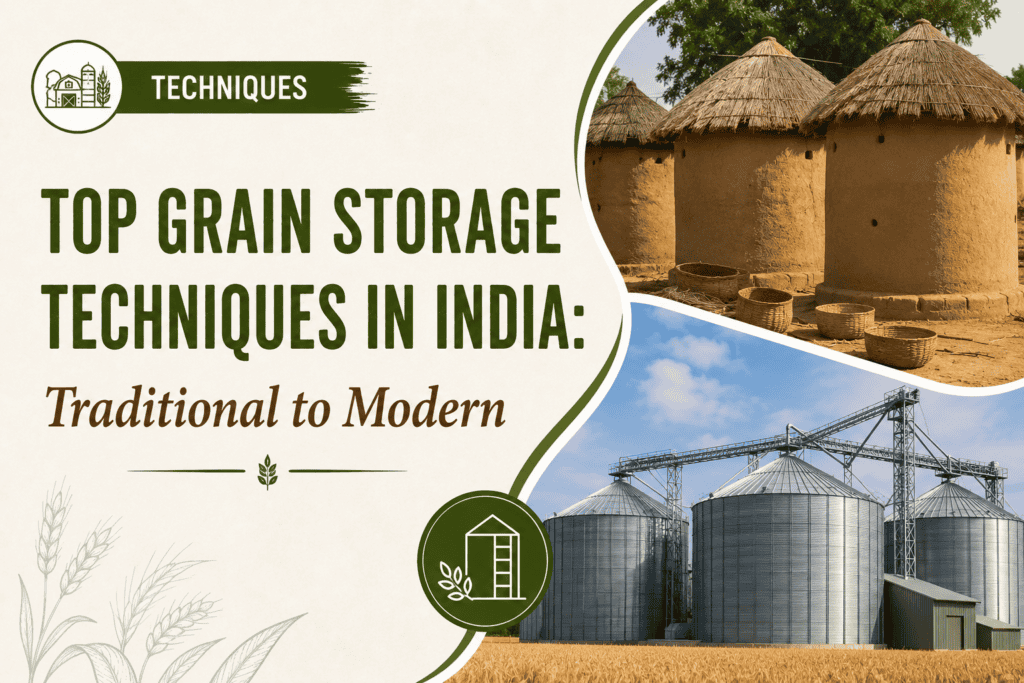
Top Grain Storage Techniques in India: Traditional to Modern
Top Grain Storage Techniques in India: Traditional to Modern
Introduction
A bumper harvest should mean more income, but in India nearly 15–25% of grain is still lost after harvest. The main reason is poor storage. Farmers often find themselves caught between traditional grain storage techniques India has used for centuries and the demands of modern farming. With tractors and mechanised harvesting becoming common, the need for tractor-friendly storage systems is more important than ever. The question is no longer whether to store, but how to choose grain storage systems that work with tractor loading and unloading while protecting both food quality and farmer income.
Traditional vs modern crop storage is a story every farmer knows. Older methods like mud bins, bamboo baskets, or underground pits worked in their time, but they struggle today. Problems with traditional grain storage techniques in humid Indian regions include moisture damage, pest and rodent attack, and poor seed viability during storage. Climate change has only made it harder. That’s why farmers are turning to modern storage solutions to reduce post-harvest losses in India farms. From hermetic storage bags India to improved rural grain bins and even metal silos, options are expanding. But with every choice comes questions of cost economics of storage infrastructure, pest control, and the safe moisture level for storing cereals before sealing hermetic storage.
This blog breaks down both sides – what worked in the past, why it’s changing, and where we are heading now. We’ll look at scientific grain storage India practices, role of aeration and temperature monitoring, seed storage methods India farmers can trust, and post-harvest grain loss solutions that actually work on the ground. We’ll also touch on government subsidies grain storage India provides, rural godown / warehouse schemes like the Gramin Bhandaran Yojana, and food grain storage policy in India. Along the way, we’ll compare costs, like metal silos vs Pusa bins for small farmers, share case studies of farmers upgrading from traditional pits to modern silos, and highlight small-farm storage solutions that leverage tractor capacity. From eco-friendly storage materials to IoT & sensor technology in agriculture storage, this guide covers grain storage best practices India farmers need today.
Traditional Storage Techniques in India
For hundreds of years, grain storage techniques in India were based on local materials and indigenous knowledge. Farmers relied on underground pits, bamboo baskets, earthen pots, straw containers, and mud or brick bins. These traditional grain storage techniques worked well in small villages because they were cheap, easy to build, and eco-friendly. They also helped farmers save seed for the next season, especially with simple seed storage methods India has used for centuries.
The materials were simple – mud, clay, bamboo, straw, and jute. Filling and unloading were done manually, often using bullock carts before tractors were common. This made sense when harvests were smaller, but as production increased, these methods showed limits. Traditional vs modern crop storage became a real challenge once tractors and mechanised harvesters arrived.
The main advantage of these older methods was their low cost and sustainability. They did not need electricity or machinery and were perfectly suited to small farms. But with rising grain production, problems became clear. Moisture seepage, pest and rodent attacks, fungal spoilage, and limited storage capacity caused heavy losses. Studies show that in humid regions, traditional grain storage techniques and their problems lead to nearly 15–20% post-harvest loss in Indian agriculture statistics.
Problems With Old Systems Under Modern Demands
With bigger harvests and tractors now used for loading and transport, traditional systems have become less practical. Manual loading takes time, and storing bulk quantities in pits or bamboo bins is not possible. Farmers who grow on a larger scale need tractor-friendly storage systems that can handle fast loading and unloading.
The other issue is weather. Climate change’s impact on grain storage is very visible now. Unpredictable monsoon rains, humidity, and rising heat waves damage cereals quickly. Safe moisture level for storing cereals before sealing hermetic storage is not easy to maintain in open pits or mud bins. As a result, both food quality and seed viability during storage are at risk.
Key problems farmers face with old methods today:
- Post-harvest grain loss solutions are limited in traditional bins.
- Manual labour is slow compared to mechanised harvest.
- Rodent and pest control in grain storage is nearly impossible without sealing.
- Seed storage methods India used earlier fail in humid climates.
- Lack of uniform size or shape makes transporting to rural godowns or warehouses harder.
This is why farmers are shifting towards modern storage solutions to reduce post-harvest losses in India farms.
Modern Grain Storage Solutions in India
Today, scientific grain storage India practices are replacing older methods. Farmers now have options like improved rural grain bins, hermetic storage bags India, metal silos, and even large warehouses with aeration and temperature monitoring. These modern storage solutions not only reduce losses but also work with tractors for fast movement.
Some popular choices:
- Improved Rural Bins – Pusa bins, PAU bins, drum bins, and LDPE brick bins. These improved rural grain bins are low-cost and easier to seal against pests.
- Hermetic Storage Bags India – Airtight bags that cut oxygen, stopping pests and fungi. The benefits of hermetic bags over traditional storage bins in India are clear: no chemicals, better grain quality, and longer storage life.
- Silos & Metal Bins – Large silos allow bulk storage, aeration, and scientific monitoring. Case studies of farmers upgrading from traditional pits to modern silos show post-harvest loss reduced by over 60%.
- Silo-Bags – Flexible storage systems used in some regions, tractor-friendly for filling and sealing.
- Warehouses & Godowns – Rural godown / warehouse schemes under government support allow large-scale storage with scientific systems.
Modern storage also focuses on best practices: drying grains properly, checking safe moisture levels, disinfecting storage areas, and using aeration systems. The role of aeration and temperature monitoring in scientific grain storage is vital for maintaining quality. IoT & sensor technology in agriculture storage is also emerging, allowing farmers to track conditions on their phones.
Benefits of Modern Tractor-Friendly Storage
The shift to modern storage solutions is not just about technology – it’s about saving crops and money. When farmers use tractor-friendly storage systems, handling becomes faster and losses drop sharply.
Main benefits include:
- Lower Losses – Modern storage solutions to reduce post-harvest losses in India farms cut wastage from 15–20% down to below 5%.
- Faster Handling – Tractors can load and unload directly into bins, silos, or hermetic systems, saving time.
- Better Grain Quality – Scientific grain storage India methods improve seed viability during storage and meet export standards.
- Scalability – Small farmers can start with hermetic bags, while larger ones can invest in silos. Small-farm storage solutions that leverage tractor capacity are available.
- Economic Returns – Cost economics of storage infrastructure shows that the cost comparison of metal silos vs Pusa bins for small farmers often results in faster payback due to reduced losses.
For example, the benefits of hermetic bags over traditional storage bins in India include 6–8 months safe storage without pests, while metal silos can last for decades when maintained well.
Challenges & Trade-Offs With Modern Storage
Of course, modern storage is not perfect. Farmers face challenges like high upfront investment. A silo can cost lakhs, while hermetic bags are cheaper but need careful handling. Cost economics of storage infrastructure is a big concern for smallholders.
Other challenges include:
- Maintenance of bins and silos.
- Dependence on drying grains before sealing (best practices for drying grains before storage are a must).
- Infrastructure gaps in rural areas – electricity, proper roads, and ventilation systems are not always available.
- Training farmers to use IoT & sensor technology in agriculture storage.
Climate change impact on grain storage also continues. Even with modern bins, rising humidity and heat waves need stronger systems. Eco-friendly storage materials like mud, clay, and bamboo are making a comeback in improved designs to balance sustainability with technology.
Choosing the Right Storage Method
So how do you decide which grain storage best practices India farmers should follow? The answer depends on scale, climate, and budget.
- Farm Size – Small farmers may start with hermetic storage bags India or improved rural grain bins. Large farmers should consider silos or warehouses.
- Tractor Capacity – How to choose grain storage systems that work with tractor loading/unloading depends on trailer size, lifting ability, and speed.
- Region – Traditional bins may still work in dry regions, but in humid areas, scientific storage with aeration is necessary.
- Purpose – For seed storage methods India needs safe low-moisture systems; for market sale, silos or hermetic bags are better.
- Budget & Subsidy – Government subsidies grain storage India offers can reduce upfront costs. Programs like Gramin Bhandaran Yojana provide financial help for rural godown construction.
Farmers also need to check the food grain storage policy in India and upcoming rural godown / warehouse schemes before investing.
Policies & Schemes Supporting Modern Storage
The government is pushing scientific storage strongly. Some key initiatives:
- Gramin Bhandaran Yojana – Supports construction of rural godowns and warehouses.
- Rural Godown Schemes – Help farmers with modern facilities closer to villages.
- Subsidy Programs – Government subsidies grain storage India offers make silos, hermetic bags, and bins more affordable.
- Food Grain Storage Policy in India – Sets standards for safe moisture, aeration, and pest control in storage.
With more farmers upgrading from traditional pits to modern silos, and small-farm storage solutions that leverage tractor capacity, the shift is visible across India.
Conclusion / Summary
Traditional grain storage techniques in India once worked well for small harvests, using mud bins, bamboo baskets, or underground pits. But today, with bigger yields, changing weather, and tractors in every field, those methods no longer meet the demand. Post-harvest grain loss statistics show that 15–25% of produce is still wasted because of poor storage, which hurts both farmers’ income and food security.
Modern solutions – like hermetic storage bags India, improved rural grain bins, and silos – are proving to be game changers. Scientific grain storage in India helps reduce spoilage, protect seed viability during storage, and align perfectly with tractor-friendly storage systems for quick loading and unloading. Farmers who have upgraded from pits to silos report better grain quality and higher profits.
Key takeaways for farmers:
- Dry and clean your harvest before sealing to avoid spoilage.
- Pick the right system – hermetic bags for small farms, silos for large ones.
- Check tractor capacity before choosing bulk storage systems.
- Use government subsidies grain storage India provides through schemes like Gramin Bhandaran Yojana.
- Monitor grain with aeration and temperature checks for long storage.
The big picture is clear: traditional vs modern crop storage is no longer a choice, it’s a necessity. To cut losses, improve seed quality, and match tractor efficiency, farmers must shift to modern storage solutions. Start small, explore what fits your budget and farm size, and expand gradually.
Don’t let your harvest rot after months of hard work. Explore detailed information and the full suite of programmes at ALL ABOUT AGRICULTURE. For one-on-one assistance, call us at +91 8484002620.
What is the ideal temperature for storing food grains in India?
The safe range is usually 20–25°C to reduce insect activity and mold growth. Farmers in hotter regions may need aeration or cooling support.
How long can grains be stored without losing quality?
Depending on moisture and storage type, grains can last from 3 months in open bins to over 12 months in sealed systems like silos or hermetic bags.
Which crops are most at risk of post-harvest losses in India?
Cereals like wheat, rice, and maize are most vulnerable, followed by pulses and oilseeds due to high moisture and pest attacks.
Are there eco-friendly grain storage options available?
Yes, structures made with mud, bamboo, or clay are still used as eco-friendly models, though they need modern modifications to protect against pests and humidity.
Can small farmers afford modern grain storage systems?
Yes, options like hermetic bags and small bins are cost-effective. Subsidy programs also reduce the cost – visit ALL ABOUT AGRICULTURE to learn more about these schemes.
What are silo-bags and are they used in India?
Silo-bags are large airtight plastic tubes used for temporary grain storage. They are gaining popularity in India for bulk storage during bumper harvests.
How does climate change affect grain storage in India?
Unpredictable rains, higher humidity, and heat waves increase spoilage risks. Farmers now need systems with better sealing and moisture control to protect crops.
What role does pest control play in grain storage?
Proper fumigation, cleaning, and sealing of storage help prevent insects and rodents, which are major causes of losses.
Are there mobile or flexible storage options for farmers?
Yes, mobile storage bins and flexible hermetic systems are being tested to help farmers transport and store grain in different locations.
Where can farmers find detailed information on storage schemes?
Farmers can explore subsidy details, government programmes, and product options directly on ALL ABOUT AGRICULTURE. The site provides updated guides and support.
Can improved storage help with export quality grains?
Absolutely. Proper drying, moisture control, and sealed storage maintain grain color, weight, and purity, which are key for export markets.
What is the importance of drying grains before storage?
Drying reduces moisture levels and prevents fungal growth. Skipping this step can lead to heavy losses even in modern systems.
Do warehouses in India follow scientific storage methods?
Many large warehouses now use aeration, fumigation, and temperature monitoring. Government and private agencies are improving these facilities each year.
How do cooperatives help small farmers with grain storage?
By pooling resources, cooperatives build shared godowns and silos that farmers can use at lower costs.
Who can farmers contact for personal guidance on storage solutions?
For tailored advice, farmers can connect with experts through ALL ABOUT AGRICULTURE. Visit the website or call the helpline for one-on-one assistance.