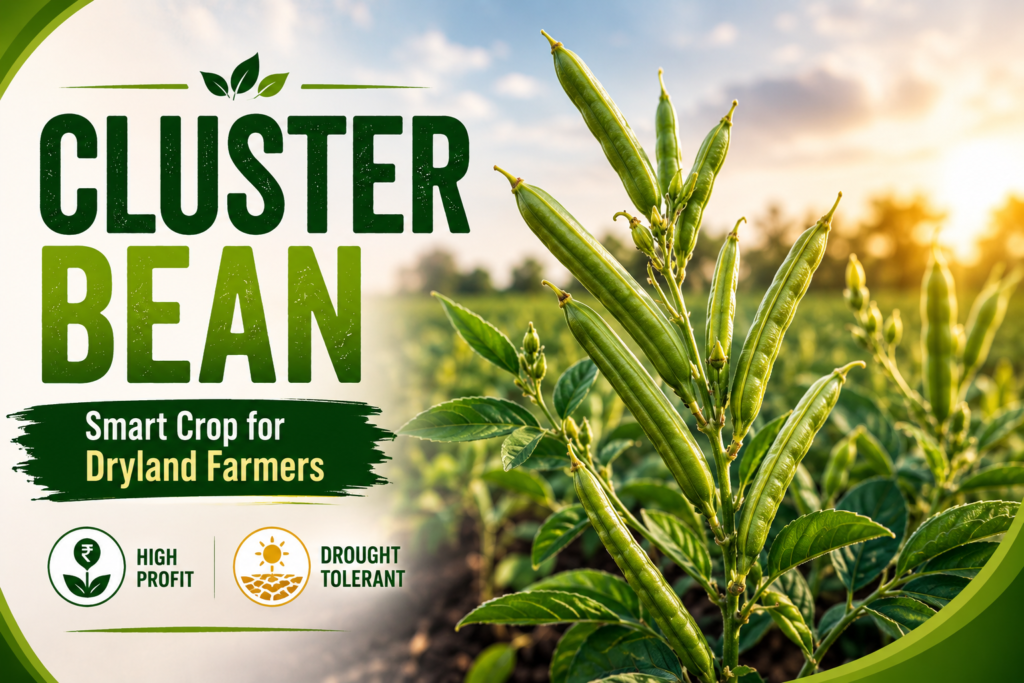
Cluster Bean
Cluster Bean
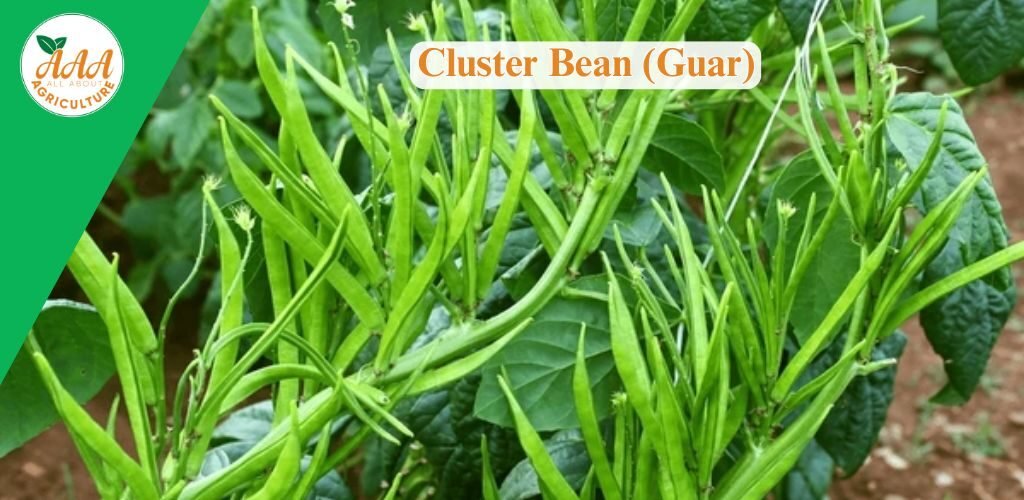
Understanding about Crop
Nutritional Value:
- Cluster Bean (Guar) is rich in proteins, dietary fiber, minerals such as iron and calcium, and vitamins. It is low in fat and cholesterol, aiding digestion and supporting heart health. It’s a valuable addition to diets focused on balanced nutrition. Detailed nutritional insights are available at All about agriculture.
Dietary Diversity:
- Cluster Bean pods are consumed as vegetables cooked fresh or dried into pulses. The leaves and young shoots are also edible and nutritious, making it a versatile crop for diverse culinary use across communities.
Economic Importance:
- Cluster Bean (Guar) is an important cash crop, especially for the oil and gas industry due to guar gum derived from its seeds. It contributes significantly to farmers’ incomes, mainly in semi-arid regions where it grows well. Market trends and cultivation tips can be found on All about agriculture.
Crop Rotation:
- Adding Cluster Bean (Guar) in rotation with cereals or cotton improves soil nitrogen through symbiotic fixation and breaks pest and disease cycles, sustaining farm productivity.
Climate Resilience:
- Adapted to hot, semi-arid to arid climates, Cluster Bean (Guar) tolerates drought and heat up to 45°C but is sensitive to waterlogging. It requires moderate rainfall and plenty of sunlight, making it suitable for dry regions.
Health Benefits and Side Effects:
- Cluster Bean (Guar) supports digestive health, helps control blood sugar, and has antioxidants. Excessive consumption may cause digestive discomfort; thorough cooking reduces this risk.
Other Important Points:
- Crop residues serve as fodder or green manure, enhancing soil quality. All-inclusive farming info is accessible on All about agriculture to guide successful cultivation.
Key Features of Cluster Bean
Climate and Soil Requirements
- Thrives in temperatures of 25–35°C with moderate rainfall (400–600 mm).
- Prefers well-drained sandy loam soils; tolerates slightly alkaline conditions (pH 7–8.5).
- Sensitive to waterlogging – good drainage is vital.
- Suitable for semi-arid and arid regions with adequate sunshine.
- Soil fertility improves with organic matter addition before planting.
- Can withstand slight soil salinity but extreme salinity reduces productivity.
- Soil should be loose enough to allow deep root penetration.
- Avoid planting in frost-prone zones which damage the crop.
- Regular soil testing is recommended for balanced nutrient management.
Land Preparation
- Deep ploughing (2-3 times) to loosen soil and remove weeds.
- Levelled seedbed to ensure uniform germination and ease of irrigation.
- Incorporate decomposed organic manure or compost to boost fertility.
- Remove stones and crop residues to prevent seed damage and pests.
- Create ridges or beds if soil is heavy or prone to waterlogging.
- Soil moisture should be adequate post-preparation for good seed germination.
- Avoid excessive soil compaction by machinery.
- Early land prep helps soil settle and prevents crust formation.
- Maintain clean, weed-free fields for healthier crops.
High-Yielding and Hybrid Seed Selection
- Use certified seeds of popular varieties like Pusa Naubahar, RGC 936, and HG 365.
- Hybrid varieties have higher yield potential and better disease resistance.
- Select uniform, healthy seeds free from pest damage.
- Avoid aged or physically damaged seeds to ensure higher germination.
- Purchase seeds annually for best quality and vigor.
- Test seeds on a small scale for local adaptability before large planting.
- Store seeds in cool, dry conditions to preserve viability.
- Ensure seed sources are reliable and certified by authorities.
- Newer varieties offer improved gum content and drought tolerance.
Seed Treatment
- Treat seeds with fungicides like Carbendazim to prevent damping-off disease.
- Use Rhizobium inoculants specific for Cluster Bean (Guar) to enhance nitrogen fixation.
- Avoid prolonged seed soaking; follow recommended treatment protocols.
- Dry treated seeds under shade before sowing to prevent heat stress.
- Bio-fertilizer treatments boost soil microflora and plant health.
- Chemical dosages must be safe to avoid seed damage and environmental harm.
- Storage of treated seeds in cool, dry conditions preserves treatment efficacy.
- Seed treatment ensures better field establishment and plant vigor.
Sowing and Planting Methods
- Sow seeds at 2–3 cm depth with 45–60 cm spacing between rows and 15–30 cm between plants.
- Optimal sowing time: beginning of monsoon, June-July, or post-first rainfall.
- Seed rate: 15–20 kg per hectare for standard planting.
- Use seed drilling or broadcasting methods depending on farm size; drilling ensures uniform stands.
- Irrigate after sowing for proper seed germination and establishment.
- Optimal seed depth prevents poor emergence or rot.
- Timely sowing avoids uneven flowering and pod setting.
- Trellising is not necessary; a bushy growth habit is stable without support.
- Maintain uniform plant spacing for better airflow and pest management.
Nutrient and Fertilizer Management
- Cluster Bean (Guar) fixes atmospheric nitrogen, reducing the need for nitrogen fertilizer.
- Apply phosphorus and potassium fertilizers as basal doses: 60 kg P2O5 and 40 kg K2O per hectare optimize yields.
- Use organic manures to improve soil structure and nutrient availability.
- Avoid excess nitrogen fertilization to prevent excessive vegetative growth.
- Foliar sprays of micronutrients (zinc, boron, iron) correct deficiencies.
- Regular soil testing guides appropriate fertilizer application.
- Combine organic and chemical fertilization for sustainable yields.
- Nutrient management influences seed quality and gum content.
- Balanced nutrients improve plant resistance to stresses.
Irrigation and Water Management
- Cluster Bean (Guar) requires moderate moisture, especially at flowering and pod filling stages.
- Drought-tolerant; avoid waterlogging which damages roots.
- Drip or furrow irrigation improves water efficiency.
- Mulching conserves moisture and reduces evaporation.
- Irrigation should stop 15 days before harvest to allow pods to dry.
- Monitor soil moisture regularly for timely irrigation scheduling.
- Use rainwater harvesting techniques in arid regions to supplement irrigation.
- Avoid late irrigation to prevent fungal diseases.
- Proper water management enhances seed and gum quality.
Intercultural Operations
- Weed control is essential in early crop stages to avoid competition for nutrients.
- Earthing-up improves plant stability and nutrient uptake.
- Remove diseased or weak plants to limit pest and disease spread.
- Mulching helps maintain soil moisture and reduces weed pressure.
- Plant gap filling improves plant density and overall yield.
- Use crop rotation to maintain soil health and reduce pest buildup.
- Manual and mechanical weeding methods can be adopted based on farm size.
- Field sanitation prevents disease and pest outbreaks.
- Regular crop monitoring aids timely interventions.
Pest Management
- Major pests include pod borers, leaf miners, aphids, and whiteflies.
- Implement integrated pest management using cultural, biological, and chemical tools.
- Natural predators and neem-based biopesticides reduce chemical pesticide use.
- Regular field scouting for pests prevents severe damage.
- Remove infested plants and crop residues promptly.
- Observe economic thresholds before pesticide application.
- Encourage biodiversity to sustain pest control agents.
- Store harvested seeds carefully to avoid storage pests.
- Maintain clean field conditions to reduce pest habitats.
Disease Management
- Common diseases: leaf spot, powdery mildew, root rot, and bacterial blight.
- Use resistant Cluster Bean (Guar) varieties when available.
- Seed treatment and proper field sanitation reduce disease incidence.
- Maintain optimal plant spacing to enhance air circulation.
- Fungicides should be applied only according to expert guidance.
- Rotate crops to break disease life cycles.
- Avoid overhead irrigation to reduce fungal infection risks.
- Remove and destroy diseased plants immediately.
- Monitor fields regularly for early detection and management.
Harvesting and Post-Harvest Management
- Harvest Cluster Bean (Guar) pods when they turn brown and dry, usually 90–120 days after sowing.
- Cut plants by hand or machine carefully to avoid seed losses.
- Dry harvested pods for 5–7 days in sunlight to reduce moisture content.
- Thresh and clean seeds using mechanical or manual methods.
- Store seeds in moisture-free, pest-proof containers to prevent deterioration.
- Regularly inspect and maintain storage conditions.
- Separate damaged seeds to preserve seed lot quality.
- Process seeds immediately for guar gum extraction or sale.
- Proper post-harvest handling enhances seed viability and product value.
Other Important Points
- Cluster Bean (Guar) plant biomass enhances soil organic matter and soil health.
- Its gum product is in high demand globally, boosting farmer income potential.
- Cultivation supports sustainable farming by improving nitrogen availability.
- Traditional culinary uses include fresh pods as vegetables in many Indian cuisines.
- Soaking guar seeds reduces anti-nutrients for better digestibility.
- Find detailed cultivation advice, schemes, and farmer support services on All about agriculture.
Do’s
Don'ts
Frequently Asked Questions
What are the main industrial uses of Cluster Bean (Guar) gum?
Cluster Bean (Guar) gum is widely used as a thickener and stabilizer in food products, textiles, oil drilling, pharmaceuticals, and cosmetics because of its water-absorbing properties.
How does Cluster Bean (Guar) contribute to sustainable farming?
By fixing nitrogen in the soil, Cluster Bean (Guar) decreases chemical fertilizer needs, enhancing soil fertility and supporting eco-friendly agriculture systems.
Can Cluster Bean (Guar) be grown in arid and semi-arid climates?
Yes, Cluster Bean (Guar) is highly drought-resistant, making it suitable for dry regions with limited rainfall and high temperatures.
What is the economic significance of Cluster Bean (Guar) cultivation for farmers?
Farmers cultivating Cluster Bean (Guar) benefit from stable market demand for guar gum, which is exported and in heavy industrial use, ensuring good income potential.
How is Cluster Bean (Guar) seed quality maintained for better yield?
Using certified, treated seeds and proper storage conditions preserves Cluster Bean (Guar) seed viability and improves germination rates leading to better crop establishment.
What are the natural pest control methods effective for Cluster Bean (Guar)?
Biopesticides, crop rotation, intercropping, and encouraging beneficial insects reduce pest problems sustainably in Cluster Bean (Guar) farming.
How should water irrigation be managed for Cluster Bean (Guar)?
Efficient irrigation during flowering and pod set, combined with drip irrigation systems, optimizes water use and increases yield in Cluster Bean (Guar).
What post-harvest measures ensure Cluster Bean (Guar) quality?
Proper drying, cleaning, and storing Cluster Bean (Guar) seeds in dry, pest-free environments preserve gum quality and seed viability.
Is Cluster Bean (Guar) used in any food products?
Yes, Cluster Bean (Guar) gum is added to ice creams, bakery products, and dairy items as a natural thickener and stabilizer.
What precautions should be taken while handling Cluster Bean (Guar) crop residues?
Proper composting of Cluster Bean (Guar) residues prevents disease spread and improves soil health without harmful environmental effects.
How does Cluster Bean (Guar) support livelihoods in dryland areas?
Growing Cluster Bean (Guar) offers income and employment opportunities, particularly in dry regions where few crops can flourish, sustaining farmer communities.
Where can one find reliable market prices and cultivation advice for Cluster Bean (Guar)?
Farmers and growers can access timely updates on market prices and cultivation best practices for Cluster Bean (Guar) on reputable agricultural platforms like All about agriculture.