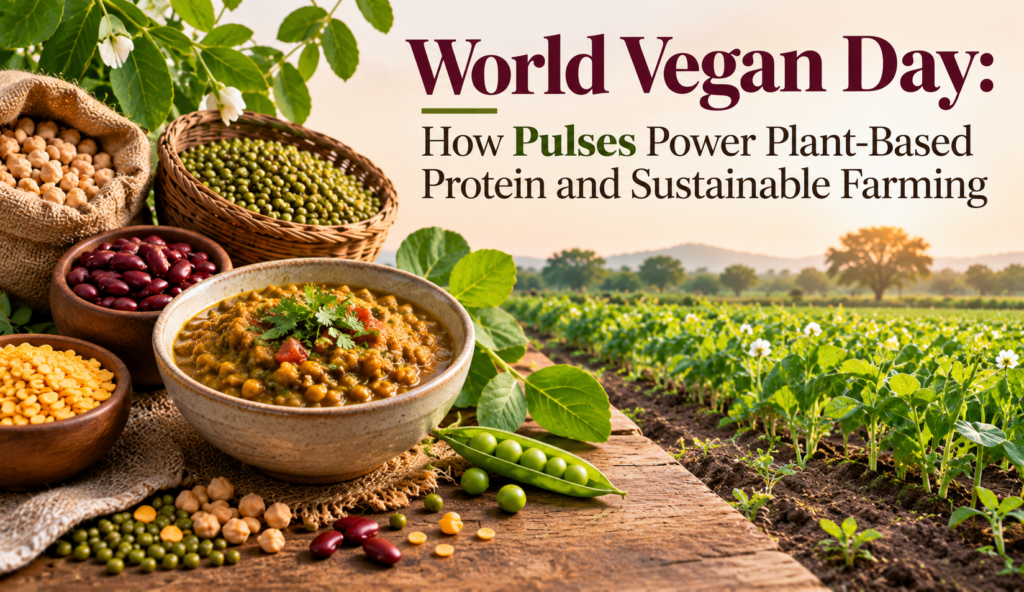
World Vegan Day: How Pulses Power Plant-Based Protein and Sustainable Farming
World Vegan Day, observed every year on November 1, highlights the importance of plant-based diets, animal welfare and environmentally responsible food choices. The occasion also creates awareness about nutritious plant-based foods, including lentils, chickpeas, beans, peas and other pulses. These crops are important sources of plant protein and dietary fibre, making them valuable ingredients in balanced vegetarian and vegan diets.
In India, pulses have been part of traditional food habits for generations. Dal, chana, rajma, moong and masoor are widely consumed across different regions. Beyond their nutritional value, pulse crops also support sustainable agriculture by improving soil fertility and contributing to crop diversification. As interest in plant-based protein, sustainable food systems and climate-smart agriculture grows, pulses deserve greater attention.
What Is World Vegan Day and Why Is It Celebrated?
World Vegan Day is observed on November 1 to promote awareness about veganism and plant-based living. It encourages people to understand how food choices can influence animal welfare, personal nutrition and environmental sustainability.
A vegan diet excludes meat, fish, eggs, dairy products and other animal-derived ingredients. Instead, it relies on plant-based foods such as:
- Pulses, lentils and beans
- Whole grains and millets
- Fruits and vegetables
- Nuts and seeds
- Soy-based foods and plant-based alternatives
For Indian consumers, pulses offer an accessible way to include plant-based protein in everyday meals. Traditional foods such as dal-rice, chana masala, moong khichdi and rajma are familiar examples of protein-containing plant-based meals.
Why Are Pulses the Backbone of Plant-Based Protein?
Pulses are dried edible seeds of leguminous plants and are recognised as important sources of plant-based protein, dietary fibre, vitamins and minerals. They help make nutritious diets more affordable and accessible, particularly in countries where plant-based meals are common.
Some popular protein-rich pulses include:
- Chickpeas (Chana): Chickpeas provide plant protein, dietary fibre and minerals. They are commonly used in chana masala, hummus, salads and roasted snacks.
- Lentils (Masoor Dal): Masoor dal is easy to prepare and provides protein, fibre and essential nutrients. It is widely used in Indian households.
- Green Gram (Moong): Moong is consumed as whole beans, split dal and sprouts. It is a versatile ingredient in khichdi, soups and salads.
- Pigeon Pea (Arhar or Toor Dal): Toor dal is an important source of plant protein in Indian diets and is commonly prepared with rice, roti and vegetables.
- Black Gram (Urad Dal): Urad dal is used in traditional dishes such as dal makhani, idli and dosa batter.
- Kidney Beans (Rajma): Rajma contains plant protein and dietary fibre and is popular in North Indian cuisine.
Including different pulses in a balanced diet can improve dietary variety. Combining cereals and pulses also helps improve the overall quality of dietary protein because their amino acid profiles complement each other.
Nutritional Benefits of Pulses in a Vegan Diet
Pulses offer several nutritional benefits, making them valuable for people following plant-based diets.
- Plant-based protein: They contribute to daily protein intake without requiring animal-derived foods.
- Dietary fibre: Their fibre content supports digestive health and helps improve meal satisfaction.
- Essential minerals: Depending on the variety, pulses provide iron, magnesium, potassium and zinc.
- Complex carbohydrates: They provide energy and can support balanced meals.
- Affordable nutrition: Locally available pulses can make nutritious plant-based eating more accessible.
According to the ICMR–National Institute of Nutrition’s Dietary Guidelines for Indians 2024, pulses and legumes are important components of a balanced vegetarian diet. The guidelines’ illustrative vegetarian food plan includes approximately 85 grams of pulses per day for a 2,000-kcal diet. Individual requirements vary according to age, activity level and health needs.
How Pulse Farming Supports Sustainable Agriculture
Pulses are not only important for human nutrition but also contribute to environmentally responsible farming. Leguminous crops have a special ability to work with soil bacteria to fix atmospheric nitrogen, helping improve soil fertility.
Their agricultural benefits include:
- Biological nitrogen fixation: Pulse crops help add biologically fixed nitrogen to agricultural systems, potentially reducing dependence on synthetic nitrogen fertilisers.
- Crop rotation: Growing pulses after cereals can diversify cropping patterns and support soil health.
- Water efficiency: Several pulse varieties are suitable for rainfed and semi-arid farming conditions, although water requirements vary by crop and region.
- Soil conservation: Their roots and crop residues can contribute to better soil structure and organic matter management.
- Climate-resilient farming: Including pulses in diversified farming systems can help farmers manage production risks and improve agricultural sustainability.
According to the Food and Agriculture Organization (FAO), pulses support sustainable food systems through their contribution to soil fertility, biodiversity and food security. These qualities make them valuable crops for climate-smart agriculture.
Importance of Pulse Production for Indian Farmers
India is one of the world’s major producers and consumers of pulses. Crops such as chickpea, pigeon pea, green gram, black gram, lentil and field pea are important components of Indian agriculture.
Pulse cultivation provides farmers with opportunities to diversify their income and make better use of available agricultural land. These crops can also fit into existing cereal-based farming systems through suitable crop rotation and intercropping practices.
However, farmers face several challenges in pulse production:
- Unpredictable rainfall and changing weather conditions.
- Pest attacks and diseases affecting crop productivity.
- Limited access to quality seeds and improved varieties.
- Inadequate irrigation facilities in certain growing regions.
- Price fluctuations and post-harvest storage challenges.
To improve pulse production, farmers should select varieties suited to local soil and climatic conditions, use quality seeds, follow recommended sowing practices and adopt integrated pest management. Access to agricultural extension services, market information and suitable farm machinery can also improve farm-level decision-making.
How Consumers Can Support Plant-Based Protein and Local Farmers
World Vegan Day provides an opportunity for consumers to explore affordable plant-based food options while supporting agricultural producers. Choosing locally grown pulses can strengthen demand for domestic agricultural produce and encourage farmers to continue pulse cultivation.
Here are some practical ways to support this movement:
- Include different varieties of dal, beans and chickpeas in regular meals.
- Choose locally available and seasonal agricultural produce.
- Explore plant-based recipes using traditional Indian ingredients.
- Reduce unnecessary food waste through proper storage and meal planning.
- Purchase pulses from reliable local farmers, farmer producer organisations (FPOs) and agricultural markets.
- Learn about sustainable farming practices and the importance of crop diversification.
Consumers should also remember that a healthy vegan diet requires variety. Pulses are an important protein source, but they should be combined with cereals, nuts, seeds, vegetables and other suitable foods to support overall nutritional requirements.
The Future of Pulses in India’s Sustainable Food System
The growing interest in plant-based protein, sustainable diets and alternative protein sources creates opportunities for India’s pulse sector. Demand for foods made from chickpeas, lentils, peas and other legumes can encourage innovation in food processing, packaged foods and plant-based product development.
For farmers, this creates opportunities beyond traditional dal production. Pulse-based flour, roasted snacks, ready-to-cook products and plant-protein ingredients can add value to agricultural produce when supported by suitable processing facilities and market access.
Improving seed quality, developing climate-resilient varieties, strengthening storage infrastructure and providing better market linkages will be important for increasing pulse productivity and farmer income.
Government initiatives that support pulse production, agricultural research and market access can further strengthen India’s efforts towards greater domestic pulse availability. At the same time, responsible consumption and reduced post-harvest losses can contribute to a more efficient food supply chain.
Conclusion
World Vegan Day highlights the importance of plant-based food choices, and pulses remain one of the most practical sources of plant protein for Indian consumers. From chana and rajma to moong and masoor, these nutritious crops support balanced diets while offering important agricultural benefits.
Their contribution to nitrogen fixation, crop diversification and soil health makes them valuable for sustainable farming. Supporting pulse cultivation is therefore not just about promoting vegan food; it is also about strengthening farmers, improving food security and building a more resilient agricultural system.
As India moves towards sustainable food production, pulses can play an increasingly important role in connecting consumer nutrition with farmer prosperity and environmental responsibility.