Winter Care for Dairy Animals: 6 Essential Tips for Farmers
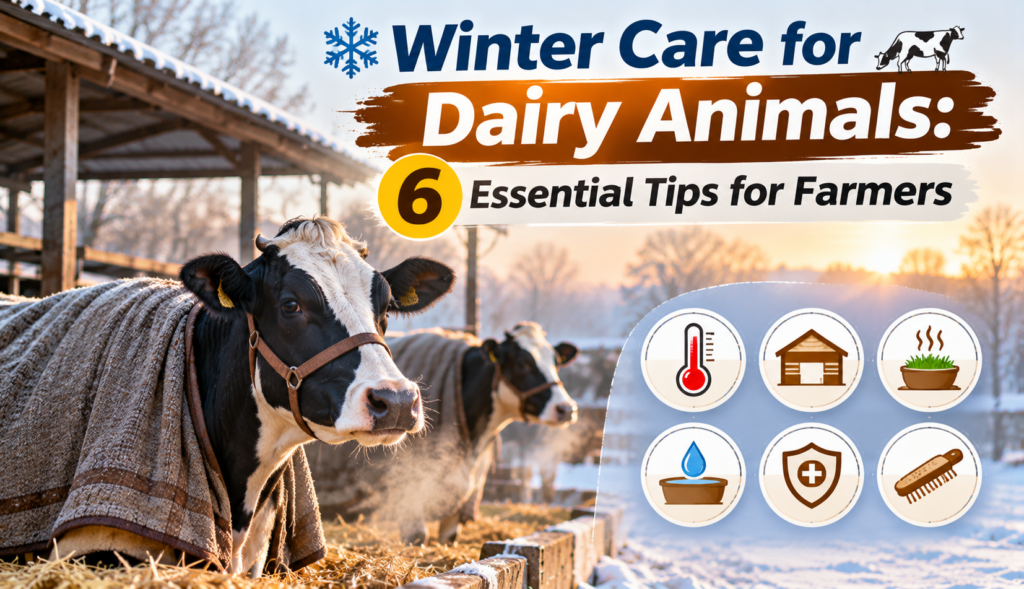
Winter can affect dairy animal health, feed intake, milk production and overall farm productivity, particularly when cattle and buffaloes are exposed to cold winds, damp floors and inadequate shelter. Proper winter care for dairy animals involves maintaining comfortable housing, providing balanced nutrition, ensuring clean drinking water and identifying early signs of cold stress.
For dairy farmers in India, winter management is especially important for lactating buffaloes, newborn calves and animals with poor body condition. Following suitable seasonal livestock management practices can help maintain animal health and support consistent milk production.
- Provide Warm, Dry and Well-Ventilated Animal Housing
Proper cattle housing is one of the most important aspects of dairy animal winter care. A comfortable shed protects cows and buffaloes from cold winds, rain, excessive moisture and sudden temperature changes.
Farmers should make the following arrangements:
- Protect animals from cold winds: Use jute bags, gunny bags, bamboo screens or suitable curtains to block direct cold winds at animal level.
- Maintain proper ventilation: Keep sufficient openings for fresh air circulation while preventing cold drafts from reaching resting animals.
- Use dry bedding: Spread paddy straw, wheat bhusa, dry grass or rice husk on concrete floors to provide insulation.
- Keep floors dry: Remove dung, urine and wet bedding regularly to reduce moisture and prevent hoof-related problems.
- Allow sunlight: Provide opportunities for animals to receive natural sunlight during the daytime.
Avoid completely sealing the shed because poor ventilation can increase moisture and harmful gases inside the housing area.
- Improve Winter Feeding and Balanced Nutrition
Winter feeding for dairy cattle should provide sufficient energy, protein, minerals and fibre to maintain body condition and milk production. Animals may require additional dietary energy during cold conditions, particularly when exposed to low temperatures and wind.
A balanced winter diet can include:
- Green fodder: Berseem, lucerne and other locally available nutritious green fodder.
- Dry fodder: Wheat straw, hay and other clean, good-quality roughage.
- Concentrate feed: A suitable mixture of grains, oil cakes, bran and other ingredients according to milk yield and nutritional requirements.
- Mineral mixture: Provide an appropriate area-specific mineral mixture and common salt as advised by an animal nutritionist or veterinarian.
- Silage: Store quality silage to maintain fodder availability when fresh green fodder becomes limited.
Farmers should avoid sudden changes in the animal’s diet. Leguminous fodder should be introduced carefully and balanced with suitable dry roughage to reduce the risk of digestive problems such as bloat.
The quantity of concentrate feed should depend on milk production, body weight, pregnancy status and the quality of available fodder rather than following one fixed feeding formula.
- Ensure Adequate and Clean Drinking Water
Water management is essential during winter because dairy animals may drink less when water becomes excessively cold. However, reduced water intake can affect feed consumption, digestion and milk production.
Farmers should follow these practices:
- Provide clean and fresh drinking water throughout the day.
- Prevent water troughs from becoming dirty or contaminated.
- Offer comfortably cool or lukewarm water when extremely cold conditions discourage drinking.
- Clean water containers regularly.
- Monitor whether lactating cows and buffaloes are drinking enough.
Water requirements vary according to body weight, milk production, feed composition and weather conditions. Therefore, farmers should not restrict water availability during winter.
- Identify Early Signs of Cold Stress in Dairy Animals
Cold stress occurs when an animal cannot maintain its normal body temperature comfortably under environmental conditions. Newborn calves, sick animals, pregnant cows and animals with poor body condition are particularly vulnerable.
Common signs of cold stress in cattle and buffaloes include:
- Continuous shivering or trembling.
- Huddling together for warmth.
- Reduced feed intake or unusual weakness.
- Cold ears, legs and other extremities.
- Unusual inactivity or difficulty standing.
- Reduced milk production.
- Wet body hair and prolonged exposure to cold conditions.
In severe cases, animals may develop hypothermia, which requires immediate veterinary attention.
Farmers should observe animals regularly, particularly during early mornings and nights. If an animal shows persistent shivering, weakness, breathing difficulties or an abnormal body temperature, contact a qualified veterinarian promptly.
- Maintain Hygiene and Follow Preventive Healthcare
Winter dairy farm management should include regular cleaning, disease monitoring and preventive healthcare. Damp surroundings and poor ventilation can increase the risk of respiratory and other health problems.
Follow these practices:
- Clean animal sheds and feeding troughs regularly.
- Disinfect housing areas using suitable products and recommended instructions.
- Check animals for coughing, nasal discharge, fever and abnormal behaviour.
- Maintain vaccination and deworming schedules according to veterinary advice.
- Inspect hooves regularly and keep resting areas dry.
- Maintain clean udders, hands and milking equipment to support hygienic milk production.
Avoid unnecessary bathing with cold water during extremely cold weather. If cleaning is required, use suitable methods and ensure the animal is completely dry before returning it to the shed.
- Monitor Milk Production and Daily Animal Health
Regular monitoring helps farmers identify changes in dairy animal health before they become serious problems. Cold stress, poor nutrition, inadequate water intake and illness can affect milk yield and reproductive performance.
Maintain daily records of:
- Milk production from individual animals.
- Daily feed and water consumption.
- Body condition and general activity.
- Signs of illness or abnormal behaviour.
- Vaccination, deworming and veterinary treatment.
- Calving dates and reproductive health.
If milk production suddenly decreases, farmers should investigate possible causes instead of assuming that winter is the only reason. Changes in feed quality, mastitis, digestive problems and other illnesses may also reduce milk yield.
Conclusion
Proper winter care for dairy animals is essential for maintaining livestock health, milk production and dairy farm profitability. Farmers should focus on dry and well-ventilated housing, balanced winter feeding, sufficient drinking water, calf protection and regular veterinary care.
By adopting these practical dairy farming tips, livestock owners can reduce cold-weather risks and improve animal comfort throughout the winter season. Consistent monitoring and timely veterinary support are particularly important during cold waves and sudden temperature drops.