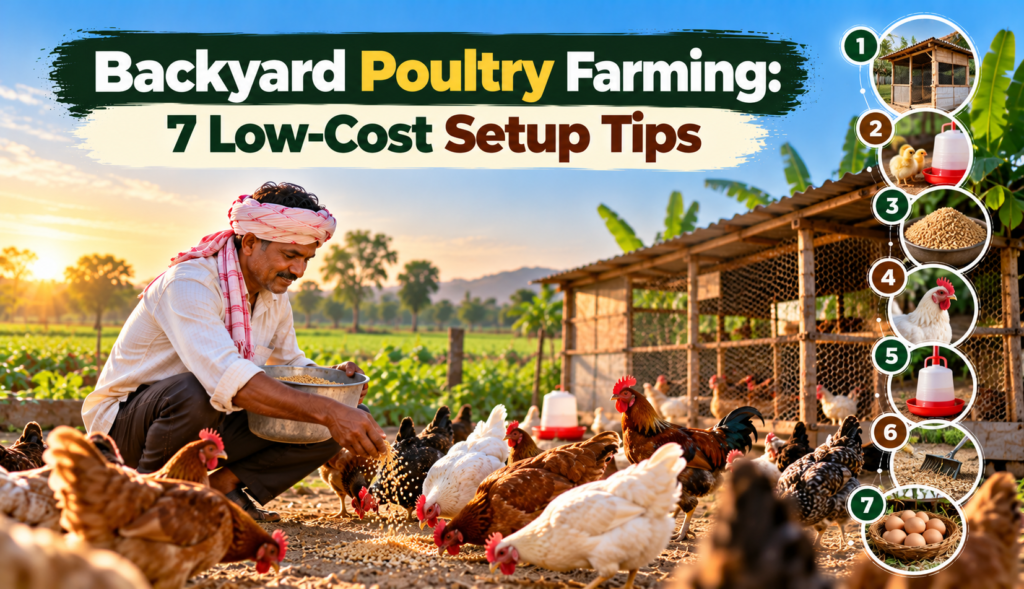
Backyard Poultry Farming: 7 Low-Cost Setup Tips
Backyard poultry farming is a practical way for rural households to produce eggs and chicken meat while creating a potential source of supplementary income. With suitable poultry breeds, low-cost housing, balanced feeding, clean drinking water and proper disease prevention, farmers can start small and expand according to their resources and local market demand.
For beginners, the key is not to invest heavily at the start. A well-managed small poultry unit can provide useful experience before a farmer considers expanding the business.
What Is Backyard Poultry Farming?
Backyard poultry farming is the rearing of chickens in a small, semi-intensive or free-range system around a household or farm. Birds may obtain some natural feed by scavenging outdoors, while farmers provide supplementary feed, water, shelter and healthcare.
In India, backyard poultry can support household nutrition, rural livelihoods and small-scale entrepreneurship. The Indian Council of Agricultural Research (ICAR) has highlighted its potential to improve rural income and nutritional security. However, results depend on bird health, feed availability, local climate, management and the price farmers receive for eggs or meat.
7 Low-Cost Tips for Starting Backyard Poultry Farming
- Choose Suitable Poultry Breeds
Breed selection is an important first step in backyard poultry farming. Indigenous birds and improved rural poultry varieties may be suitable for small-scale systems, but farmers should compare their growth, egg production, climate adaptability and feed requirements before purchasing chicks.
Depending on local availability, farmers can ask a veterinary officer or Krishi Vigyan Kendra (KVK) about suitable varieties such as Vanaraja, Gramapriya or other locally recommended birds. Buy healthy chicks from a reliable hatchery or authorised supplier, and check vaccination history where available.
- Build a Low-Cost Poultry Shed
A poultry shed does not need expensive construction to be effective. Locally available materials may help reduce setup costs, provided the shelter remains secure, dry, well-ventilated and easy to clean.
Follow these basic poultry housing practices:
- Choose a raised or well-drained location to reduce dampness.
- Provide enough space for birds to move, rest and feed comfortably.
- Ensure good ventilation without exposing young chicks to cold drafts.
- Use suitable dry bedding and replace wet or dirty material promptly.
- Protect birds from rain, extreme heat, predators and other animals.
The required space depends on bird size, age, housing system and local veterinary guidance. Avoid overcrowding because it can increase stress and disease risk.
- Plan Poultry Feed and Water Management
Feed is a major recurring expense in poultry farming. Birds that forage outdoors may find insects, seeds and other natural food, but scavenging alone may not meet their nutritional needs, especially during dry seasons or when natural feed is limited.
Provide suitable supplementary feed according to the birds’ age and purpose. Chicks, growing birds and laying hens have different nutritional requirements. Keep feed dry and protected from rodents, mould and contamination. Provide clean drinking water throughout the day, and wash drinkers regularly.
Farmers may explore locally available feed ingredients or approved feed supplements to manage costs. However, low-cost feeding should not mean an unbalanced diet. Consult a poultry specialist before making major changes to feed composition.
- Follow Vaccination and Disease Prevention Practices
Disease prevention is essential for a sustainable backyard poultry business. Infections can cause bird deaths, reduce egg production and lead to financial losses, particularly when many birds are kept together.
Ask a local veterinarian to prepare a vaccination and deworming schedule suited to the birds, their age and local disease risks. Do not rely on a single vaccination schedule for every flock.
Keep newly purchased birds separate for an appropriate observation period, limit unnecessary visitors to the poultry area, clean equipment regularly and remove sick birds from contact with healthy ones while seeking veterinary advice. Dispose of dead birds safely according to local animal-health guidance. Report unusual illness or sudden deaths promptly to a veterinary professional.
- Maintain Hygiene and Protect Birds From Predators
Clean surroundings reduce exposure to disease-causing organisms and pests. Remove leftover feed, prevent water from collecting around the shed and clean feeders and drinkers frequently.
Use secure doors, wire mesh or suitable fencing to protect birds from dogs, wild animals and other predators. At night, keep birds in a protected shelter rather than leaving them exposed outdoors. During hot weather, provide shade and adequate airflow. During heavy rainfall, keep bedding and resting areas dry.
These simple practices can reduce avoidable losses without requiring costly infrastructure.
- Estimate Costs Before Expanding
Before starting, prepare a basic budget covering chicks, housing, feed, feeders, drinkers, vaccinations, veterinary care, bedding, transport and repairs. Also estimate the time required for daily feeding, cleaning and monitoring.
Track expenses and income in a notebook or spreadsheet. Record bird purchases, mortality, feed consumption, eggs collected, sales and other operating costs. This helps farmers understand whether the activity is covering its expenses.
There is no guaranteed profit from backyard poultry farming. Returns vary with the number and type of birds, survival rate, feed prices, productivity and local selling prices. Start with a manageable flock and expand only when the available space, labour, market demand and finances support it.
- Identify Buyers Before Selling
A reliable market is as important as good poultry management. Potential customers may include nearby households, local retailers, small restaurants or community markets, depending on local demand and applicable food-safety rules.
Compare selling prices and transport costs before choosing where to sell eggs or birds. Maintain clean handling practices and follow relevant requirements for the sale and transport of poultry products.
Farmers can also ask their local KVK, veterinary department or farmer groups about poultry management training, market connections and applicable livestock support programmes.
Government Support and Training for Rural Poultry Farming
Farmers interested in expanding poultry activities should check current support and eligibility requirements with official government sources. India’s National Livestock Mission (NLM) includes entrepreneurship development and breed-improvement activities for rural poultry, subject to the applicable scheme guidelines.
Conclusion
Backyard poultry farming can help rural households diversify their livelihoods and improve access to eggs and chicken meat. The most practical starting points are choosing suitable birds, building a safe low-cost shed, providing balanced feed and clean water, following veterinary advice and identifying potential buyers.
Treat poultry rearing as a managed farm activity rather than guaranteed income. Careful record-keeping, disease prevention and gradual expansion can help farmers make better decisions and build a more sustainable rural poultry enterprise.