How to Improve Milk Production with Better Dairy Management
Improving milk production is not only about giving dairy animals more feed. Better dairy management combines balanced nutrition, clean drinking water, comfortable housing, regular health monitoring, hygienic milking and heat-stress management to support higher and more consistent milk yield.
For dairy farmers, the focus should be on maintaining animal health and productivity rather than depending on a single feed or supplement. Proper management can also help control feeding costs, reduce disease risks and improve the overall efficiency of a dairy farm.
- Provide a Balanced Diet for Better Milk Production
Balanced nutrition is one of the most important factors to improve milk production because dairy animals need adequate energy, protein, minerals and other nutrients according to their age, body condition and milk yield. An imbalanced ration can affect productivity, health and fertility.
Dairy farmers should combine appropriate quantities of:
- Green fodder
- Dry fodder
- Concentrate feed
- Protein sources
- Mineral mixture
- Suitable supplements when required
According to the National Dairy Development Board (NDDB), balanced feeding can help improve milk yield and fat content while reducing feeding costs. Its ration-balancing programme has reported improvements in milk production and feed efficiency.
Fodder should also be properly chopped before feeding to reduce wastage and improve digestibility. Changes in feed should be introduced gradually instead of suddenly changing the animal’s diet.
- Ensure Continuous Access to Clean Water
Clean and easily accessible drinking water is essential for dairy animals because milk production depends heavily on adequate water intake. Farmers should make fresh, clean water available throughout the day.
Water supports digestion, nutrient transportation, body-temperature regulation and milk production. NDDB notes that an adult healthy dairy animal normally requires substantial daily water intake, while additional water is needed as milk production increases.
During hot weather, water management becomes even more important. Farmers should regularly clean water troughs and ensure that animals are not forced to travel long distances for drinking water.
- Improve Green Fodder and Feed Management
Good-quality green fodder can support dairy animal nutrition while helping farmers maintain a balanced feeding programme. Farmers can use suitable fodder crops according to local climate, soil conditions and availability.
Green and dry fodder should be stored properly to prevent contamination, fungal growth and unnecessary nutritional losses. Surplus green fodder can also be conserved as hay or silage for periods when fresh fodder is limited.
Modern dairy farming is increasingly focusing on silage, total mixed ration (TMR), ration balancing and locally available feed resources to improve feeding efficiency and reduce unnecessary feed costs.
- Manage Heat Stress in Dairy Animals
Heat stress can significantly reduce feed intake and milk production, making summer management an important part of dairy farm management. High temperatures and humidity can affect animal comfort, productivity and reproductive performance.
Farmers can reduce heat stress by:
- Providing shaded and well-ventilated sheds
- Keeping drinking water available
- Improving air movement inside the shed
- Using sprinklers or suitable cooling systems where practical
- Avoiding unnecessary handling during peak heat
- Adjusting feeding practices during extreme weather
Heat-stress management is particularly important for high-yielding crossbred and exotic dairy animals, which can be more sensitive to hot conditions.
- Maintain Clean and Comfortable Dairy Housing
Clean, dry and well-ventilated housing helps maintain animal health and creates better conditions for consistent milk production. The cattle shed should have adequate ventilation, sufficient space and non-slippery flooring.
Dung and urine should not be allowed to accumulate. Regular cleaning reduces hygiene problems and helps create a healthier environment for dairy animals. NDDB’s good dairy husbandry guidance emphasizes clean, dry and properly ventilated cattle sheds.
During extreme weather, farmers should also protect animals from excessive heat, rain and cold conditions.
- Follow Proper Milking Hygiene
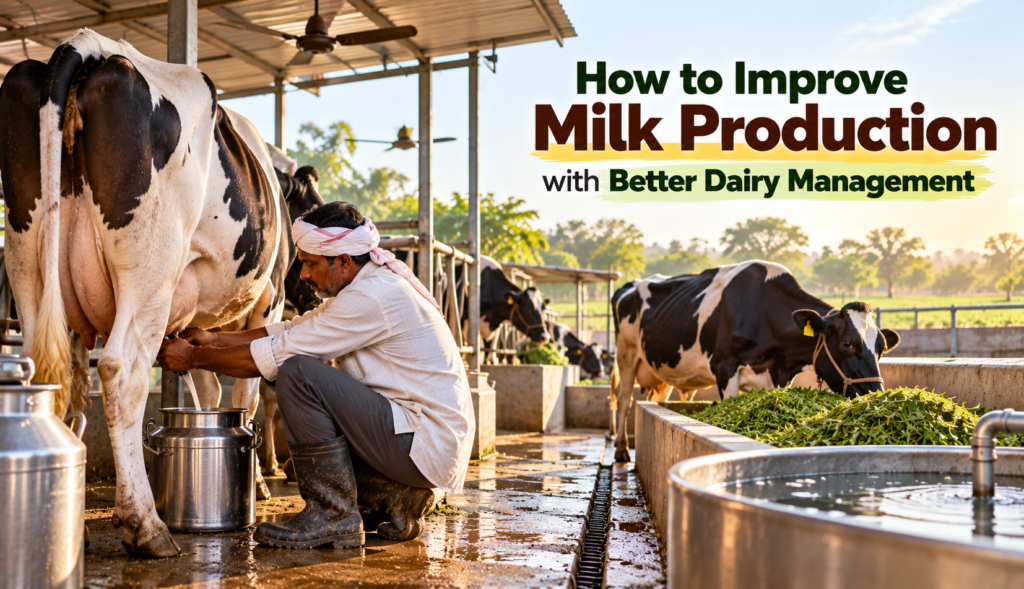
Clean milking practices are essential for maintaining milk quality and reducing contamination risks. Before milking, the udder and teats should be cleaned appropriately and dried using a clean cloth or suitable disposable material.
Milking equipment and containers should also be properly cleaned and maintained. The milking area should remain clean so that dust, dirt and other contaminants do not enter the milk.
Farmers should also monitor animals for signs of udder problems such as mastitis and seek veterinary advice when abnormalities are detected.
- Monitor Animal Health Regularly
Healthy animals are more likely to maintain productive lactation, so regular health monitoring should be part of every dairy management plan. Farmers should observe appetite, milk yield, body condition, behaviour and signs of illness.
Vaccination, parasite control, reproductive management and timely veterinary care can help reduce production losses. Keeping simple records of individual animals can also help farmers identify sudden changes in milk yield or health.
Digital dairy management tools, milk recording systems and farm-level data tracking are increasingly useful for identifying changes early and making better management decisions.
- Use Data to Improve Dairy Farm Efficiency
Recording daily milk yield, feed use, animal health and breeding information can help farmers make more informed dairy management decisions. Instead of judging performance only by visual observation, farmers can compare production trends over time.
Useful records include:
- Daily milk yield
- Feed quantity and type
- Lactation stage
- Breeding dates
- Vaccination and treatment records
- Body condition
- Changes in milk quality
This approach supports more precise dairy farming and helps identify which management practices are contributing to better productivity.
- Focus on Sustainable Dairy Farming
Improving milk production should also mean improving resource efficiency rather than simply increasing feed or input use. Balanced rations, better fodder utilization, proper water management and reduced feed wastage can improve farm efficiency.
NDDB has reported that balanced ration practices can improve productivity while also reducing the environmental footprint associated with milk production.
For Indian dairy farmers, combining traditional knowledge with scientific animal nutrition, veterinary guidance and modern farm-management practices can create a more sustainable production system.
- Build a Consistent Dairy Management Routine
The most practical way to improve milk production is to follow a consistent management routine covering nutrition, water, housing, health, hygiene and heat-stress control. No single feed, supplement or technology can replace good overall animal management.
Farmers should review milk yield regularly and identify the factors affecting production before making major changes to the ration or management system. When necessary, advice from a veterinarian, animal nutritionist or qualified dairy extension professional should be taken.
Better dairy management is ultimately about healthy animals, efficient feeding, clean milk production and consistent farm practices. By combining these elements, farmers can work toward more stable milk yields, improved animal welfare and better dairy-farm profitability.