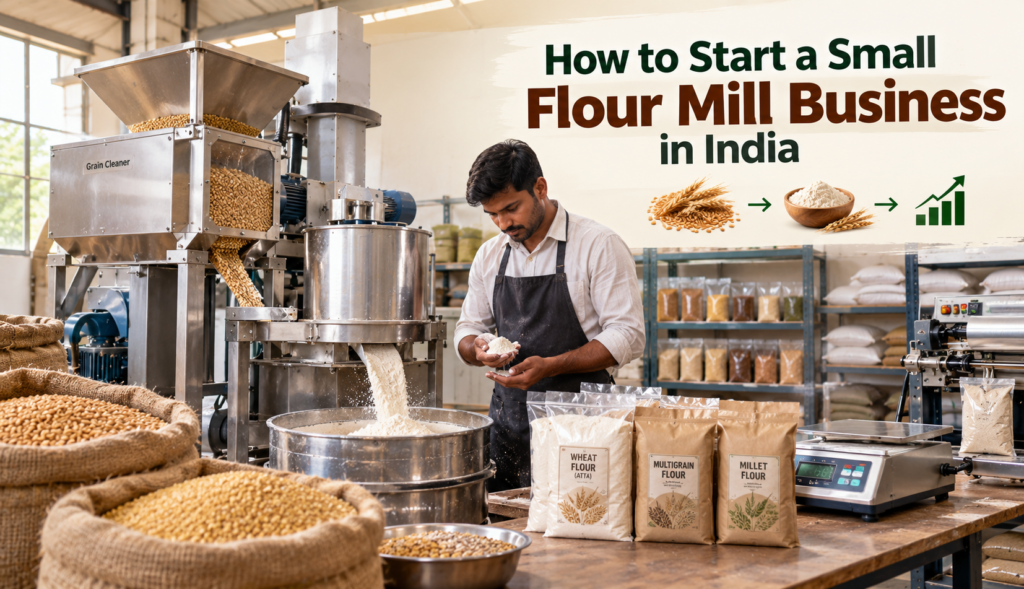
How to Start a Small Flour Mill Business in India
Starting a small flour mill business can be a practical opportunity for entrepreneurs who want to enter the food-processing sector with a locally focused business model. A small unit can process wheat and other grains into products such as atta, multigrain flour and customised flour blends, depending on local demand and available machinery.
The business works best when entrepreneurs focus on quality, hygienic processing, consistent packaging, local sourcing and reliable customer service rather than competing only on price. With growing interest in packaged staples, local food brands and value-added agricultural products, grain processing can also create opportunities for rural and semi-urban entrepreneurs.
What Is a Small Flour Mill Business?
A small flour mill is a food-processing unit that cleans, processes and grinds grains into flour for household, retail, institutional or commercial use. Depending on the equipment installed, the unit can handle products such as wheat, maize, millet and other suitable grains.
A typical business model can include:
- Wheat flour or atta production
- Multigrain flour
- Millet-based flour
- Custom grinding services
- Bulk flour supply
- Retail packaged flour
- Supply to local shops and restaurants
Before investing, entrepreneurs should study local demand and identify which grains and flour products have the strongest market potential.
How to Start a Small Flour Mill
The first step is to prepare a basic business plan covering location, processing capacity, machinery, raw materials, labour, packaging, electricity, transportation and expected sales.
Choose a location that provides convenient access to grain suppliers and customers. A small unit can be positioned near a local agricultural market, residential area or food-processing cluster, provided the premises meet applicable regulatory and hygiene requirements.
The basic process generally involves:
- Procuring suitable grains
- Cleaning and removing impurities
- Grading or sorting where required
- Grinding the grain
- Sieving the flour
- Quality checking
- Packaging and labelling
- Storing the finished product
- Distributing it to customers
A simple process flow helps reduce wastage and maintain consistent product quality.
Flour Mill Machinery and Equipment
Selecting the right flour mill machine depends on the expected production capacity and the type of grains being processed. Entrepreneurs should avoid purchasing machinery solely on price and instead compare capacity, power consumption, maintenance requirements, food-contact materials, spare-parts availability and after-sales support.
Common equipment may include:
- Grain cleaning machine
- Destoner
- Flour mill or pulveriser
- Sifter
- Grain weighing equipment
- Flour weighing machine
- Packaging or sealing machine
- Storage bins or containers
For a small atta chakki business, equipment requirements may be simpler than those of a larger commercial flour-processing unit. The machinery should be selected according to the intended production volume rather than maximum advertised capacity.
Raw Materials and Quality Control
Wheat and other grains are the primary raw materials for a flour mill. The quality of the finished flour depends heavily on the quality, cleanliness and storage condition of the incoming grain.
Entrepreneurs should establish reliable sourcing arrangements with farmers, traders, mandis, FPOs or authorised suppliers where appropriate. Grain should be inspected before processing for visible impurities, moisture-related problems, insects and other quality concerns.
Proper storage is equally important. Clean, dry and well-maintained storage areas can help protect raw materials from contamination and unnecessary losses.
Licences and Food Safety Requirements
A flour mill is a food business, so regulatory compliance should be planned before commercial production begins. FSSAI states that food businesses in India are required to obtain the applicable FSSAI registration or licence, with the appropriate category depending on the nature and scale of the business.
Entrepreneurs should also check applicable requirements for:
- Business registration
- FSSAI registration/licence
- GST, where applicable
- Local trade or municipal permissions
- Electricity and premises requirements
- Packaging and labelling compliance
- Fire and safety requirements, where applicable
Requirements can vary according to location, turnover, production activity and business structure. Therefore, entrepreneurs should verify current requirements through the relevant government portals before starting operations.
Flour Mill Business Cost and Investment
The investment required for a small flour mill varies significantly depending on machinery capacity, automation, premises, electrical infrastructure, packaging equipment, storage and working capital.
Instead of relying on one fixed cost figure, prepare a project estimate under these categories:
Expense | What to Include |
Machinery | Flour mill, cleaner, sifter and related equipment |
Premises | Rent, deposit, renovation and utilities |
Electrical setup | Wiring, panels and installation |
Raw materials | Initial grain inventory |
Packaging | Bags, pouches, labels and sealing |
Labour | Operators and helpers |
Working capital | Transport, maintenance and operating expenses |
Marketing | Branding, local promotion and distribution |
This approach gives a more realistic picture of the flour mill setup cost for a particular location.
Government Support for Food Processing Businesses
Entrepreneurs should also investigate government support available for food-processing enterprises. The Ministry of Food Processing Industries currently lists programmes covering areas such as micro food-processing enterprises, common infrastructure, branding and marketing, training and support for FPOs/SHGs/producer cooperatives.
For eligible micro food-processing units, PMFME guidelines include credit-linked support for eligible projects, but eligibility, application windows and applicable conditions should be verified before including any subsidy in a business plan.
Packaging and Marketing Strategy
Packaging can become an important differentiator for a small flour brand. Clean packaging, accurate labelling, product information and consistent quality can help build customer confidence.
For local marketing, entrepreneurs can combine:
- Retailer partnerships
- Direct household sales
- WhatsApp Business
- Local grocery stores
- Farmer and community networks
- Social media marketing
- Google Business Profile
- Institutional buyers
- Subscription-based monthly flour delivery
A local brand can also differentiate itself through freshly processed flour, multigrain products, millet flour or customised grinding services, depending on customer demand.
How to Make a Flour Mill Business Profitable
Profitability depends on several factors, including capacity utilisation, raw-material prices, electricity consumption, labour, packaging costs, wastage, selling price and distribution expenses.
A practical strategy is to begin with a clearly defined local market rather than investing heavily in capacity before establishing demand. Track the cost of every kilogram processed, compare wholesale and retail margins, minimise wastage and maintain consistent product quality.
Digital ordering and local delivery can also help a small flour business build recurring customers without depending entirely on traditional retail channels.
Conclusion
A small flour mill business can be a viable agro-processing opportunity when it is built around local demand, efficient machinery, food safety, quality raw materials and disciplined cost management. Entrepreneurs should complete market research, prepare a realistic project plan, select suitable equipment and confirm all applicable licences before investing.
The opportunity becomes stronger when a flour mill moves beyond basic grinding and develops a recognisable local brand through quality packaging, value-added flour products, digital marketing and reliable customer service.